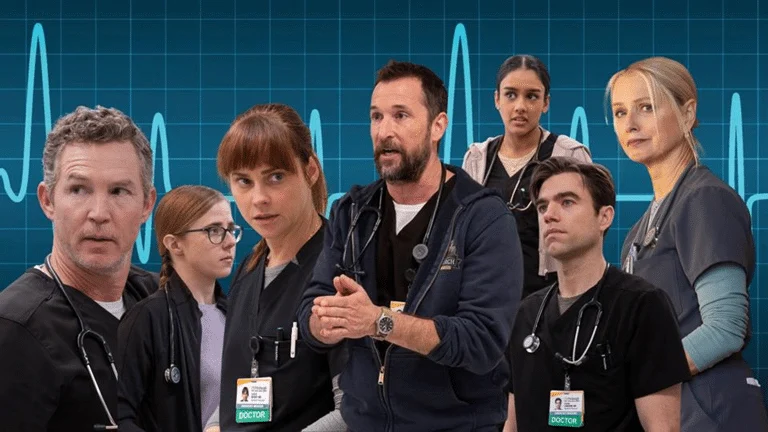
If you haven’t yet immersed yourself in the chaotic, high-stakes corridors of HBO Max’s The Pitt, you are missing what is arguably the most unflinching look at the modern American healthcare system ever committed to film. While medical procedurals have long been a staple of television—ranging from the high-octane romances of Grey’s Anatomy to the diagnostic puzzles of House—The Pitt occupies a different space entirely. It is not interested in sugar-coating the exhaustion of the modern physician or the systemic fractures that leave patients vulnerable.
For those of us working in aging research and advocacy, the show serves as more than just entertainment; it is a mirror reflecting the silent crises defining the future of American healthcare. By examining the show’s second season, we can pull back the curtain on the intersection of television drama and the harsh, measurable realities of our aging population.
The Reality of the "Clamshell": A New Standard for Accuracy
The Pitt distinguishes itself through a rigorous commitment to technical and thematic authenticity. Unlike shows that treat a hospital as a backdrop for interpersonal melodrama, The Pitt treats the hospital as a character itself. When the show depicts complex, life-saving interventions—such as a "clamshell" thoracotomy—it does so with a precision that demands the audience’s full attention.
However, the show’s true genius lies in its refusal to sanitize the aftermath of those procedures. In the world of The Pitt, a successful surgery is not the "happy ending." Instead, it is the beginning of a difficult conversation about discharge planning, long-term care, and the daunting financial burden placed on families. It is this willingness to tackle the "un-televisual" aspects of medicine—the insurance denials, the wait times, and the social determinants of health—that makes the show essential viewing.
Chronology of Crisis: From Season 1 to Season 2
The narrative arc of The Pitt across its first two seasons mirrors the escalating strain on the American healthcare infrastructure.
In Season 1, we are introduced to the staff’s struggle with the fundamental exhaustion of the emergency department. We witness the introduction of patients who are not just "cases," but representatives of a broader demographic shift. The audience is invited into the home life of patients and their caregivers, seeing the silent, invisible labor of those trying to support aging parents.
By Season 2, the stakes have sharpened. The show moves beyond the individual patient encounter to explore the systemic failures that force doctors to choose between "doing what’s right" and "doing what’s allowed." We see the frustration of physicians like Dr. Robby, who must navigate a bureaucracy that is increasingly indifferent to the human cost of care. The progression is clear: from the immediate trauma of the ER to the chronic trauma of a system failing to support its most vulnerable aging citizens.
Supporting Data: When Drama Meets Demographic Reality
The power of The Pitt lies in its ability to take complex sociological data and distill it into visceral human moments.
The Caregiver Burden
The show’s depiction of the "sandwich generation"—adults simultaneously caring for children and aging parents—is harrowing. In one notable Season 1 episode, a daughter, stretched to her absolute breaking point by her mother’s increasing dependency, simply disappears. She is eventually found asleep in her car, a moment of profound, quiet desperation.
The Reality: According to the Caregiver Action Network, over 63 million Americans are currently providing unpaid care for a spouse, elderly parent, or relative. One in five of these caregivers is simultaneously managing full-time employment. This demographic is at an exponentially higher risk for depression, anxiety, and the development of their own chronic health conditions, often because their own preventative care is neglected in favor of their loved ones.
The Geriatrician Shortage
In a biting, realistic exchange, a senior doctor dismisses a colleague’s potential fellowship in geriatrics as a "slower, easier" path. This brief moment of dialogue highlights a profound societal misunderstanding regarding the complexity of geriatric medicine.
The Reality: The United States is facing a demographic tsunami. By 2030, every baby boomer will be over the age of 65, representing one in five Americans. Yet, the supply of medical professionals specializing in this field is abysmal. We have roughly 7,000 board-certified geriatricians in the entire country, compared to over 60,000 pediatricians. The Department of Health and Human Services has projected a shortfall of nearly 27,000 geriatric providers—a deadline that has effectively already passed.
Official Responses and Systemic Implications
The issues highlighted in The Pitt have not gone unnoticed by medical boards and policy experts. The American Medical Association (AMA) has repeatedly cited emergency medicine as the leading specialty for physician burnout, a trend exacerbated by the influx of older adults with complex, multi-morbidity profiles.
When a doctor like the show’s Dr. Langdon admits to seeing 16 patients in a single morning, the implications for patient safety are dire. In such high-pressure environments, cognitive load leads to errors, reduced empathy, and a "boomerang effect," where patients are discharged prematurely only to be readmitted days later.
Furthermore, the show’s focus on transportation barriers addresses an often-overlooked public health crisis. When an older patient like "Vera" is cleared for discharge but has no way to get home, the hospital faces a "social admission." The fact that a medical student must pay for a ride-share out of pocket is not just a heartwarming moment; it is a scathing indictment of a system that fails to account for the most basic social determinants of health. Data suggests that 3.6 million Americans report missing medical appointments specifically due to lack of transportation, and 50% of older adults fear they will be forced to miss future care for the same reason.
The Economics of Despair
Perhaps the most haunting theme in The Pitt is the financial dread that permeates every room. The show captures the agonizing reality of the "GoFundMe" era, where families are forced to crowdfund life-saving care.
When a character leaves the hospital against medical advice to avoid saddling his family with debt, only to return in a terminal state, the show is not exaggerating. It is documenting the current status quo of healthcare in the United States. These are not merely plot devices; they are the result of decisions made in legislative halls, in the boardrooms of insurance providers, and in the curriculum committees of medical schools.
Conclusion: A Call to Action
The significance of The Pitt lies in its insistence that we look at the aging of America not as a distant problem, but as a current, urgent reality. We are currently witnessing the largest cohort of older adults in human history, and our systems—from our hospital emergency bays to our long-term care facilities—are not prepared.
As we watch these fictional characters navigate the impossible, we must remember that the real-life consequences are being played out in waiting rooms across the country. We need more than just awareness; we need a radical restructuring of how we value geriatric care, how we support the family caregiver, and how we ensure that financial status does not determine life expectancy.
The Pitt provides the drama, but the burden of the resolution rests with us. Let us ensure that the decisions made in the coming years reflect the dignity and care that our aging population deserves.
Katrin Werner-Perez is the Director of Health Programs at the Alliance for Aging Research. Her work focuses on the intersection of clinical practice, public policy, and the lived experience of the aging population.