










June 5, 2026
As the Democratic Republic of the Congo (DRC) and neighboring Uganda grapple with a burgeoning Ebola outbreak, new modeling data from the U.S. Centers for Disease Control and Prevention (CDC) paints a sobering picture of the potential trajectory. While the risk to the United States remains classified as “very low,” the epidemiological outlook for Central Africa suggests that without immediate, large-scale intervention, the region could be facing a public health emergency that rivals the historic devastation of the 2014-2016 West Africa crisis.
The Mathematical Reality: A Potential for Historic Proportions
The latest findings, published in the CDC’s Morbidity and Mortality Weekly Report (MMWR), represent a rigorous attempt to quantify the "unknowns" currently bedeviling field teams. Led by Eric Mooring, ScD, of the CDC’s Center for Forecasting and Outbreak Analytics, the research team utilized a series of predictive simulations to map out how the virus—specifically the Bundibugyo strain—might spread over the coming three-month window.
The models were built upon varying assumptions of cumulative death tolls recorded as of May 24, 2026. By testing scenarios ranging from 50 to 200 initial deaths, researchers evaluated how different levels of public health intervention—specifically the identification, isolation, and treatment of symptomatic individuals—would alter the outbreak’s course.
The results are stark: Under a “poor” intervention scenario, where only 20% of infected individuals are successfully isolated, the probability of the outbreak spiraling into a catastrophe exceeding 20,000 cases rises to 65%. In more severe simulations, such as those assuming 100 initial deaths and the same low-isolation rate, a staggering 76% of simulations projected over 20,000 cases, with nearly 90% projecting at least 4,000 deaths by August 2026.
Chronology of the Current Outbreak
The current health crisis began to coalesce in early 2026, centering on the Bundibugyo virus, a species of Ebolavirus known for its high mortality rate and the notable absence of specific, commercially available vaccines or targeted therapeutic treatments.
- Initial Detection: The outbreak was localized primarily within the Democratic Republic of the Congo, with a small number of spillover cases subsequently identified in Uganda.
- The May 24 Threshold: This date serves as the analytical anchor for the CDC’s modeling. By this time, confirmed deaths were estimated in the hundreds, providing the baseline data for forecasting models.
- Early June 2026 Status: As of June 2, official reports confirmed 378 total cases—363 in the DRC and 15 in Uganda—with a death toll reaching 63 individuals.
- June 5 Publication: The release of the MMWR findings during a formal press briefing signaled an urgent shift in how international health organizations are viewing the contagion, moving from containment monitoring to proactive disaster prevention.
The Variable of Intervention: Why Isolation Matters
The CDC’s modeling emphasizes a critical feedback loop: the speed and efficacy of the public health response determine the virus’s reproductive number.
The researchers tested four distinct intervention tiers:
- Poor (20% isolation): The baseline for the "catastrophic" projections.
- Moderate (50% isolation): A middle-ground scenario that still leads to significant loss of life.
- High (70% isolation): A threshold where the probability of cases exceeding 10,000 drops to approximately one in 20.
- Extremely High (95% isolation): The "gold standard" required to effectively blunt the transmission chain.
Satish Pillai, MD, the leader of the CDC’s Ebola response, noted with palpable concern during the briefing that current conditions on the ground suggest the efficacy of interventions is likely tracking toward the lower end of these scenarios. "Based on the trajectory and based on the conditions on the ground, I would believe that the percentages are on the lower end of the scenarios," Pillai stated, effectively signaling that the world is currently on the path toward the more lethal projections.
Implications for Global Health Infrastructure
The primary concern among infectious disease experts is that the Bundibugyo virus is moving through populations that lack the robust healthcare infrastructure needed to maintain 90% or higher isolation rates. The 2014-2016 West Africa outbreak remains the cautionary benchmark; that event resulted in over 28,000 cases and 11,000 deaths, devastating the economies and social fabrics of Liberia, Sierra Leone, and Guinea.
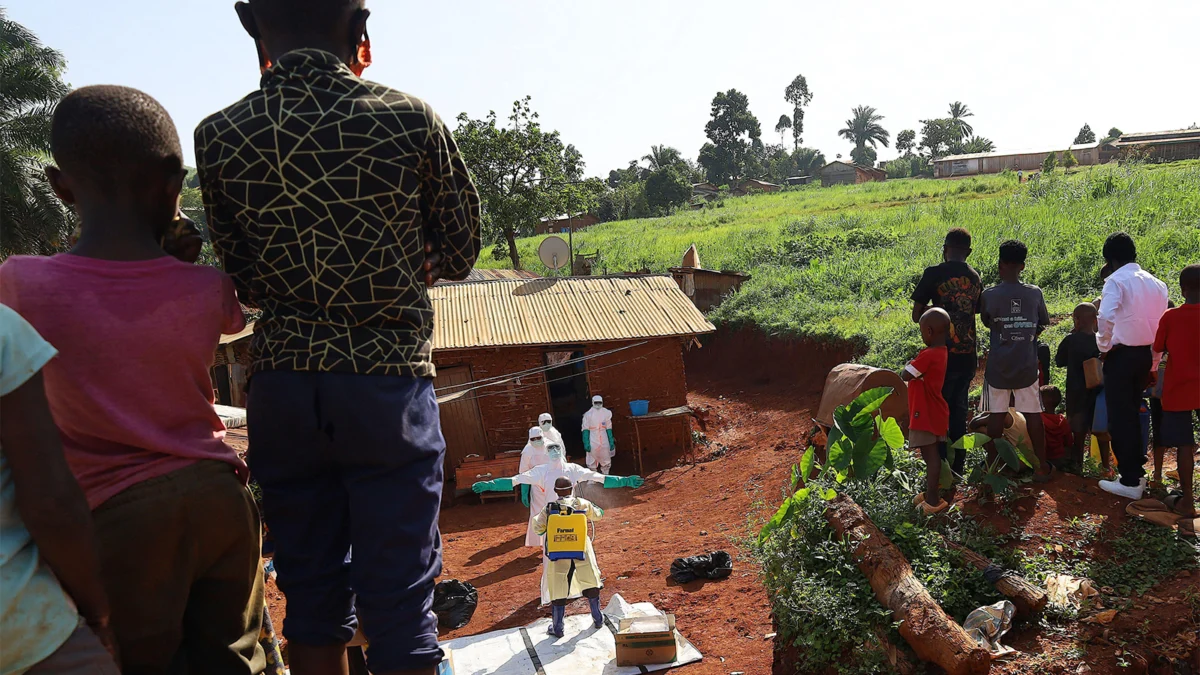
The researchers explicitly warned that if sustained public health interventions are not rapidly scaled, the current situation could mirror that tragedy. The lack of specific vaccines or treatments for the Bundibugyo strain means that the primary tool in the arsenal remains "contact tracing and isolation"—a method that requires massive logistical support, trust from the local populace, and a stable security environment, all of which are challenging to maintain in the affected regions.
Official Responses and the View from the U.S.
Despite the dire projections for Central Africa, the U.S. government and health agencies are working to manage domestic expectations and prevent unnecessary alarm.
A secondary MMWR report released simultaneously addressed the likelihood of the virus reaching the United States. The report concludes that the risk of international spread to the U.S. remains "very low." Furthermore, the CDC posits that even in the event of an imported case, the structure of the U.S. healthcare system—specifically its ability to rapidly identify, isolate, and treat patients in a clinical setting—would prevent significant secondary transmission.
"For Americans going about their daily lives, including those with travel plans that do not involve the affected countries, there’s no recommended change in behavior at this time," Dr. Pillai clarified. The messaging is clear: while the world must focus its resources on supporting the DRC and Uganda, the domestic U.S. public is not currently at an elevated risk.
Looking Ahead: The Path to Mitigation
The next three months are considered the "critical window" for the outbreak. Public health officials are focusing on three main pillars to change the trajectory:
- Logistical Support: Increasing the number of Ebola Treatment Units (ETUs) to ensure that the "isolation" variable in the CDC models moves from 20% toward the 70-95% range.
- Community Engagement: Combatting misinformation and ensuring that local communities are active partners in the surveillance process. Without community buy-in, the CDC’s projected "high isolation" scenarios remain mathematically impossible.
- International Funding: Reallocating resources to ensure that field workers have the personal protective equipment (PPE) and rapid diagnostic tools required to identify cases within hours of symptom onset rather than days.
The CDC’s warning is not a prediction of inevitability, but a diagnostic tool for policy. By identifying that a failure to scale interventions leads directly to a 65% chance of a 20,000-case outbreak, the CDC has provided the international community with a roadmap of the consequences of inaction. Whether the global health community can mobilize with the speed necessary to force the reality into the "high isolation" model remains the central question for the remainder of the summer.
As the scientific community continues to monitor the genetic evolution of the virus and the effectiveness of the containment strategies, the message from the CDC remains one of cautious vigilance. The tragedy of the past, as seen in the 2014 West African epidemic, serves as a grim reminder that when it comes to Ebola, the cost of being late is measured in human lives.