





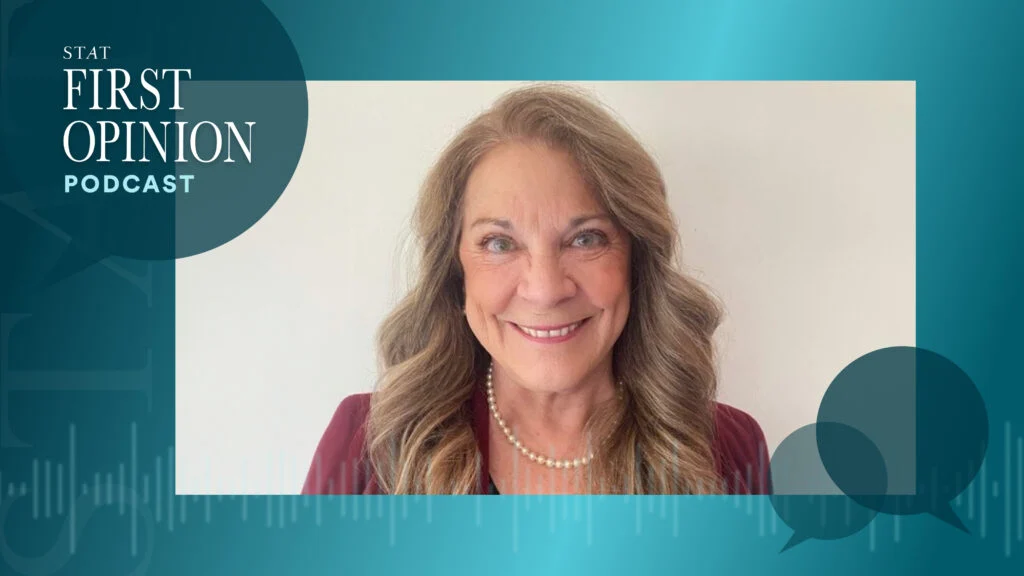
In the high-pressure, high-stakes world of medicine, the typical career trajectory is linear: four years of undergraduate study, four years of medical school, and three to seven years of residency. For most, the process concludes before they hit their mid-30s. However, for Dawn Zuidgeest-Craft, life refused to follow a conventional map. At 73 years old, she is embarking on a family medicine residency—a feat that has captured national attention and challenged societal perceptions of retirement, ambition, and the "expiration date" of a professional career.
A former neonatal nurse practitioner (N.P.) with 45 years of clinical experience, Zuidgeest-Craft’s decision to transition from N.P. to M.D. is not merely a late-life hobby. It is the culmination of a lifelong intellectual curiosity that survived multiple careers, the complexities of raising a family, the heartbreak of medical loss, and the global disruption of a pandemic.
The Path Less Traveled: A Chronology of Persistence
Zuidgeest-Craft’s interest in the sciences was kindled early. As a sickly child, she spent significant time in hospitals, where a gift of a microscope from her mother turned her curiosity toward diagnostics. "My mother told me when I was seven that I should be a pathologist," she recalls. While her childhood interest in "mealworm experiments" in the family refrigerator was less than welcomed by her parents, the seeds of a diagnostic mind were sown.
During her undergraduate years, her path seemed set toward medical school, but life intervened with a series of significant pivots. She entered the first-ever neonatal nurse practitioner program, a rigorous field that allowed her to function as a high-level medical provider. For 45 years, she operated at the top of her license, managing resuscitation teams and intensive care units. Yet, despite her expertise, she frequently hit a glass ceiling in terms of autonomous decision-making—a constraint that nagged at her.
"There were times where you felt like you were butting heads with someone else’s practice modality," Zuidgeest-Craft explains. "I wanted to know what I didn’t know."
Her attempts to formalize her medical education were repeatedly delayed by personal milestones:
- The 1980s: A desire to enter medical school was put on hold to raise children and establish her career as a pioneering N.P.
- Age 35: She applied to Michigan State University’s medical program but was advised to complete a second organic chemistry requirement. Life—specifically, the birth of more children and the demands of a growing family—intervened once again.
- Age 47–50: After navigating the complexities of high-risk pregnancies and infertility, she focused on teaching anatomy and physiology at the university level, keeping her medical skills sharp through per diem hospital shifts.
- 2020–2021: The Covid-19 pandemic brought a period of profound reflection. Following a terrifying medical crisis involving her husband’s subdural hemorrhage, the couple took stock of their lives. "Life is too dang short," she told him. In 2021, at the age of 69, she applied to Caribbean medical schools.
An Idyllic and Rigorous Academic Experience
Zuidgeest-Craft chose a medical school in Anguilla, an experience she describes as both academically challenging and personally transformative. Far from the grueling, high-stress environments often depicted in domestic medical dramas, her time on the Caribbean island offered a unique juxtaposition of intensive study and island serenity.
She was not the only non-traditional student; her cohort included a 50-year-old former labor and delivery nurse and an oil-industry executive in his 60s. The age gap between her and the youngest students—some as young as 19—created a vibrant, multigenerational learning environment.
The clinical phase of her education brought her back to the United States, where she rotated through hospitals in Chicago, West Virginia, New York—including a prestigious stint at Memorial Sloan Kettering—and South Texas. Unlike many of her younger peers, who faced the daunting prospect of six-figure student loan debt, Zuidgeest-Craft was able to fund her medical education through her decades of savings. This financial independence allowed her to focus entirely on patient care rather than the immediate need to secure the highest-paying position.
The Match Process and the "Ageism" Factor
The transition from medical student to resident is notoriously difficult, governed by the National Resident Matching Program (NRMP). For an International Medical Graduate (IMG) of her age, the odds were statistically thin. She applied to only 12 programs—a fraction of the 100-plus applications typical for an IMG.
When the initial match results were released, she did not match. However, she persevered through the Supplemental Offering and Acceptance Program (SOAP). After a computer glitch initially hindered her application to her top-choice hospital in Muskegon, Michigan, she secured an interview. The program directors were impressed not only by her clinical experience but by her lack of naivete regarding the grueling hours of residency. She was accepted.
Addressing the Critics: Is It "Fair"?
A common question raised by critics of late-life career changes is whether an older physician is "taking a slot" from a younger trainee who will have more years to practice. Zuidgeest-Craft is candid in her response.
"I would say I have some agreement with that to a certain degree," she admits. "But there are physicians who practice into their 80s and 90s. I intend to work as long as I physically can."
She argues that her age is, in fact, an asset. While younger students are often focused on the sheer pressure of passing boards and securing their future, she approaches the patient-physician relationship with a seasoned perspective on the privilege of care. "When you’re only there in your younger years, trying to make your living, your focus is different," she notes.
The Future of Family Medicine
Zuidgeest-Craft has chosen family medicine, a specialty that aligns with her desire to serve a rural community. She envisions a role in a small-town clinic, providing comprehensive care to a population that mirrors the rural nature of her recent life experiences.
Her transition from N.P. to M.D. provides a rare, dual-lens perspective on the medical system. She observes that while the day-to-day practice of an N.P. and an M.D. often overlaps, the underlying training in core sciences provided by medical school is a "revisiting" that strengthens a physician’s ability to educate patients. She emphasizes that the "business of medicine"—the encroachment of large hospital corporations on private practices—is a challenge she plans to bypass by focusing strictly on the clinical, human element of her work.
Implications for the Medical Field
The story of Dawn Zuidgeest-Craft serves as a profound case study for the medical community. It challenges the rigid age-based expectations of professional development and highlights a potential, underutilized labor pool: older, experienced clinicians who possess the desire and health to continue contributing to the workforce.
As the U.S. healthcare system faces projected shortages of primary care physicians, the medical establishment may need to reconsider its biases toward non-traditional applicants. Zuidgeest-Craft’s journey proves that the desire to serve, paired with intellectual rigor and physical stamina, is not limited by a birth year.
"If you’re healthy enough and you have the passion, go for it," she says to others contemplating a similar path. "We are lifelong learners if we are so blessed. This is not a ‘have-to’; this is a ‘want-to.’"
As she steps into her residency, she does so with the humility of a student and the confidence of a veteran. Her presence in the halls of her residency program will undoubtedly serve as a reminder that the pursuit of excellence in medicine is a lifelong endeavor, one that does not necessarily end when the rest of the world suggests it is time to retire.