




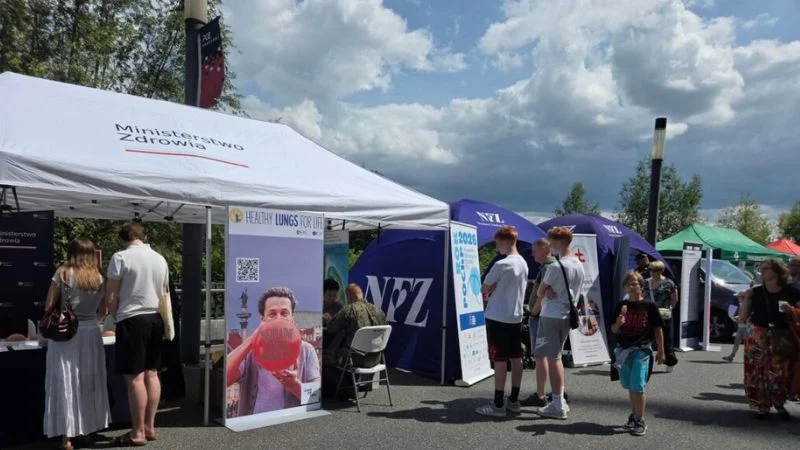
WARSAW, 13 August 2026 – In a significant push to elevate respiratory health on the national agenda, the "Healthy Lungs for Life" campaign descended upon the PGE Narodowy in Warsaw this week, transforming Poland’s iconic national stadium into a hub of preventive medicine and public awareness.
The event, which drew thousands of families, uniformed service members, and voluntary blood donors, served as a poignant reminder of the invisible crisis facing the Polish population: the escalating burden of chronic respiratory conditions. By integrating free, accessible lung health checks into a high-visibility community setting, organizers aimed to bridge the gap between medical expertise and public accessibility, emphasizing that the path to better lung health begins with a simple breath.
The Core Mission: Normalizing Lung Health Checks
At the heart of the campaign is a straightforward but powerful message: early detection is the single most effective tool in the fight against chronic lung disease. For many of the more than 100 individuals who participated in the on-site screenings, the experience was their first introduction to spirometry—a non-invasive, diagnostic test that measures how much air a person can inhale and exhale, as well as how quickly they can empty their lungs.
While most participants walked away with the reassurance that their lung function was within the expected range, the screening proved to be a vital intervention for others. A small, yet significant, percentage of participants received results that warranted further clinical investigation. These individuals were provided with clear, actionable guidance to seek follow-up assessments from specialists. By catching potential issues before they manifest as debilitating symptoms, the initiative demonstrated the proactive potential of screening programs to alleviate the future burden on Poland’s healthcare infrastructure.
A Growing Crisis: The Economic and Human Toll
The urgency of the "Healthy Lungs for Life" campaign is underscored by sobering national statistics. In Poland, respiratory conditions are not merely a clinical challenge; they are a systemic emergency. Current data reveals that more than 6.1 million Poles are living with some form of chronic respiratory condition, ranging from asthma to Chronic Obstructive Pulmonary Disease (COPD).
The human cost is equally staggering, with lung-related illnesses claiming over 140,000 lives annually. Beyond the personal tragedy of these losses, the economic impact is profound. Experts estimate that the Polish economy loses approximately €51 billion every year due to the direct costs of medical care, medication, and the indirect costs associated with productivity loss, absenteeism, and premature mortality.
Air pollution remains the primary driver of this crisis. As an environmental factor, poor air quality is inextricably linked to the rising incidence of chronic inflammation and respiratory decline. By highlighting the correlation between clean air and lung vitality, the campaign serves as a bridge between public health awareness and the urgent need for environmental policy reform.
Chronology of the Initiative: From Policy to Pulse
The success of the 13 August event is the result of months of strategic coordination. The initiative was held under the umbrella of the "2026 Year of COPD," a designated year of focus established by the Polish Healthy Lung Coalition.
- Early 2026: The Polish Healthy Lung Coalition, in collaboration with the Polish Respiratory Society and the National Tuberculosis and Lung Diseases Research Institute, began planning a year-long outreach program to address the diagnostic delay prevalent in COPD cases.
- March 2026: The official launch of the "2026 Year of COPD" received high-level support, including patronage from Monika Wielichowska, Deputy Marshal of the Polish Parliament, and the Polish Ministry of Health, signaling a shift toward prioritizing respiratory health at the legislative level.
- Mid-2026: Preparations for the National Health Fund Health Zone at the PGE Narodowy intensified, with partners focusing on how to make complex diagnostic information accessible to the general public.
- 13 August 2026: The screening event took place, marking the largest direct community engagement effort of the campaign to date.
The Role of Strategic Partnerships
The initiative’s effectiveness is largely attributed to the robust network of professional and advocacy groups involved. By bringing together the Polish Healthy Lung Coalition (Polska Koalicja ZDROWE PŁUCA), the Polish Respiratory Society (Polskie Towarzystwo Chorób Płuc), and the Polish Federation of Asthma, Allergy and COPD Patient Associations, the campaign created a "unified front" that lends credibility to the scientific advice provided.
Support from the Clean Air Fund was also pivotal. By financing public engagement, the fund helped organizers demonstrate that community awareness is the catalyst for broader policy change. When the public understands the direct impact of air quality on their own breathing capacity, the social mandate for stricter emissions standards and urban greening becomes significantly stronger.
Official Perspectives: A Call for Action
In an official statement issued following the event, the coalition organizers emphasized the necessity of a paradigm shift in how society views lung health.
"Early diagnosis can make a real difference for people living with COPD and other lung conditions," the statement noted. "Simple tests like spirometry can help identify problems before they become more serious. We aren’t just checking lungs; we are empowering citizens to take control of their long-term health trajectory."
The inclusion of the National Health Fund (NFZ) as a partner underscored the government’s growing recognition that the current model of reactive, hospital-based care is unsustainable. By shifting resources toward the "Health Zone" at public venues, officials hope to foster a culture of prevention that reduces the long-term strain on the Polish healthcare system.
Implications for Public Health Policy
The findings from this event provide a roadmap for future health interventions. Firstly, the "Health Zone" model proves that if you bring healthcare to the public, participation rates rise dramatically. Many of the attendees would not have visited a clinic for a lung check; however, when the test was integrated into a family-oriented day at the stadium, the barriers of time, stigma, and access were removed.
Secondly, the event highlights the need for a national screening strategy. If 100 people can be tested in a single afternoon at a stadium, the potential for a nationwide, standardized spirometry program—integrated into primary care—is massive. Such a program could identify the millions of undiagnosed COPD patients in Poland, allowing for early intervention that could save the economy billions of euros in lost productivity and acute care costs.
Finally, the campaign serves as a powerful lobbying tool. With the backing of the Polish Parliament and the Ministry of Health, the data gathered from such events can be used to justify further investment in air quality monitoring and stricter enforcement of pollution limits. It creates a feedback loop: better air leads to better health, which leads to a more prosperous and stable society.
Looking Ahead: The EU Screening Week
The momentum generated in Warsaw is not meant to be a singular occurrence. The organizers are already looking ahead to the EU’s first "Screening Week," scheduled for 28 September to 4 October 2026.
This upcoming initiative aims to put respiratory health firmly on the European map. The lessons learned at PGE Narodowy—regarding logistics, public engagement, and the efficacy of community testing—will serve as a blueprint for organizations across the continent. By sharing these findings, the Polish partners are contributing to a broader European effort to combat the "silent epidemic" of lung disease.
For those interested in the future of respiratory health, the message is clear: the time to act is now. Whether through organizing local testing events, advocating for cleaner air in one’s own community, or simply scheduling a lung health check, the power to prevent, detect, and treat lung disease lies in the hands of the individual and the community.
As the sun set over the PGE Narodowy on 13 August, the lasting impact of the event was not just the number of tests performed, but the shift in consciousness. Thousands of citizens left the stadium with a new understanding of the air they breathe and the lungs that sustain them—a vital step toward a healthier, more resilient Poland.