By Jackie Keating, LCSW
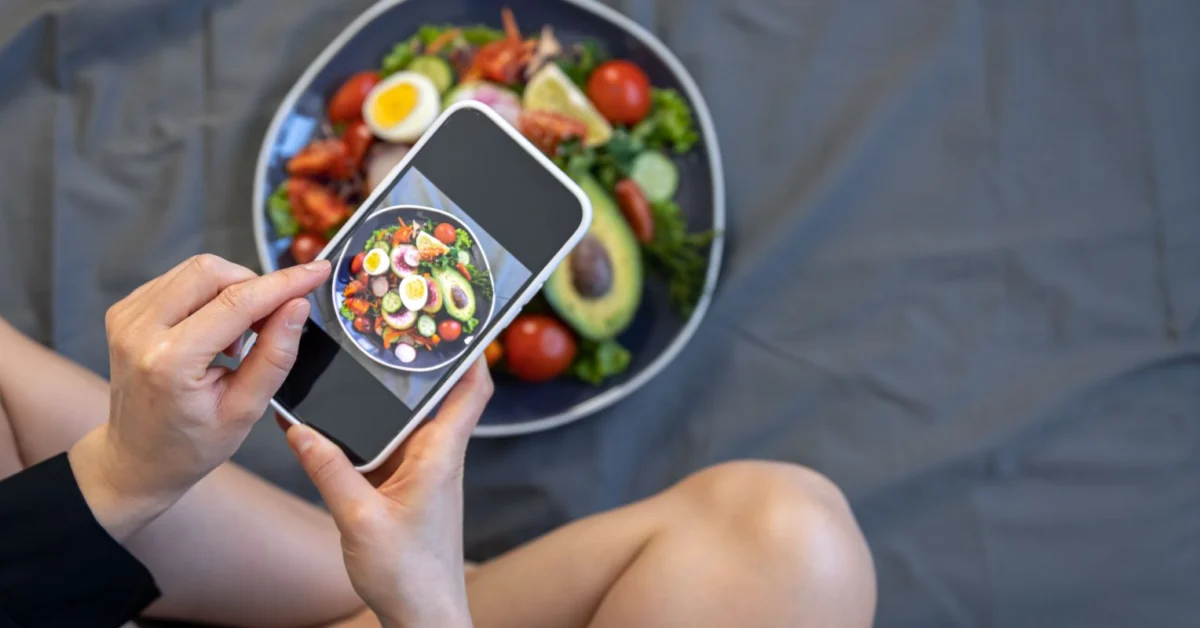
It is a familiar Sunday night ritual: you are lying in bed, the glow of your smartphone illuminating the dark room as you scroll through social media in search of a brief, mindless escape. Within seconds, the algorithm feeds you a "what I eat in a day" video. The creator displays a curated array of carb-free, calorie-depleted meals. A few swipes later, a different influencer is "jokingly" recounting a night of heavy drinking, followed immediately by a mother facetiously suggesting she requires wine to survive the stresses of parenting. Interspersed throughout are high-production ads for fitness programs promising that you can "fix your life" in three simple, transformative steps.
This is not a coincidence; it is a landscape. By the time Monday morning arrives, the message is reinforced by a coworker discussing a new restrictive diet or a friend texting about "getting ready for summer." When public figures like Tom Brady advocate for specific, rigid plant-based protocols, the narrative becomes inescapable: your body is a project, and your happiness is contingent on how well you optimize it.
The Mechanics of Diet Culture in the Digital Age
Social media platforms are ostensibly designed for connection, yet they simultaneously serve as high-speed conduits for diet culture and unattainable beauty ideals. Diet culture operates on a seductive promise—that if you attain a specific body type or adhere to a rigorous food regimen, you will achieve lasting health and happiness. In reality, it delivers a potent cocktail of shame, guilt, and pervasive anxiety surrounding food and weight.
The wellness industry, which reached a staggering $160 billion in 2024, is projected to swell to $360 billion by 2034 (Finklea, 2025). Digital creators, influencers, and brands have weaponized the modern obsession with self-care to market products, restrictive meal plans, and fitness trends. These messages often rely on the demonization of specific macronutrients or food groups, effectively fat-shaming those who do not—or cannot—conform to these rigid standards.
The Illusion of Perfection
Beneath the polished aesthetic of "wellness" influencers often lie extreme restriction, compensatory fasting, and significant psychological distress. For the average user, these images create a warped benchmark for normalcy. Research highlights a disturbing trend: nearly half (46%) of teens aged 13–17 report feeling worse about their own bodies after social media exposure. Furthermore, the REACH Institute (2025) notes that individuals spending more than three hours a day on social media are twice as likely to develop eating disorders (EDs) compared to those with limited screen time. The implication is clear: the digital environment is not merely a reflection of society, but an active participant in eroding self-esteem for profit.
A Chronology of Normalization
To understand the current crisis, we must look at how these behaviors have been systematically normalized over the last decade.
- The Early 2010s (The "Clean Eating" Era): Social media began to shift from simple photo sharing to lifestyle curation. "Clean eating" became a buzzword, masking restrictive orthorexic behaviors behind the guise of health.
- The Mid-2010s (The Fitness Influencer Boom): Instagram and YouTube prioritized "transformation" photos. The narrative shifted from general health to "gains," "shreds," and "detoxes."
- The Late 2010s (The Normalization of Coping Mechanisms): Platforms like TikTok accelerated the "wine mom" culture and the glorification of "party culture," framing alcohol as an essential tool for managing the stress of modern living.
- 2020–2025 (The Convergence): We are now seeing the intersection of these two trends. Extreme dieting and substance misuse are increasingly presented as acceptable, even aspirational, ways to cope with life’s pressures.
The Dangerous Overlap: Eating Disorders and Substance Use
While Eating Disorders (EDs) and Substance Use Disorders (SUDs) may appear distinct in their outward manifestations, they share a common psychological architecture. Both are frequently employed as maladaptive coping mechanisms—attempts to manage, suppress, or avoid underlying emotional pain, trauma, or social pressures.
According to data from the National Eating Disorders Association (NEDA, 2023), 50% of people struggling with an eating disorder also misuse alcohol or drugs. This is not a coincidence; there is an interdependent, bidirectional relationship between the two. Research indicates that one disorder can act as a catalyst for the other, creating a cycle of physiological and psychological degradation (Xi & Galaj, 2025).
The "Glamorization" Factor
Platforms like TikTok and Instagram have inadvertently created a feedback loop where extreme dieting and substance misuse are normalized as essential components of the "aesthetic" lifestyle. When an influencer displays a restrictive diet alongside an excessive intake of alcohol, they aren’t just sharing their day; they are signaling that these behaviors are compatible with success and desirability. This normalization lowers the threshold for an individual to slide from "habitual" behavior into full-blown clinical pathology, often without realizing that a problem has developed until it reaches a crisis point.
The Fatal Consequences of Co-Occurring Disorders
The intersection of these disorders is not just a mental health concern—it is a matter of life and death. Anorexia nervosa currently holds the highest mortality rate of any mental illness. When an eating disorder is complicated by substance misuse, the physical toll is compounded, and the mortality risk nearly quadruples compared to an ED alone (Mellentin et al., 2022).
The Multi-Faceted Risk
Individuals battling these co-occurring disorders face a heightened risk of:
- Suicidal Ideation and Attempts: The combination of biochemical imbalance and hopelessness significantly raises the stakes.
- Fragmented Treatment: As highlighted by Pierce, Joy, and David (2025), our current healthcare systems are often siloed. A patient might be treated for an eating disorder in one facility, only to be discharged into an environment that fails to address their underlying substance misuse. This "whack-a-mole" approach to recovery leaves patients to navigate a fractured system, often resulting in a lack of sustained progress.
- Medical Comorbidities: From cardiovascular damage caused by starvation and purging to the systemic organ failure often exacerbated by substance toxicity, the physical impact is often cumulative and, if left untreated, terminal.
Implications: A Call for Integrative Care
The reality of the digital age requires a radical shift in how we approach mental health. We cannot continue to treat these issues in isolation. Clinical care must move toward an integrative model that addresses the whole person—acknowledging the biological, psychological, and sociocultural factors that drive these behaviors.
Beyond the Algorithm
Combating the cultural pressure to look or act a certain way requires more than just clinical intervention; it requires a societal shift in digital literacy. We must empower individuals to recognize that the curated content they consume is often a commercial product designed to exploit their insecurities.
As we look toward the future, the goal must be to dismantle the "profit-from-pain" model that dominates our feeds. This involves:
- Systemic Healthcare Reform: Ensuring that treatment centers are equipped to treat co-occurring disorders simultaneously, rather than treating them as separate entities.
- Increased Regulation: Holding platforms accountable for the algorithmic promotion of content that encourages eating disorders and substance misuse.
- Community Support: Building offline spaces that prioritize genuine connection and self-worth over external validation.
The battle for mental health in the 21st century is being fought on the screens in our hands. By understanding the links between diet culture, substance use, and digital influence, we can begin to reclaim our health from a world that profits from our struggle.
References
- Dane, A., & Bhatia, K. (2023). The social media diet: A scoping review to investigate the association between social media, body image and eating disorders.
- Finklea, K. (2025). The wrong influence: The link between diet culture and eating disorder. HopeHealth.
- Mellentin, A. I., et al. (2022). The impact of alcohol and other substance use disorders on mortality in patients with eating disorders. The American Journal of Psychiatry.
- Pierce, S., Joy, J. M., & David, A. (2025). Abstinence-based treatment of comorbid eating disorders and ultra-processed food addiction. Frontiers in Psychiatry.
- The REACH Institute. (2025). Mind over minutes: How youth screen habits are impacting their mental health.
- Xi, Z.-X., & Galaj, E. (2025). Novel potential pharmacological approaches in treating eating disorders comorbid with substance use disorders. Biomedicine & Pharmacotherapy.