











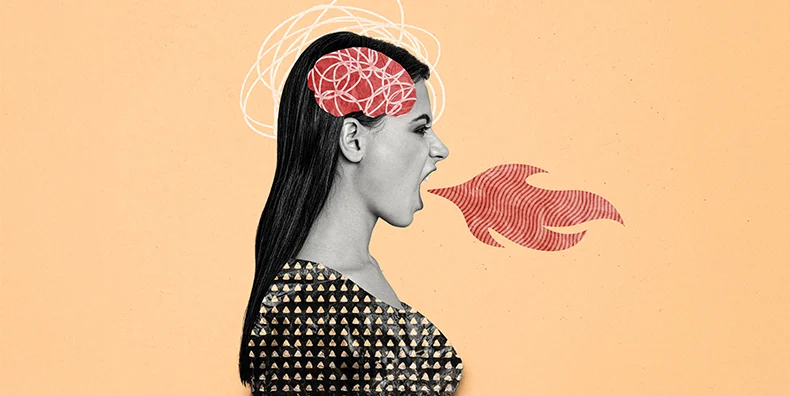
The landscape of bipolar disorder is frequently characterized by the dramatic oscillations between mania and depression. However, a third, often more destructive symptom frequently emerges from the shadows of these mood states: bipolar anger. Far from being a mere personality flaw or a temporary lapse in temper, bipolar anger is a complex, biologically driven clinical symptom that affects millions of individuals worldwide.
Recent clinical data and neuroimaging studies have begun to shed light on why this irritability occurs, how it differs from "standard" anger, and what can be done to mitigate its devastating impact on personal and professional lives.
I. Main Facts: Defining the "Red" Spectrum of Bipolar Disorder
Bipolar anger is defined as an intense, mood-driven irritability or rage that arises as a direct symptom of bipolar I, bipolar II, or cyclothymic disorder. Unlike the anger experienced by the general population, which is typically a proportional response to an external provocation, bipolar anger is often disproportionate, sudden, and difficult to de-escalate.
State vs. Trait Anger
Clinical research distinguishes between "trait anger"—a person’s baseline personality tendency to become annoyed—and "state anger," which is a temporary emotional condition. In the context of bipolar disorder, anger is primarily a "state" phenomenon. It is a physiological manifestation of a brain struggling to regulate emotion.
Internal vs. External Manifestations
Bipolar anger does not always manifest as shouting or physical aggression. For many, it is an "internalized" experience characterized by:
- Rumination: A persistent, obsessive focus on perceived slights or failures.
- Self-Criticism: Intense anger directed inward, often leading to self-harm or suicidal ideation.
- Withdrawal: A "cold" anger where the individual isolates themselves to prevent an explosion.
The Amygdala Hijack
Physiologically, bipolar anger occurs when the amygdala—the brain’s emotional processing center—perceives a threat and triggers a "fight-or-flight" response. In a neurotypical brain, the prefrontal cortex (the reasoning center) moderates this response. In a person experiencing a bipolar mood episode, this moderating influence is weakened, leading to what researchers call "emotional dysregulation."
II. Chronology: How Anger Evolves Through Mood Episodes
The presentation of anger varies significantly depending on the chronological phase of the bipolar cycle. Understanding this timeline is crucial for early intervention.
1. The Manic and Hypomanic Phase: The Frustrated Goal
During mania or hypomania, an individual experiences a surge in goal-directed energy. Anger in this phase is often a result of "reward frustration." When the individual’s rapid thoughts or ambitious plans are interrupted or questioned, the brain reacts with intense hostility.
- Early Signs: Rapid speech, interrupting others, and becoming "snappy" when others cannot keep up with their pace.
- Escalation: If the manic energy is blocked, it can transition into "manic rage," where the individual may feel invincible and lash out at those they perceive as obstacles.
2. The Depressive Phase: The Pressure Cooker
In the depressive phase, anger is often "agitated depression." While the world sees a person who is lethargic or sad, the individual’s internal experience is one of intense tension.
- The "Loud" Mind: Even when the body is slowed down, the mind may be racing with resentful thoughts.
- Social Isolation: The anger here is often used as a shield to push people away, as the individual lacks the emotional bandwidth for social interaction.
3. The Mixed Episode: The Volatile Intersection
Clinically, the most dangerous period for bipolar anger is the "mixed state." This is a chronological overlap where the high energy of mania meets the dark hopelessness of depression.
- The Explosion: Because the individual has the physical energy to act (mania) but is viewing the world through a negative lens (depression), the resulting anger is often explosive and unpredictable. Research indicates that mixed states carry the highest risk for both outward aggression and self-directed harm.
III. Supporting Data: The Science of Irritability
Recent studies have provided quantifiable evidence regarding the prevalence and impact of bipolar anger.
Statistical Prevalence
A landmark review published in Depression and Anxiety found that approximately 22.1 percent of individuals who transitioned from unipolar depression to bipolar disorder experienced "anger attacks." These attacks are defined as sudden episodes of intense anger accompanied by physical symptoms like racing heart, sweating, and chest tightness.
Neuroimaging Insights
Magnetic Resonance Imaging (MRI) studies published in the Journal of Affective Disorders have revolutionized our understanding of bipolar aggression. The data suggests:
- Inward Aggression: Contrary to popular belief, bipolar aggression is more frequently directed at the self than at others. This internal hostility is a significant predictor of suicide attempts.
- Hypersensitivity: MRI scans show that individuals in a manic state overreact to facial cues. A neutral expression on a partner’s face may be interpreted by a bipolar brain as "disapproving" or "hostile," triggering a defensive anger response.
Frequency of Outbursts
A study in Digital Health tracked individuals with bipolar disorder over time, finding that while some may go months without an incident, others experience "clusters" of irritability. During a mood episode, an individual might experience 3 to 5 significant anger events per week, highlighting the "fast-forward" nature of emotional reactions in the bipolar brain.
IV. Official Responses and Clinical Guidelines
Medical authorities, including the American Psychological Association (APA) and the National Institute of Mental Health (NIMH), emphasize a multi-modal approach to managing bipolar anger.
Pharmacological Interventions
The primary "official response" to bipolar anger is mood stabilization.
- Mood Stabilizers: Medications like Lithium or Valproate are the frontline defense, helping to "level out" the neurological spikes that lead to rage.
- Antipsychotics: In cases of severe irritability or "bipolar rage," second-generation antipsychotics are often prescribed to dampen the dopamine-driven intensity of the episodes.
Therapeutic Frameworks
Clinical guidelines recommend specific therapies designed to improve emotional regulation:
- Cognitive Behavioral Therapy (CBT): Helps patients identify the "automatic thoughts" that lead to anger.
- Dialectical Behavior Therapy (DBT): Focuses heavily on "distress tolerance" and mindfulness, teaching patients how to sit with intense anger without acting on it.
- Interpersonal and Social Rhythm Therapy (IPSRT): Focuses on stabilizing daily routines. Since sleep disruption is a primary trigger for bipolar anger, IPSRT is considered essential for long-term stability.
The Role of Sleep Hygiene
The Mayo Clinic maintains that sleep is the cornerstone of bipolar management. Clinical data shows that even one night of lost sleep can trigger a manic or irritable episode. Official guidelines suggest a strict 7-to-9-hour sleep schedule, even on weekends, to keep the brain’s emotional centers stable.
V. Implications: Social, Professional, and Personal Consequences
The implications of unmanaged bipolar anger extend far beyond the individual, creating a "ripple effect" through their entire ecosystem.
Professional Stability
Bipolar anger is a leading cause of job loss among those with the disorder. Outbursts directed at supervisors or colleagues, often interpreted as "insubordination" rather than a medical symptom, lead to frequent terminations and career instability.
The Caregiver Burden
The journal Frontiers in Psychiatry highlights the "tangible consequences" for families. Caregivers often live in a state of hyper-vigilance, "walking on eggshells" to avoid triggering an episode. This leads to high rates of "caregiver burnout," divorce, and domestic strain.
The Stigma of "The Angry Patient"
Perhaps the most damaging implication is the social stigma. While society has become more accepting of the "sadness" of depression, there remains a deep-seated fear and judgment regarding the "anger" of bipolar disorder. This stigma often prevents individuals from being honest with their doctors about their rage, fearing they will be labeled as "dangerous" or "abusive."
Conclusion: A Path Forward
Recognizing bipolar anger as a medical symptom is the first step toward reclaiming control. By combining pharmacological stability with behavioral strategies—such as identifying triggers, maintaining "life charts" to track mood patterns, and establishing "early-action plans" with loved ones—individuals can mitigate the "red" spectrum of the disorder.
As the medical community continues to refine its understanding of the bipolar brain, the goal remains clear: to transform "rage" back into "regulation," allowing those with the condition to lead stable, fulfilling lives. Bipolar anger may be a powerful force, but with the right clinical support, it does not have to be the defining feature of the individual’s identity.