











WASHINGTON — In a move signaling a major escalation in the federal government’s campaign to reshape the American healthcare marketplace, the Trump administration has issued formal warnings to more than 500 hospitals across the United States. The core of the grievance is consistent and blunt: these institutions are failing to provide the public with clear, accessible pricing information for medical services, a lack of transparency that federal officials argue artificially inflates the cost of care for millions of Americans.
This initiative, which has gained momentum since April, targets a fundamental lack of disclosure that has long shielded the healthcare industry from the market pressures of consumer competition. By failing to post standard, understandable data regarding the cost of everything from routine blood work to complex imaging tests, these hospitals are accused of keeping patients, employers, and private insurers in the dark—ultimately forcing them to pay more than necessary for essential procedures.
The Scope of Enforcement and Financial Penalties
The list of non-compliant institutions, obtained exclusively by The Associated Press, highlights a nationwide problem that spans both rural clinics and major urban health systems. The warnings represent a significant tightening of the administration’s regulatory grip. Under the current enforcement framework, hospitals that fail to respond to these letters or neglect to submit robust plans for price disclosure face severe financial consequences, with penalties reaching as high as $2 million annually per facility.
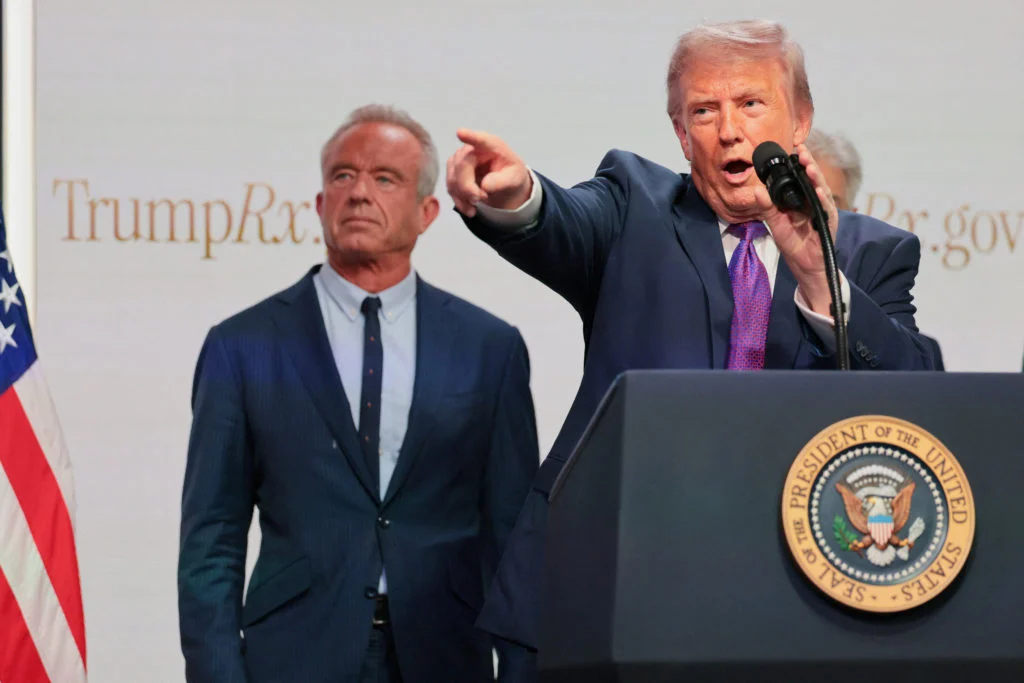
A senior administration official, speaking on the condition of anonymity, confirmed that President Donald Trump is committed to accelerating the enforcement of standards established under his 2019 executive order. The official indicated that this current batch of warnings is likely just the beginning, with further audits and enforcement actions planned as the administration seeks to solidify price transparency as a cornerstone of its healthcare legacy.
A Chronology of the Transparency Push
The path to this moment began years ago, driven by the belief that a lack of "shoppable" pricing is a market failure.
- 2019: President Trump signs an executive order mandating that hospitals provide clear pricing information to help patients understand their financial obligations before receiving care.
- Post-2019 Implementation: Despite federal requirements, adoption remained sluggish across the industry. Many hospitals claimed that the complexity of medical billing made standardized, public pricing nearly impossible to display accurately.
- April 2024 to Present: The administration shifted from an educational phase to an enforcement phase. The Department of Health and Human Services (HHS) and the Centers for Medicare & Medicaid Services (CMS) began systematically auditing hospital websites, resulting in the current wave of warning letters and requests for corrective action plans.
- Mid-2025: As the election season approaches, the administration has pivoted toward aggressive enforcement, utilizing the threat of multi-million dollar fines to compel compliance.
Supporting Data: Where the System Falls Short
The data regarding non-compliance reveals a geographically diverse issue, though the impact is particularly acute in several Republican-leaning states. Texas leads the nation with 42 hospitals receiving warnings, followed closely by Indiana and California.
Interestingly, the disparity between states like Indiana and California—which have vastly different population sizes yet similar numbers of non-compliant hospitals—suggests that the issue of price transparency is systemic rather than purely regional.
Gary Claxton, senior vice president and director of the program on the healthcare marketplace at the Kaiser Family Foundation (KFF), suggests that while the initiative is moving in the right direction, it remains a "work in progress."
"There is a widespread belief that prices are more divergent than they should be in a competitive market," Claxton said. "However, the data being produced is often more useful to benefit consultants and insurers who have the analytical tools to parse it than it is to the average patient trying to compare costs at their local emergency room."
Official Responses and Industry Defense
The reaction from the hospital sector has been a mix of cooperation and defensive clarification. The American Hospital Association (AHA) has issued statements emphasizing that its members broadly support the goal of price transparency.
"The current system is not working as well as it could for patients," said Ashley Thompson, senior vice president for policy at the AHA. She added that the association is committed to working with the administration to refine these reporting standards to ensure they are both meaningful for patients and manageable for providers.
Individual hospital systems have also moved to mitigate the impact of the warning letters. For instance, the University of Texas MD Anderson Cancer Center, one of the nation’s premier facilities, noted that the warning they received was the result of a "minor formatting issue involving a date field." Once identified, the center stated, the error was corrected and subsequently accepted by the federal government. Similarly, Missouri-based Ascension, one of the largest health systems in the country, described their warnings as "minor technical errors" and reaffirmed their commitment to the spirit of the transparency mandate.
Political Implications: A Calculated Pitch
The timing of this crackdown is not coincidental. With affordability serving as a top-tier concern for American voters, President Trump is leaning into a narrative of "fixing the system." The administration views price transparency as a tangible way to provide immediate relief to families crushed by medical debt, framing it as a direct challenge to the status quo of the medical-industrial complex.
However, the political landscape is complex. While Trump pushes transparency, his administration faces criticism regarding the sunsetting of subsidies for those insured through the Affordable Care Act (ACA). Recent polling from the AP-NORC Center for Public Affairs Research indicates that only 29% of U.S. adults approve of Trump’s healthcare policies. In a climate where many Americans report cutting back on necessities like food to afford health insurance premiums, the administration’s focus on hospital pricing is a high-stakes attempt to pivot the conversation toward consumer-friendly market reform.
Philosophical Divides in Healthcare Policy
The current dispute underscores a fundamental divide between Republican and Democratic approaches to healthcare.
The Biden administration, in its previous tenure and influence, focused heavily on expanding coverage and negotiating drug prices directly through Medicare. By leveraging the scale of the federal government, they successfully reduced costs for specific high-expenditure drugs.
Conversely, the Trump administration’s approach relies on the "data-first" philosophy. By forcing hospitals to make pricing public, the administration is betting that the resulting transparency will foster genuine competition. The logic is that once prices are easily searchable—much like airfare or retail goods—hospitals will be forced to lower their rates to attract patients. Critics, however, argue that healthcare is not a typical consumer market; patients in emergency situations rarely have the luxury of "shopping around," regardless of how transparent the pricing might be.
Looking Ahead: The Future of Transparency
The House Committee on Energy and Commerce is slated to hold a hearing on the matter, signaling that the pressure on hospitals will likely increase. Advocates like Shawn Gremminger, CEO of the National Alliance of Healthcare Purchaser Coalitions, argue that "transparency is the foundation of a healthcare system that rewards competition based on cost and quality."
As the administration continues to audit hospital websites and demand compliance, the medical industry faces a new reality. The era of "black box" pricing is coming to an end, at least in theory. Whether this shift will result in lower premiums and out-of-pocket costs for the average American remains to be seen. For now, the administration is betting that if they can force the data into the light, the market will eventually force the prices down, creating a more efficient and accountable healthcare system for the future.