





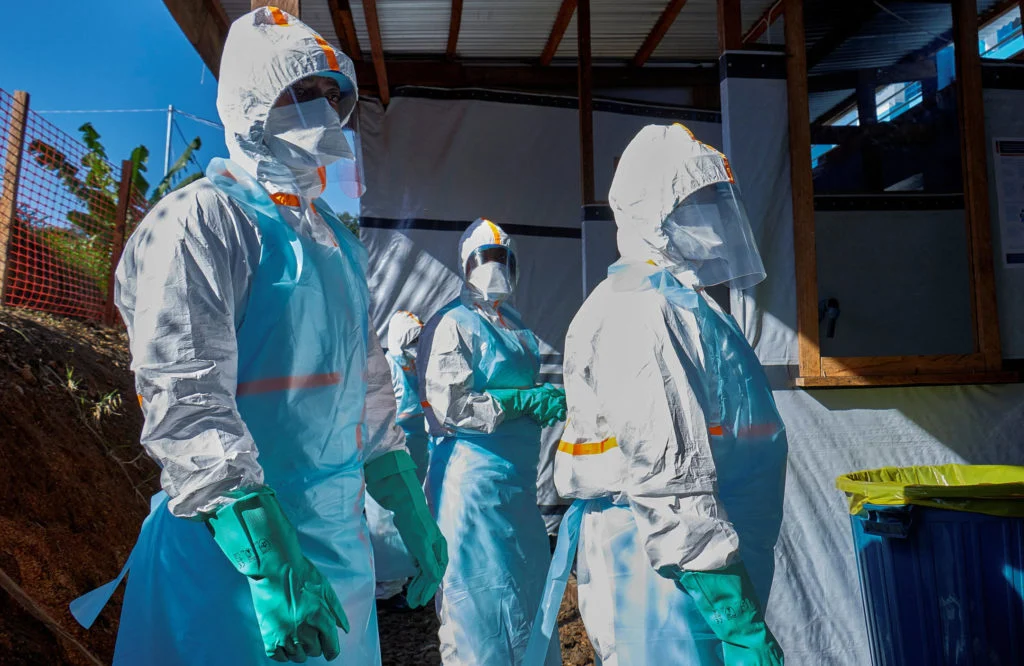
The Ebola virus, a lethal pathogen known for its high mortality rate and rapid transmission, has once again emerged as a significant threat to international public health. Currently ravaging regions within the Democratic Republic of the Congo (DRC) and Uganda, the outbreak is demonstrating a disturbing trajectory of escalation. Health officials report that more than 120 lives have already been claimed, with confirmed cases surpassing 630. Experts warn that these figures represent a conservative estimate, as the virus’s reach into densely populated urban areas suggests a silent, wider spread that has yet to be fully captured by current surveillance systems.
The Current State of the Outbreak: Facts and Figures
The situation on the ground in the DRC and Uganda is characterized by a "perfect storm" of compounding obstacles. The virus has successfully breached metropolitan borders, most notably in the city of Bunia in the Ituri province. Urban transmission presents a distinct challenge compared to rural outbreaks; the higher population density allows for exponential growth in contact tracing requirements, which are currently failing to keep pace with the virus.
In a recent interview, Jeremy Konyndyk, President of Refugees International and former head of USAID’s foreign disaster assistance, highlighted the gravity of the situation. "Just from yesterday to today, they have added more than 30 new cases," Konyndyk noted, emphasizing that such a sharp daily increase mirrors the early, chaotic stages of the 2014 West African epidemic—an event that eventually spiraled into a global health catastrophe.
The medical community is also grappling with a significant technical hurdle: the specific strain involved in this outbreak, the Bundibugyo species, lacks a proven, widely available vaccine. This leaves responders with a "limited toolkit," forcing them to rely heavily on traditional containment strategies—isolation, contact tracing, and safe burial practices—while the pathogen continues to gain momentum.
Chronology of the Crisis and Structural Challenges
To understand the current failure to contain the virus, one must look at the timeline of the response. The outbreak was not immediately recognized, allowing the virus to establish a foothold in vulnerable communities before authorities could mobilize.
Key Phases of the Current Response:
- Delayed Recognition: The virus circulated undetected for months, allowing it to migrate from remote areas into major transport and commercial hubs.
- Conflict Complications: The outbreak is unfolding in regions plagued by long-standing armed conflict. This creates a dual burden: health workers are not only battling a biological threat but are also operating in environments where security is tenuous and infrastructure is nonexistent.
- Community Mistrust: The Ebola response has been hampered by deep-seated suspicion. In many instances, local populations, wary of foreign intervention and the perceived "outsider" nature of the health response, have turned hostile. There have been documented reports of attacks on clinics and medical personnel, further impeding the delivery of care and the ability to conduct contact tracing.
The Erosion of International Leadership
A primary critique leveled by global health experts is the perceived retreat of the United States from its traditional role as the lead coordinator in global health security. During the 2014 West African Ebola crisis, the U.S. response was a hallmark of diplomatic and logistical mobilization. Under the Obama administration, the U.S. leveraged the full weight of the U.S. Agency for International Development (USAID), the Centers for Disease Control and Prevention (CDC), and the Department of Defense to support local health workers in Liberia, Sierra Leone, and Guinea.
"President Obama went to the U.N. General Assembly in September of 2014 to rally the world to mobilize a massive response," Konyndyk recalls. "Without that, it would have been very, very difficult to contain that outbreak. There’s nothing like that level of diplomatic ambition here."
Critics argue that the systematic dismantling of USAID’s operational capacity and the general shift in U.S. foreign policy toward isolationism have left a vacuum. The institutional knowledge and established partnerships that were essential for navigating local social dynamics in 2014 have been largely eroded, leaving current responders without the "trusted voices" necessary to communicate the reality of the virus to local communities.
Official Responses and Administrative Defense
In response to growing criticism regarding the adequacy of the American involvement, current U.S. administration officials have defended their strategy. Jay Bhattacharya, the current director of the National Institutes of Health (NIH) and acting director of the CDC, has pushed back against claims of institutional failure.
In a recent op-ed for The Wall Street Journal, Bhattacharya characterized the current American strategy as "scientifically justified, sensitive to the epidemiological facts, and specifically tailored to contain the outbreak."
However, this defense has been met with skepticism by public health experts. The criticism is not necessarily directed at the scientific validity of the individual protocols, but rather at the scale and organizational focus of the response. Experts like Konyndyk question the lack of transparency in the strategy: "What I want to know is, how many Ebola treatment units have we set up? How many NGO partners are we funding? What are the specifics of the response they’re rolling out?"
The absence of a robust partnership between the U.S. and the World Health Organization (WHO)—exacerbated by the U.S. withdrawal from the organization—has further complicated matters. In previous large-scale outbreaks, the synergy between U.S. logistical might and the WHO’s global oversight was the engine of containment; that engine is currently fractured.
The "Kenya Isolation" Controversy and Ethical Implications
The controversy surrounding the proposal to establish an Ebola isolation unit in Kenya has further strained diplomatic relations and public perception. The plan, which would have seen infected patients evacuated to a specific facility in Kenya, faced intense backlash and street protests.
The ethical core of this debate centers on the perception of double standards. After 2014, the United States invested heavily in domestic, high-containment isolation units specifically designed to handle pathogens like Ebola. These facilities are arguably the safest in the world.
"We have a lot of capacity. We have put a lot of time and effort into that," Konyndyk explained. "And instead, we’re saying to Kenya, ‘This is such a disease that we do not dare bring it to the United States… but, hey, Kenya, it’s fine for you to deal with this.’"
This approach has been viewed by regional stakeholders as a form of "health colonialism," where the risks are offloaded to nations with fewer resources, despite the existence of superior containment capabilities in the U.S.
Future Implications: A Call for Re-engagement
The trajectory of the current outbreak suggests that without a massive, immediate, and coordinated international intervention, the death toll could mirror or exceed the devastating figures seen in 2014 and 2018. The implications are not just regional; in an interconnected global economy, an uncontrolled Ebola outbreak in urban centers represents a significant threat to global health security.
To reverse the current trend, experts argue that the international community must pivot back to a model of radical cooperation:
- Surging Resources: The immediate deployment of mobile treatment units and medical supplies is critical.
- Diplomatic Mobilization: A high-level diplomatic push is needed to align the U.S., the WHO, and local African governments into a unified command structure.
- Community-Centric Health Models: The response must move beyond clinical intervention. Success depends on partnering with local civil society and non-governmental organizations to rebuild trust and ensure that health messages are culturally resonant and accepted.
- Institutional Restoration: Re-investing in the bureaucratic and logistical infrastructure of agencies like USAID is essential to ensure that the U.S. has the "whole-of-government" tools required to react to future crises.
As the situation in the DRC and Uganda reaches a critical juncture, the world is watching to see if the lessons of the past will be ignored or if a new era of proactive, globalized crisis management will emerge. The cost of inaction is not merely measured in dollars, but in the thousands of lives that remain at risk as the virus continues its silent, deadly advance.