





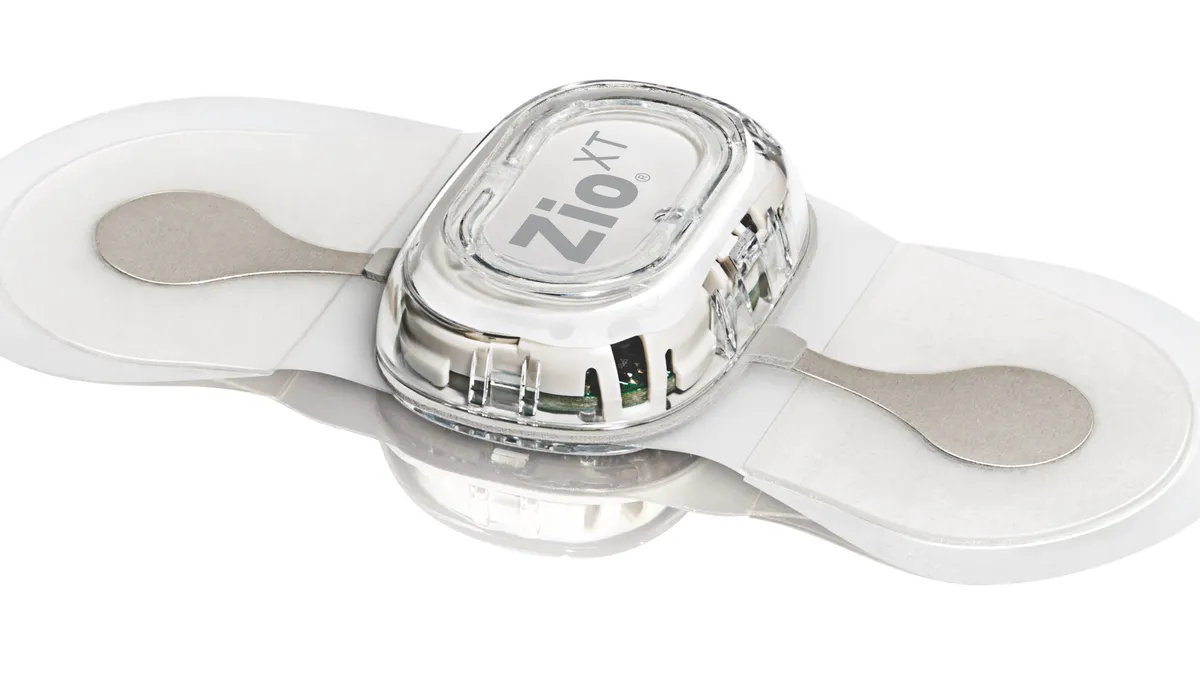
In a chilling reminder of the escalating cyber threats facing the healthcare industry, cardiac monitoring pioneer iRhythm Technologies has become the latest high-profile victim of a targeted data breach. The San Francisco-based company, renowned for its Zio XT patch technology, confirmed on Monday that it is currently navigating the aftermath of a sophisticated ransomware incident that resulted in the exfiltration of sensitive, proprietary, and protected health information (PHI).
The incident highlights a growing trend of "social engineering" attacks directed at medical technology firms, raising critical questions about the security of third-party business applications and the increasing risk to patient privacy in an era of hyper-connected healthcare systems.
Main Facts: The Scope of the Incident
According to a formal securities filing submitted by iRhythm, the breach was discovered on June 8, 2026. The threat actor, whose identity remains unknown, utilized social engineering tactics to bypass security protocols and gain unauthorized access to specific third-party-hosted business applications used by the company.
The breach is significant because it involves the theft of sensitive data. In a subsequent communication, the threat actor explicitly claimed possession of "proprietary data, patient protected health information (PHI), and other personal information." The attacker has since issued a formal ransom demand, threatening to release the exfiltrated data to the public unless a payment is made.
Crucially, iRhythm has provided assurances that the breach was confined to their corporate business systems. The company’s core clinical infrastructure—the medical devices themselves, the data processing platforms that analyze patient heart rhythms, and the manufacturing and distribution chains—remain unaffected.
Chronology of the Breach
The timeline of the incident reflects the rapid escalation characteristic of modern cyber-extortion schemes:
- June 8, 2026: iRhythm Technologies detects unauthorized activity within its third-party-hosted business applications. The company immediately initiates its internal cybersecurity response plan, isolating the affected systems.
- June 9, 2026: A threat actor contacts the company, asserting that they have successfully exfiltrated sensitive corporate and patient data. The communication includes a demand for payment in exchange for non-disclosure of the stolen information.
- June 10–14, 2026: iRhythm engages external cybersecurity forensic experts and legal counsel to assess the extent of the damage. Preliminary investigations confirm that specific data files were indeed exfiltrated from the compromised applications.
- June 16, 2026: iRhythm makes a public disclosure via a securities filing, confirming the attack, the data theft, and the extortion attempt.
The Rising Tide of Cyberattacks in Medtech
The attack on iRhythm is not an isolated event but rather part of a broader, disturbing pattern within the medical technology sector. As these companies digitize their operations to improve patient outcomes, they inadvertently expand their "attack surface."
The Stryker Precedent
In March 2026, medical device giant Stryker was crippled by a cyberattack that forced the company to halt ordering, shipping, and manufacturing operations for several weeks. The financial impact of this downtime was significant, manifesting as a drag on the company’s first-quarter fiscal performance. Stryker’s experience serves as a stark warning of the operational, rather than just data-based, risks that modern medtech firms face.
Intuitive Surgical and Medtronic
The industry has been under a barrage of activity throughout the year. Surgical robotics leader Intuitive Surgical disclosed a phishing incident in the same month as the Stryker attack, resulting in the unauthorized access of customer contact information and internal corporate data. Shortly thereafter, in April, medical device behemoth Medtronic reported that an unauthorized third party had gained access to its corporate IT systems.
These incidents demonstrate that cybercriminals are diversifying their strategies—moving from broad phishing campaigns to surgical strikes against specific corporate applications that hold high-value information.

Official Responses and Strategic Containment
iRhythm has been quick to manage the narrative, focusing on the distinction between their administrative systems and their patient-facing clinical tools. In an official statement posted to their corporate website, the company emphasized that there has been no compromise to patient safety or the integrity of their diagnostic services.
"We have not identified any impact to our products, our clinical or medical device systems, our connections to customers, our manufacturing and distribution operations, patient safety, or our ability to meet patient needs," the company stated.
Furthermore, iRhythm sought to reassure stakeholders regarding the nature of the data involved. "We do not store or retain individual financial account information or payment card information," they clarified, a move designed to mitigate fears of widespread financial fraud among their patient base.
Regarding the ransom demand, iRhythm has remained tight-lipped. When pressed by media outlets for comment on whether a payment was made or whether they intended to negotiate with the threat actor, the company declined to provide specifics. This silence is standard practice, as law enforcement and cybersecurity experts generally advise against paying ransoms, as it does not guarantee the deletion of stolen data and often marks the victim as a repeat target.
Implications: The High Stakes of Third-Party Vulnerability
The iRhythm incident underscores a fundamental shift in cybersecurity risk management: the "Third-Party Trap."

The Security-Efficiency Paradox
Companies like iRhythm rely on an ecosystem of SaaS (Software as a Service) providers to manage everything from payroll and HR to supply chain logistics and customer relationship management (CRM). While these third-party applications drive efficiency, they also serve as potential entry points for attackers. If a vendor’s security is compromised, or if a company fails to properly secure its configuration of that third-party software, the consequences can be catastrophic.
The Financial and Regulatory Horizon
From a financial perspective, iRhythm currently believes the incident will not have a "material impact" on its operations. This is bolstered by the company’s investment in cybersecurity insurance, which is designed to cover the costs of forensic investigations, legal fees, and potential liability settlements.
However, the regulatory implications are another matter. Under HIPAA (Health Insurance Portability and Accountability Act) in the United States, the breach of protected health information triggers mandatory reporting requirements. If the investigation reveals that a significant number of patient records were exposed, the company could face extensive audits, potential fines from the Office for Civil Rights (OCR), and a wave of class-action litigation.
The Future of Trust
The most profound implication, however, is the erosion of trust. Cardiac monitoring is a deeply personal service; patients rely on these devices to detect life-threatening arrhythmias. When a company responsible for that data is perceived as insecure, the reputation of the brand—and by extension, the broader adoption of remote monitoring technologies—can suffer.
Moving Forward: Resilience as a Competitive Advantage
As the dust settles on this incident, iRhythm faces the arduous task of forensic analysis. The company has publicly committed to identifying the scope of the data involved and, crucially, notifying the individuals affected.
The incident serves as a wake-up call for the entire medtech sector. In the coming months, we can expect to see an increased focus on:
- Zero-Trust Architectures: Moving away from the assumption that internal or "trusted" third-party applications are inherently safe.
- Advanced Identity Management: Implementing stricter multi-factor authentication and behavioral analytics to catch the social engineering tactics that likely led to this breach.
- Vendor Risk Management: Tightening the security requirements for all third-party software vendors, ensuring that their security protocols meet the same rigorous standards as the medical device manufacturers themselves.
For iRhythm, the path forward involves transparency and rigorous remediation. While the immediate threat to their clinical systems has been mitigated, the long-term challenge will be demonstrating that their security infrastructure is as robust as the life-saving technology they provide to patients worldwide. As of Monday, the company continues to work with cybersecurity experts and law enforcement, maintaining a "business as usual" posture for their clinical operations while they investigate the nature and scope of the breach.
In a digital landscape where data is the new currency, iRhythm’s experience is a sobering reminder that for the modern medical technology company, the most important diagnostic tool isn’t a heart monitor—it’s a proactive, ironclad approach to cybersecurity.