











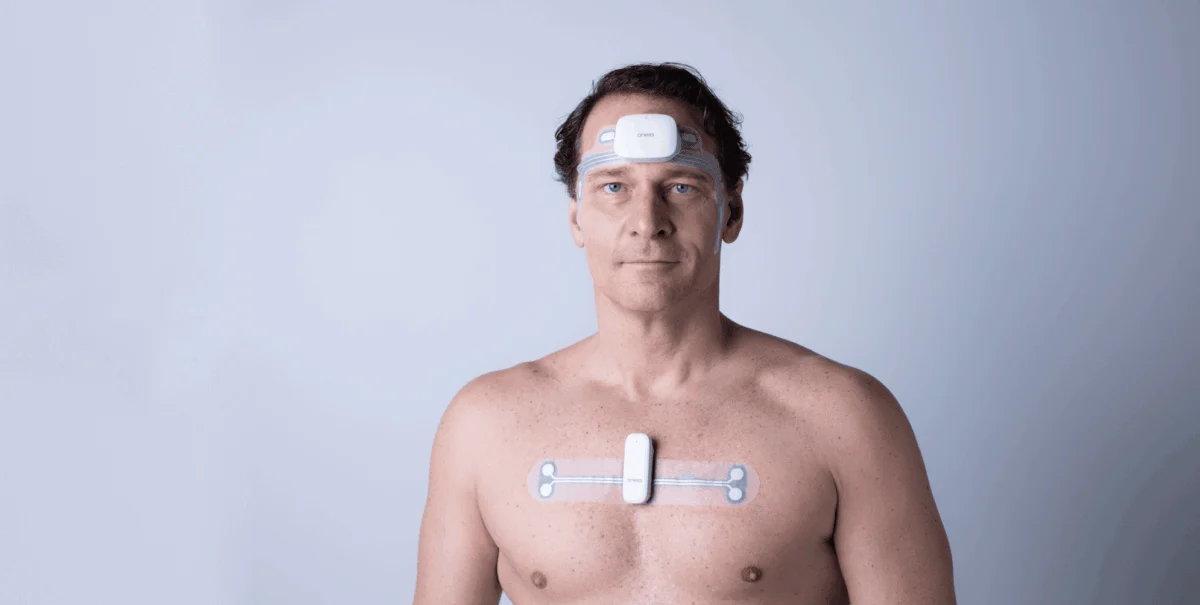
In a significant move to advance the efficiency of sleep medicine, Onera Health, a leader in transforming sleep diagnostics, has announced a new integration between its innovative Onera hPSG (home polysomnography) system and Somnoware, the prominent sleep lab management platform now under the ResMed umbrella. This partnership aims to bridge the gap between high-fidelity home-based diagnostics and clinical workflow management, promising to reduce administrative burdens while enhancing the quality of patient care.
Main Facts: A Unified Diagnostic Ecosystem
The core of this collaboration is the technical interoperability between the Onera hPSG system and the Somnoware software suite. Historically, clinicians utilizing home sleep testing (HST) or home-based PSG have often struggled with "platform fatigue"—the necessity of logging into multiple, siloed cloud environments to manage patient data, interpret study results, and generate final reports.
By integrating Onera’s cloud-based diagnostic platform with Somnoware’s established lab management software, the two companies have effectively created a single-pane-of-glass experience. Once a patient completes an Onera hPSG study, the data is automatically synthesized and pushed directly into the Somnoware environment.
Key benefits of this integration include:
- Automated Data Flow: The elimination of manual file transfers, which often introduce risks of data corruption or HIPAA-related administrative errors.
- Centralized Review: Clinicians can now review, score, and interpret sleep studies without leaving the Somnoware interface.
- Integrated Reporting: Final diagnostic reports are generated and managed within the existing clinical workflow, accelerating the path from testing to treatment recommendation.
Chronology: The Evolution of Sleep Diagnostics
To understand the significance of this integration, one must look at the recent evolution of sleep diagnostics. For decades, the gold standard for sleep disorder diagnosis—such as Obstructive Sleep Apnea (OSA)—was the In-Lab Polysomnography (iPSG). These studies required patients to spend the night in a clinical facility, tethered to cumbersome equipment under the observation of a sleep technician.
However, the industry has seen a massive shift toward home-based solutions.
- The Early 2010s: The rise of simplified home sleep apnea testing (HSAT) devices, which offered convenience but lacked the depth of clinical data provided by a full PSG.
- The Late 2010s: The emergence of companies like Onera Health, which sought to close the "fidelity gap" by developing wearable, medical-grade PSG systems capable of providing in-lab quality data in the comfort of a patient’s home.
- The 2020s: The acquisition of Somnoware by ResMed signaled a market-wide pivot toward integrated, cloud-native management platforms.
- The Current Moment: The Onera-Somnoware integration represents the convergence of high-fidelity hardware and intelligent software management, signaling that the future of sleep medicine is not just about the device, but the ecosystem in which that device operates.
Supporting Data: The Efficiency Imperative
The sleep medicine industry is currently facing a "demand crisis." As awareness of sleep-disordered breathing grows, the number of patients seeking diagnostics far outpaces the capacity of traditional sleep labs. According to the American Academy of Sleep Medicine (AASM), the wait times for in-lab studies can stretch into months, leading to patient drop-off and delayed treatment for chronic conditions that have long-term cardiovascular and metabolic consequences.
Data from recent clinical pilots suggests that shifting to a streamlined home-based workflow can yield significant operational improvements:
- Reduction in Turnaround Time: Integrated workflows have been shown to reduce the time between study completion and report finalization by an estimated 30% to 45%.
- Administrative Overhead: By automating the ingestion of study data, labs report a decrease in manual data entry errors, allowing sleep technologists to focus on interpretation rather than administrative upkeep.
- Scalability: As healthcare systems move toward "value-based care," the ability to scale diagnostic services without the high overhead of physical lab space is becoming a critical metric for profitability and clinical success.
Official Responses: The Vision for Integrated Care
The leadership teams behind this integration view it as a necessary step in the digital transformation of sleep centers.
"The integration with Somnoware is a welcomed enhancement that broadens access to the Onera hPSG solution," said Ruben de Francisco, founder and CEO of Onera Health. "Many sleep centers are customers of both Onera and Somnoware. We are very pleased that the integration of our cloud-based platforms will enable clinicians to benefit from a streamlined clinical workflow while providing access to comprehensive sleep diagnostics, including web-based study review and reporting capabilities."
The sentiment reflects a broader industry push toward interoperability. By leveraging Somnoware’s infrastructure, Onera is essentially "plugging in" to the existing nervous system of thousands of sleep labs. This lowers the barrier to entry for labs that might otherwise be hesitant to adopt new home-testing hardware due to the perceived difficulty of integrating new software into their established practices.
Implications for Patients and Clinicians
The implications of this integration are profound, extending from the administrative office to the patient’s bedroom.
For the Clinician: Reduced Cognitive Load
Clinicians, particularly sleep physicians and technicians, suffer from high rates of professional burnout, often attributed to the complexity of electronic health records (EHR) and diagnostic software. By minimizing the number of systems a clinician must navigate, the Onera-Somnoware integration reduces cognitive load. It allows the physician to focus their expertise on the diagnostic interpretation itself rather than the logistics of moving files between platforms.
For the Patient: A Better Experience
For the patient, the benefit is twofold. First, the move toward high-fidelity home PSG means they can undergo testing in their own environment, which typically leads to more representative sleep data compared to the "first-night effect" seen in clinical labs. Second, the backend efficiency of the integration means they receive their results and subsequent treatment plans faster. A faster diagnostic loop means a faster start to CPAP therapy or other interventions, which is essential for patients suffering from severe sleep apnea.
For the Industry: The Shift to "Care Everywhere"
This partnership is a clear indicator that the industry is moving toward a decentralized care model. The ability to perform a gold-standard diagnostic study at home, manage it through a unified cloud platform, and deliver results remotely is the cornerstone of the "Care Everywhere" philosophy. As ResMed continues to influence the software landscape through its ownership of platforms like Somnoware, we can expect to see further integrations that prioritize user experience and clinical velocity.
Future Outlook: What’s Next?
While this integration is a major milestone, it is likely just the beginning of a broader trend toward the automation of sleep medicine. Future developments in this space may include:
- AI-Driven Scoring: Leveraging AI to perform initial scoring of the Onera hPSG data within the Somnoware platform, allowing technicians to focus only on verification.
- Predictive Analytics: Utilizing the combined data from Onera and Somnoware to predict patient adherence to therapy before it even begins.
- Expanded Telehealth Integration: Further tightening the loop between remote diagnostics and remote therapy management, effectively turning the entire patient journey into a seamless digital experience.
In conclusion, the integration of Onera Health’s hPSG with the Somnoware platform is more than just a software update; it is a structural improvement to the way sleep medicine is practiced. By removing the friction from the diagnostic process, Onera and Somnoware are helping ensure that the future of sleep health is faster, more efficient, and, most importantly, more accessible to the millions of people who need it most.