









The trajectory of a scientist is rarely a straight line. It is a grueling, decades-long marathon of intellectual discovery, persistent rejection, and high-stakes training. For students from underrepresented backgrounds, that path is often obstructed by systemic barriers that make the dream of a Ph.D. seem like an impossibility. For thirty years, the National Institutes of Health (NIH) sought to flatten these hurdles through two flagship initiatives: the Research Initiative for Scientific Enhancement (RISE) and the Minority Access to Research Careers (MARC).
Now, as the curtain falls on these programs, a landmark study published in Science Advances provides the most rigorous evidence to date that these initiatives were not merely well-intentioned—they were transformative. The 20-year study concludes that participating in RISE or MARC effectively doubled the likelihood that an undergraduate student would go on to earn a Ph.D. Yet, this validation arrives in a hollow vacuum: both the programs themselves and the funding for the study analyzing their success have been abruptly terminated by the current administration.
The Genesis and Goal: A Mandate for Inclusion
The roots of these programs trace back to the NIH Revitalization Act of 1993, a legislative milestone that explicitly tasked the agency with increasing the number of underrepresented minorities engaged in biomedical and behavioral research. The resulting programs were designed as structured pipelines.
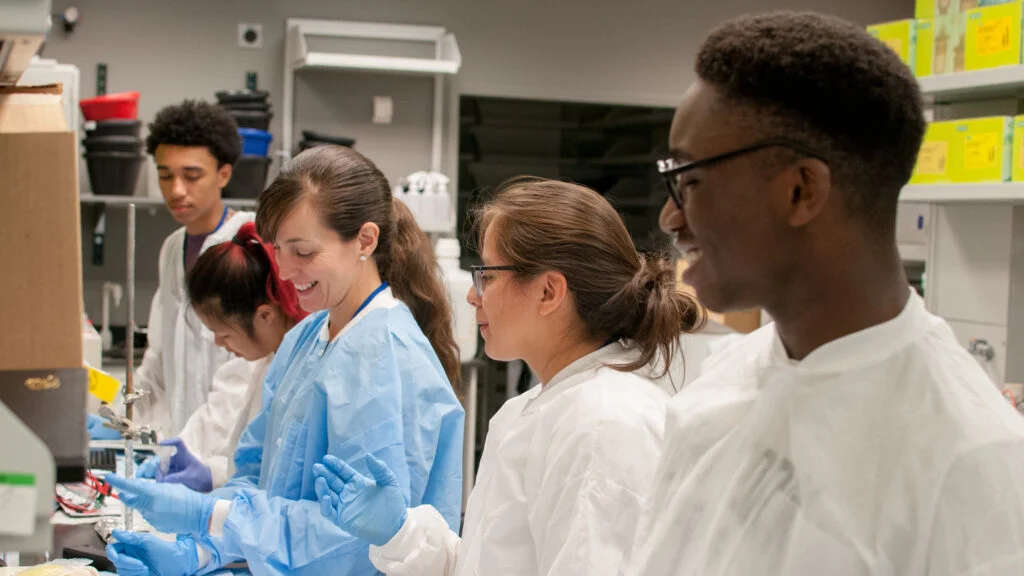
The MARC program functioned as an intensive training ground, providing two years of direct funding to undergraduates to conduct high-level research alongside professional development. RISE, meanwhile, took an institutional approach, providing grants to universities to build the infrastructure, mentorship, and educational scaffolding necessary to propel students into graduate-level science.
For decades, these programs acted as a quiet engine of the American research workforce. By the time the MARC program reached its mid-life, one study estimated that it had supported approximately 9,000 students between 1986 and 2013 alone. These were not just statistics; they were individuals who had been nurtured through the "leaky pipeline" of academia, often becoming the first in their families to obtain advanced degrees.
Chronology of a Scientific Intervention
In the early 2000s, as these programs matured, NIH administrators faced a difficult question: How do we know if these are actually working?
Clif Poodry, then-director of the division on Workforce Development and Diversity at the National Institute of General Medical Sciences, recognized that anecdotal success stories were insufficient. In 2005, Poodry and his colleagues initiated a bold, long-term study. They decided to treat these diversity programs with the same rigor as a clinical medical trial. The goal was to isolate the specific mechanisms—the "active ingredients"—of mentorship and financial support that allowed students to flourish.
For two decades, the research team tracked participants. However, the path to proving success was fraught with methodological complexity. RISE and MARC directors, tasked with selecting the brightest, most motivated students, naturally engaged in "cherry-picking." This created a selection bias: the students in the program were likely to succeed regardless.
To overcome this, social psychologist Anna Woodcock and her team employed a "twin" methodology. They identified students who were identical to the program participants in every measurable way—academic preparation, GPA, career aspirations, and first-generation status—but who, for various reasons, had not participated in the RISE or MARC programs.
Supporting Data: The Power of Mentorship
The results, published this week, are staggering in their clarity. By matching 608 program participants against a comparison group of 135 peers, the researchers found a profound divide in outcomes.
Among students in the RISE program, 20% went on to earn a Ph.D., compared to only 10% in the comparison group. The MARC program showed even more dramatic results: 34% of participants earned their doctorates, compared to just 15% of the control group.
"I believe in mentoring, and I believe it works," says Donna Ginther, an economist at the University of Kansas who has famously documented racial funding gaps at the NIH. "So I’m not surprised at the finding at all, but I think it’s very important to underscore it in this environment."
Despite these findings, the study remains incomplete. The researchers possess a wealth of data regarding the students’ publication records, graduate school satisfaction, and early career trajectory up until 2024. Whether this data will ever be fully analyzed remains uncertain, as the administration’s funding cuts have effectively paralyzed the research team’s ability to finalize their conclusions.
The Political Pivot: A Chilling Effect
The termination of RISE and MARC—and the simultaneous withdrawal of funding for the study measuring their efficacy—represents a tectonic shift in the NIH’s approach to workforce development.
For the researchers who spent their careers building these programs, the news is catastrophic. "The word that comes to mind is heartbreaking," says Woodcock. "It’s just absolutely crushing to spend 20 years of a career doing this work to find it cut so abruptly."
Clif Poodry, now retired, echoes this sentiment with a sense of profound loss. "When I thought of all the people that we have helped, all the people who have come through and are now in academic positions, research positions, teaching positions… and to have that cut back, so that we can’t provide that same support for the next generation of students—I was really very sad."
The NIH has remained silent, declining to provide comments on the findings of the study or to offer a public justification for the termination of the programs.
Implications: The Future of American Science
The impact of these cuts extends far beyond the students who lost their support systems. There is a growing fear among the scientific community that the dismantling of these programs will trigger a broader exodus from academic science.
A chilling warning was issued this week by the National Bureau of Economic Research (NBER). In a survey of 916 early-career biomedical researchers, the data revealed a sharp decline in the intention to remain in academia—or even to stay in the United States. Only half of those surveyed indicated a likelihood of remaining in the academic path, a staggering 22-percentage-point drop from just six months ago.
The authors of the NBER report were stark in their assessment: "Our survey documents a substantial and broad-based shift in their career intentions—a signal that the next generation is reconsidering its commitment to American science. What can be disrupted in a single year may take a generation to rebuild."
Conclusion: The Cost of Discontinuity
The findings in Science Advances offer a sobering lesson in the nature of scientific progress. It took twenty years to gather the data required to prove the efficacy of these diversity initiatives. It took a single policy shift to dissolve them.
As the American research landscape faces this period of uncertainty, the loss of RISE and MARC stands as a cautionary tale. While political winds may shift, the pipeline of human talent requires consistent, long-term investment. By severing the supports that helped historically underrepresented groups enter the fold, the administration may be doing more than just saving budget line items; they may be effectively discouraging a generation of future innovators from ever stepping into the lab.
For those who have spent their lives fighting to make science more inclusive, the evidence is clear: mentorship works, diversity drives success, and the path to a Ph.D. is far too difficult to navigate alone. Without these programs, the "long and twisting" path to becoming a scientist may soon become a wall that only the most privileged can climb.