As we navigate our fifties and beyond, the biological landscape of our bodies begins to shift. One of the most common aesthetic and functional concerns for adults in this age bracket is the appearance of "arm jiggle"—the loose skin and softening muscle mass that often congregates around the triceps and upper arms. While the temptation is to combat this with endless sets of seated bicep curls or repetitive triceps extensions, fitness experts suggest a pivot in strategy.
To achieve firmer, more capable arms after 50, the secret doesn’t lie in isolation—it lies in integration. By moving away from the gym bench and into a standing position, you can engage the entire upper body kinetic chain, yielding not only better muscle definition but improved posture, balance, and daily functionality.
The Physiology of Arm Changes After 50
To understand how to address arm changes, one must first understand why they occur. As we cross the age of 50, the body experiences a gradual, natural decline in muscle mass, a process clinically referred to as sarcopenia. Simultaneously, hormonal shifts and metabolic changes alter where the body stores adipose tissue.
When muscle mass in the upper arms—specifically the triceps, which make up two-thirds of the upper arm volume—diminishes, the skin lacks the underlying structural support it once had. Many people mistakenly believe that "spot reducing" fat through high-repetition arm exercises will solve the problem. However, muscle development is the primary driver of shape and firmness.
Why Standing Movements Outperform Seated Isolation
As a professional trainer with over 15 years of experience, I have observed that the most significant transformations occur when clients shift from isolated, seated movements to functional, standing exercises. When you perform an exercise while standing, your legs and core are forced to act as stabilizers. This "total-body involvement" serves three primary purposes:
- Increased Caloric Expenditure: Engaging the core and lower body increases the metabolic demand of the exercise compared to being supported by a bench.
- Postural Correction: Standing exercises force you to maintain an upright, lengthened spine, which naturally pulls the shoulders back and creates a more confident, defined aesthetic.
- Real-World Transferability: Life is not lived in a seated, isolated position. Standing exercises train the body to handle the demands of lifting, reaching, and carrying, which are the fundamental tasks of daily living.
The Core Four: Functional Exercises for Stronger Arms
You do not need an hour-long, grueling gym session to achieve results. Consistency, precision, and controlled tension are the pillars of effective training after 50. The following four movements are designed to be performed as a cohesive unit, requiring minimal equipment and maximum efficiency.
1. The Standing Overhead Press
The overhead press is the "king" of upper-body compound movements. It targets the deltoids (shoulders) and triceps while demanding intense engagement from the core to keep the torso stable.
Why it matters: Strong shoulders are the foundation for any movement involving overhead reaching—placing dishes on a high shelf, lifting luggage into an overhead bin, or putting on a coat. By strengthening these muscles, you create a structural shelf for the upper arm.
Execution: Stand with feet shoulder-width apart, holding light dumbbells at shoulder height. Engage your glutes and core to ensure your back doesn’t arch. Press the weights upward in a controlled arc until arms are extended, then slowly return to the starting position.
2. The Standing Resistance Band Row
If the overhead press is the "push," the row is the "pull." Resistance band rows target the upper back, rear shoulders, and biceps.
Why it matters: Many people suffer from "tech-neck" or rounded shoulders due to prolonged time at computers or looking down at smartphones. This posture pulls the shoulders forward, making the arms look less defined. The row pulls the shoulders back into a neutral position, instantly improving posture and chest openness.
Execution: Anchor a resistance band to a stable object at chest height. Hold the handles with arms extended. Retract your shoulder blades and pull your elbows back, squeezing your back muscles. Hold for a brief second before slowly releasing the tension.
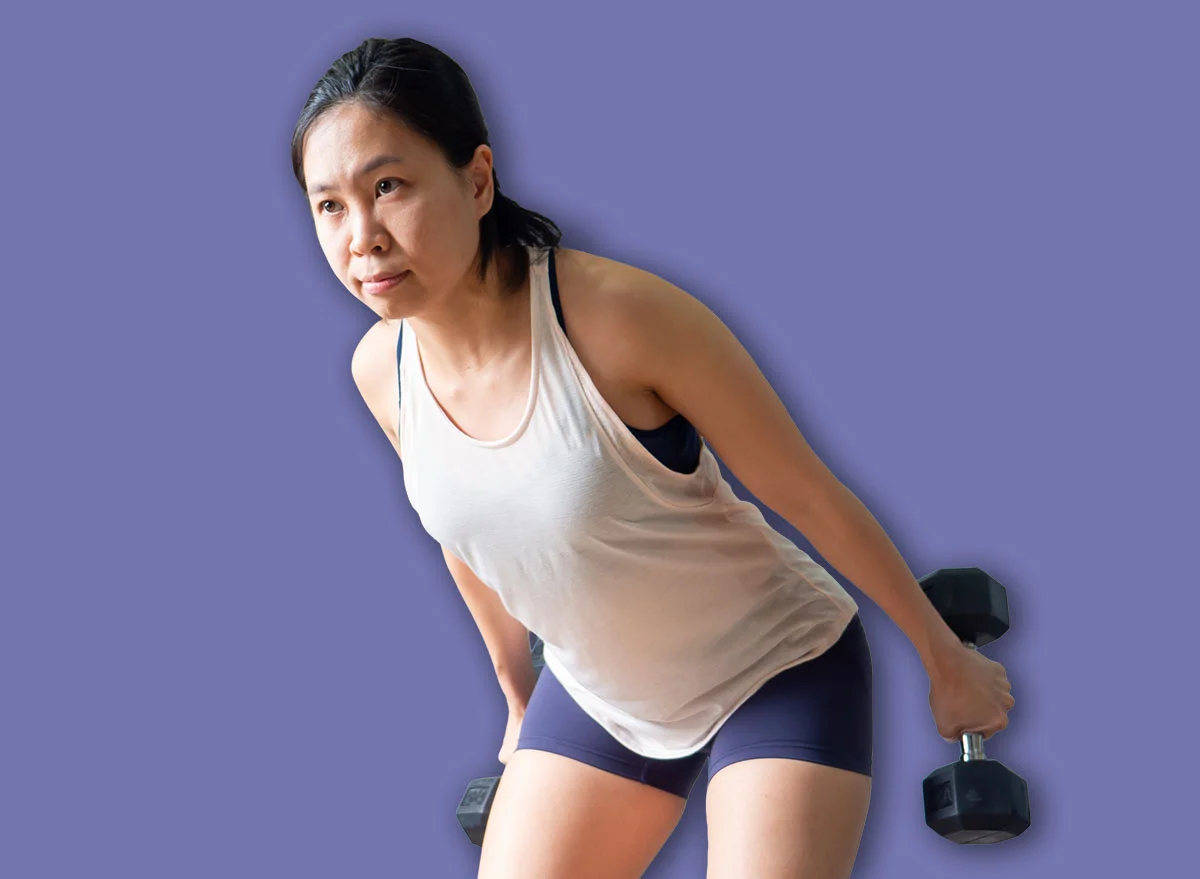
3. The Standing Triceps Kickback
The triceps are the primary focus for those looking to firm the back of the arm. This standing variation allows for maximum isolation without the need for expensive cable machines.
Why it matters: The triceps are responsible for elbow extension. Strengthening them provides the structural firmness that reduces the appearance of loose skin. The key here is to keep the upper arm perfectly stationary against your ribcage; if your arm moves, the weight is too heavy, and the target muscle isn’t doing the work.
Execution: Hinge slightly forward at the hips, keeping your spine neutral. With your elbows tucked at your sides, extend your arms fully behind you. Focus on the squeeze in the back of the arm at the top of the movement.
4. Standing Cross-Body Punches
This movement serves as a "finisher," combining arm endurance with rotational core stability.
Why it matters: Cross-body punches raise the heart rate, providing a cardiovascular benefit while challenging the shoulders and triceps in a dynamic, functional plane. The rotational element trains the obliques, further improving balance and coordination.
Execution: Stand with feet wide. Punch across your body with one arm, allowing your torso to rotate slightly. Keep the movement rhythmic and controlled, focusing on the resistance of the air rather than speed.
Supporting Data and Evidence
Research into geriatric fitness suggests that resistance training is the most effective intervention for maintaining functional independence. A study published in the Journal of Applied Physiology indicates that even in adults over 60, regular resistance training can stimulate protein synthesis, effectively slowing the rate of muscle atrophy.
Furthermore, the "functional movement" approach—which mimics the patterns of daily life—has been shown to improve bone density and joint stability. For the demographic over 50, the focus should not be on "chasing the pump" as a bodybuilder might, but rather on neuromuscular control. By consistently performing these four movements with proper technique, you are not just toning your arms; you are engaging in a comprehensive anti-aging strategy for your entire musculoskeletal system.
Implications for Daily Living
The goal of this routine is "usable strength." When you integrate your arms into your core and lower body movements, you are preparing your body for the physical realities of aging.
- Improved Coordination: The more your body moves as a connected unit, the better your proprioception (spatial awareness) becomes, reducing the risk of falls.
- Confidence and Posture: The psychological benefit of standing taller cannot be overstated. When the shoulders are properly aligned and the upper back is strong, you carry yourself with a grace and confidence that transforms how your clothing fits and how you interact with the world.
- Metabolic Maintenance: Maintaining a higher percentage of lean muscle mass helps regulate insulin sensitivity and metabolic rate, which becomes increasingly important as we age.
A Practical Strategy for Implementation
To integrate these movements into your life, start small. These exercises require no specialized gym memberships. They can be performed in the morning as a "wake-up" routine, during a lunch break to combat the slump of the day, or as a light evening session.
- Frequency: Perform this routine 3–4 times per week.
- Intensity: Focus on "Time Under Tension." A 3-second lowering phase on every rep is more effective than 10 fast, sloppy reps.
- Progression: As you get stronger, don’t necessarily reach for heavier weights. Instead, increase the number of repetitions or decrease the rest time between sets.
Conclusion
The pursuit of firmer arms after 50 is not a futile battle against nature; it is an opportunity to redefine your physical health. By abandoning isolated, ineffective exercises and embracing a functional, standing approach, you build a body that is as capable as it is aesthetic. Through the Overhead Press, Resistance Band Row, Triceps Kickback, and Cross-Body Punches, you are giving your muscles the stimulus they need to thrive.
Remember, your arms are a reflection of your overall physical vitality. Treat them not as an isolated aesthetic project, but as a vital part of a strong, healthy, and capable body. With consistency and patience, you will find that the best way to change your arms is to change how you use your entire body.