










Published June 17, 2026
In our modern, high-velocity world, the biological "off switch" is becoming an increasingly rare commodity. Millions of individuals find themselves caught in a paradox: they endure a day defined by profound fatigue and mental fog, only to find themselves hyper-alert, anxious, and unable to settle the moment their head hits the pillow at night. This state—frequently referred to by sleep scientists and wellness experts as being "wired and tired"—is a hallmark of a nervous system stuck in a chronic state of sympathetic arousal.
When the body remains in a perpetual state of "fight-or-flight" due to work stress, digital overstimulation, and the relentless pace of urban life, cortisol levels remain elevated long after the stressors have passed. Breaking this cycle requires more than just willpower; it necessitates a physiological recalibration. Restorative yoga has emerged as a premier intervention for this modern malady, offering a systematic approach to shifting the nervous system from a state of emergency to a state of recovery.
The Physiology of Stillness: Why We Need to Reset
The primary objective of a restorative practice is not muscle building or flexibility, but rather the modulation of the autonomic nervous system. By prioritizing supported stillness, practitioners can deliberately trigger the parasympathetic nervous system—the "rest and digest" branch of our biology.
Scientific inquiry into restorative practices, including studies published in peer-reviewed journals such as the International Journal of Yoga, suggests that intentional stillness combined with rhythmic breathing sends a direct signal to the brain that the environment is safe. This shift in perception is essential for systemic recovery. When you hold a restorative pose, you are essentially providing your body with a "permission slip" to drop its defenses, lower heart rate, and begin the vital work of hormonal and cellular repair.
The Methodology: Breath and Prop-Supported Asana
The efficacy of restorative yoga lies in the use of props—bolsters, blankets, blocks, and cushions. By utilizing these tools to support the weight of the body, we minimize the effort required to maintain a shape. When the muscles are fully supported, the brain can cease the micro-adjustments typically required for balance, allowing the central nervous system to quiet down.
Crucial to this process is the breath. The act of lengthening the exhalation is a biological hack for the vagus nerve, which serves as the primary conduit for the parasympathetic response. Techniques such as Sama Vritti Pranayama (Box Breathing)—inhaling for a count of four, holding for four, exhaling for four, and pausing for four—provide a focal point for the mind, preventing the "racing thoughts" that typically sabotage rest.
8 Essential Restorative Poses for Nervous System Regulation
To assist those seeking to navigate the wired-and-tired cycle, we have curated a sequence of eight restorative poses. These are designed to be held for one to five minutes, allowing for deep muscular release and mental decompression.
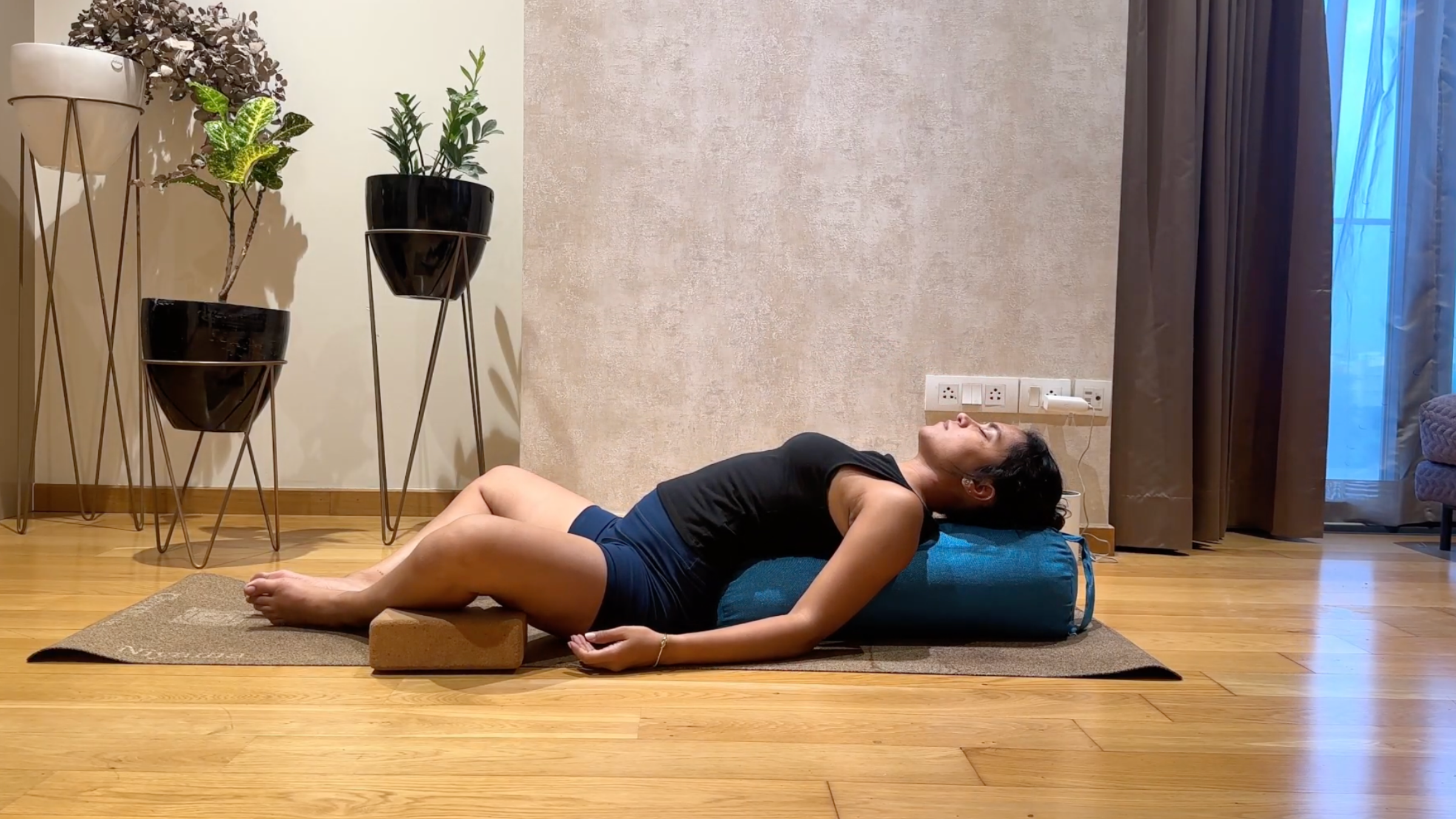
1. Reclining Bound Angle (Supta Baddha Konasana)
This pose is the cornerstone of restorative practice. By placing a bolster lengthwise along your mat and reclining onto it, you create a gentle chest opener that counteracts the "slumped" posture we adopt while using computers or phones. The soles of the feet are brought together, knees falling outward. If the hips feel tight, bolster the thighs with blocks or folded blankets. This shape opens the psoas—a muscle often implicated in stress response—while encouraging deep, diaphragmatic breathing.
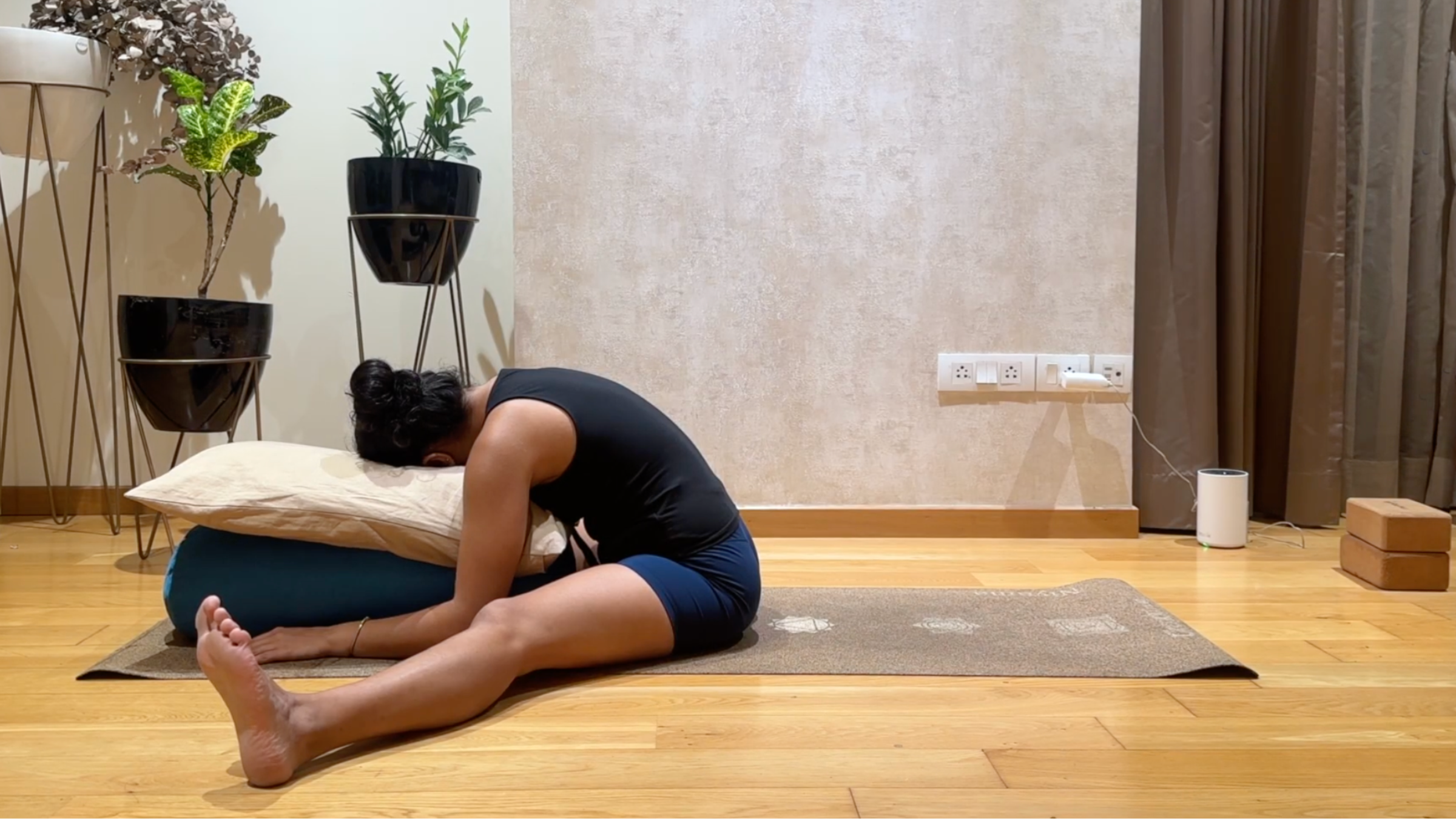
2. Supported Wide-Legged Forward Fold (Upavistha Konasana)
Forward folds are inherently introspective. By sitting with legs wide and hinging forward onto a stack of pillows or a bolster, you provide the forehead with gentle pressure. This contact can help stimulate the vagus nerve and quiet the mind. The wide-legged variation relieves tension in the inner thighs and lower back, areas where many store the physical remnants of stress.
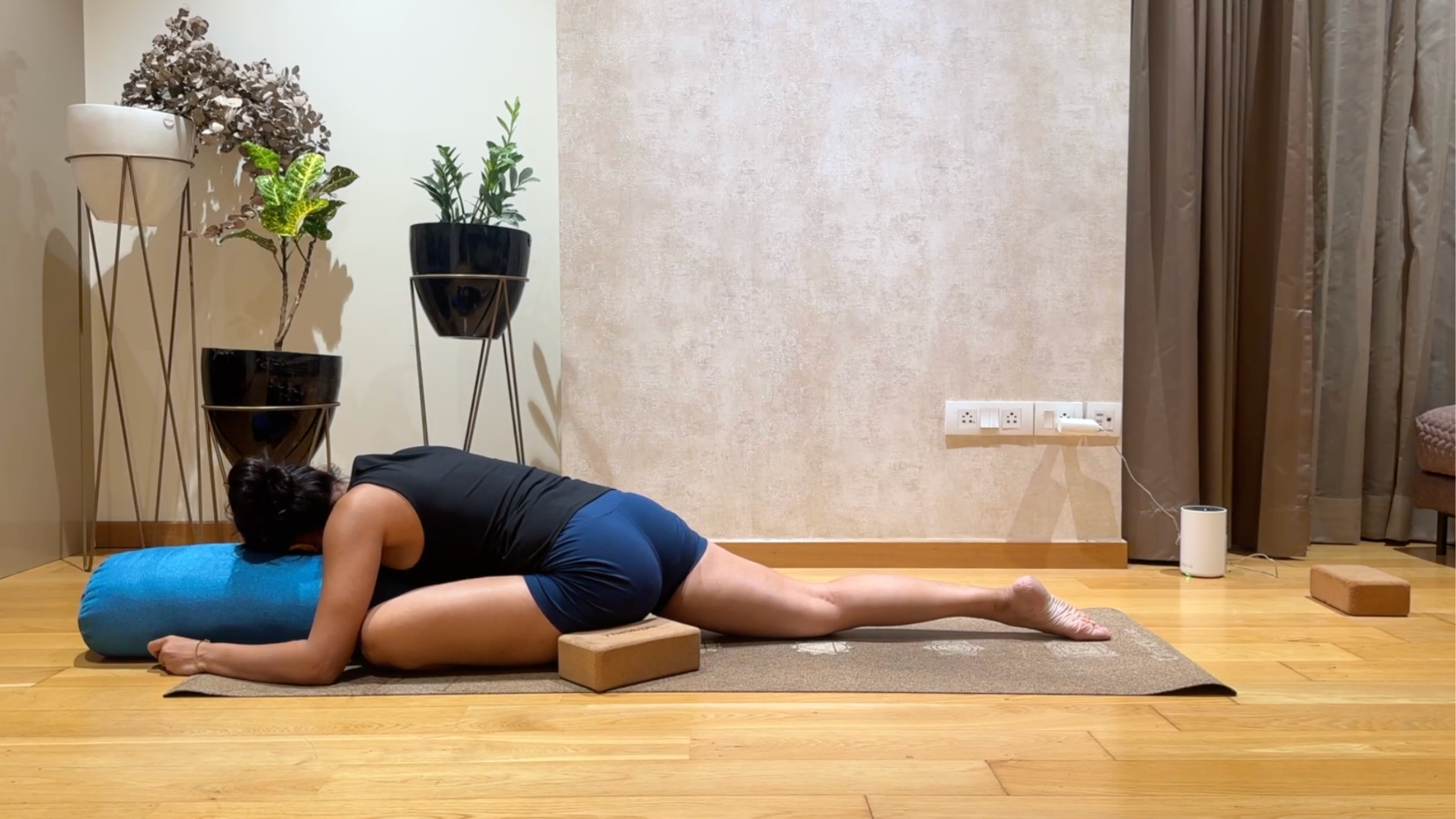
3. Supported Pigeon Pose (Eka Pada Raja Kapotasana Variation)
For many, the hips are the primary storage site for emotional and physical tension. By transitioning into a supported pigeon pose, you can safely explore this release. Using a bolster under the torso allows you to let go of the effort usually required to keep the chest upright, turning a typically challenging active pose into an exercise in surrender.
4. Supported Reclining Hero Pose (Supta Virasana Variation)
This pose targets the quadriceps and the hip flexors. By reclining onto a bolster, you achieve a passive stretch that can alleviate the tightness caused by prolonged sitting. For those with knee sensitivities, the use of props is vital; never push into pain. If the full expression is inaccessible, a "Half Reclining Hero" approach—keeping one leg extended—is equally effective for calming the system.
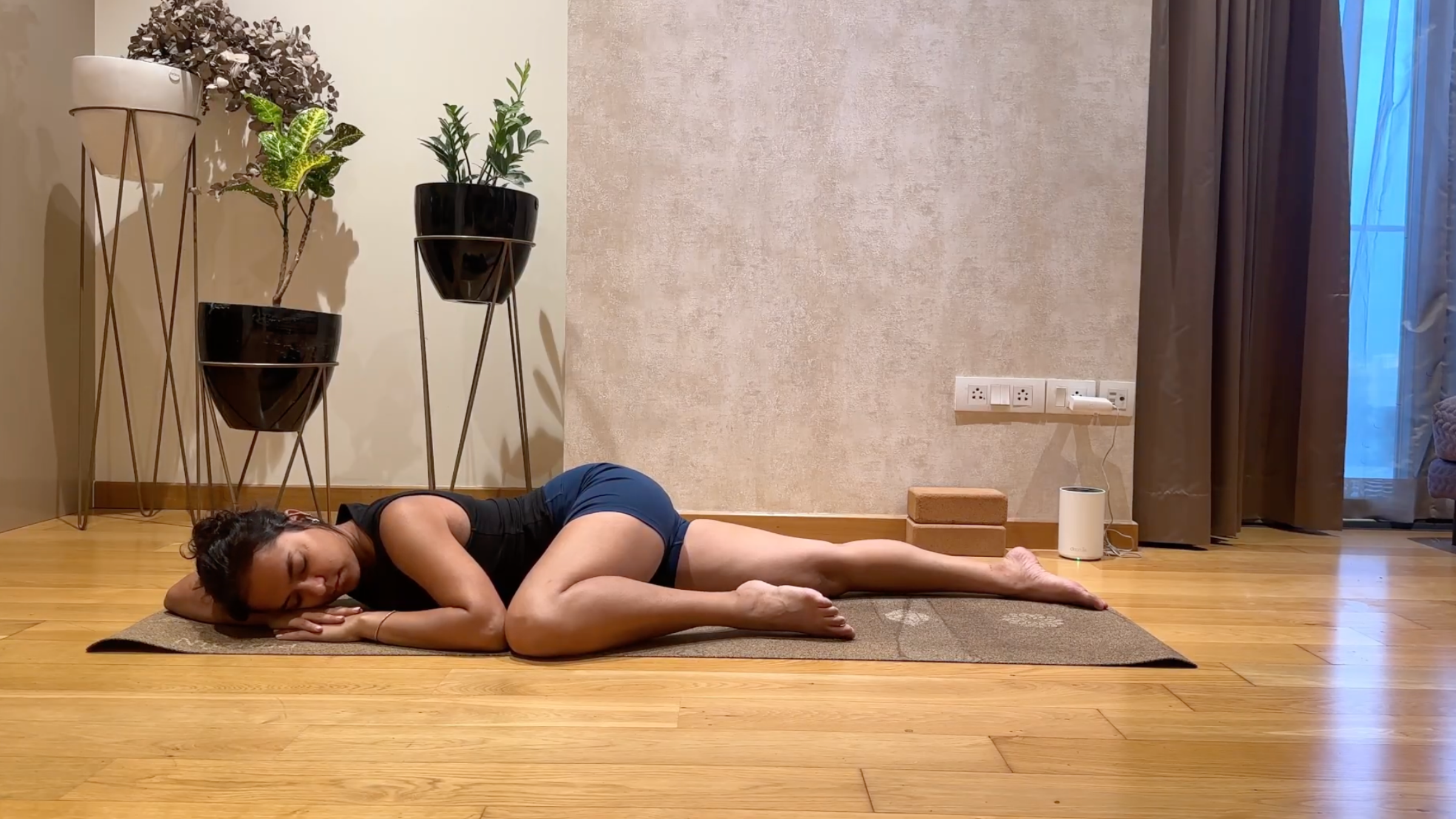
5. Restorative Half Frog Pose (Matsya Kridasana)
Known as the "flapping fish pose," this is a belly-down position that is exceptionally soothing for the digestive system and the lower back. By drawing one knee out to the side while the torso remains supported on the floor, you create a gentle spinal rotation that is both grounding and deeply relaxing.
6. Crocodile Pose (Makarasana)
In our high-stimulation environment, the simple act of lying on one’s belly can feel vulnerable and grounding. By stacking your hands and resting your forehead on them, you encourage the shoulders to drop away from the ears. This is a "primal" resting position that signals total safety to the body.
7. Side-Lying Savasana
Often, the traditional back-lying Savasana can feel too exposed for individuals suffering from high anxiety. Side-lying Savasana, particularly when supported by a wall, provides a sense of enclosure and protection. Using a pillow between the knees ensures the pelvis remains neutral, preventing hip strain and allowing for a deeper state of repose.
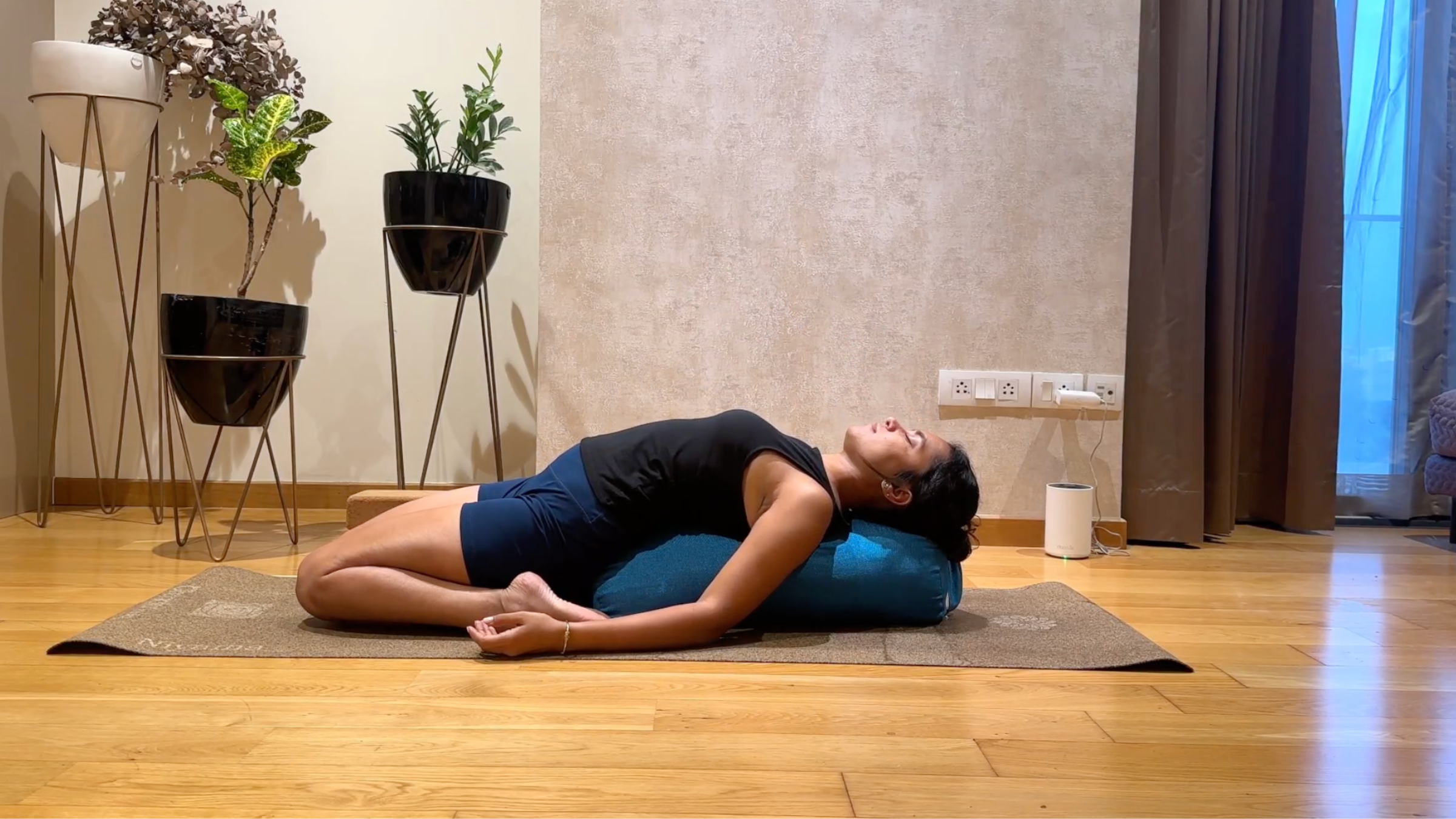
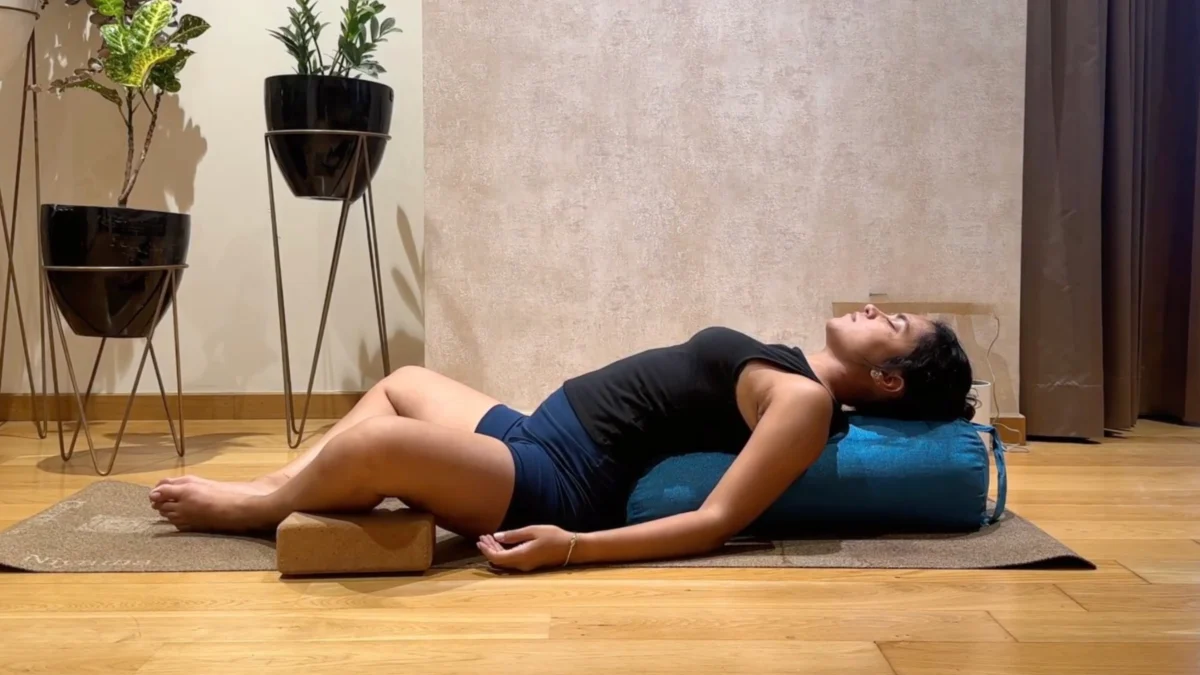
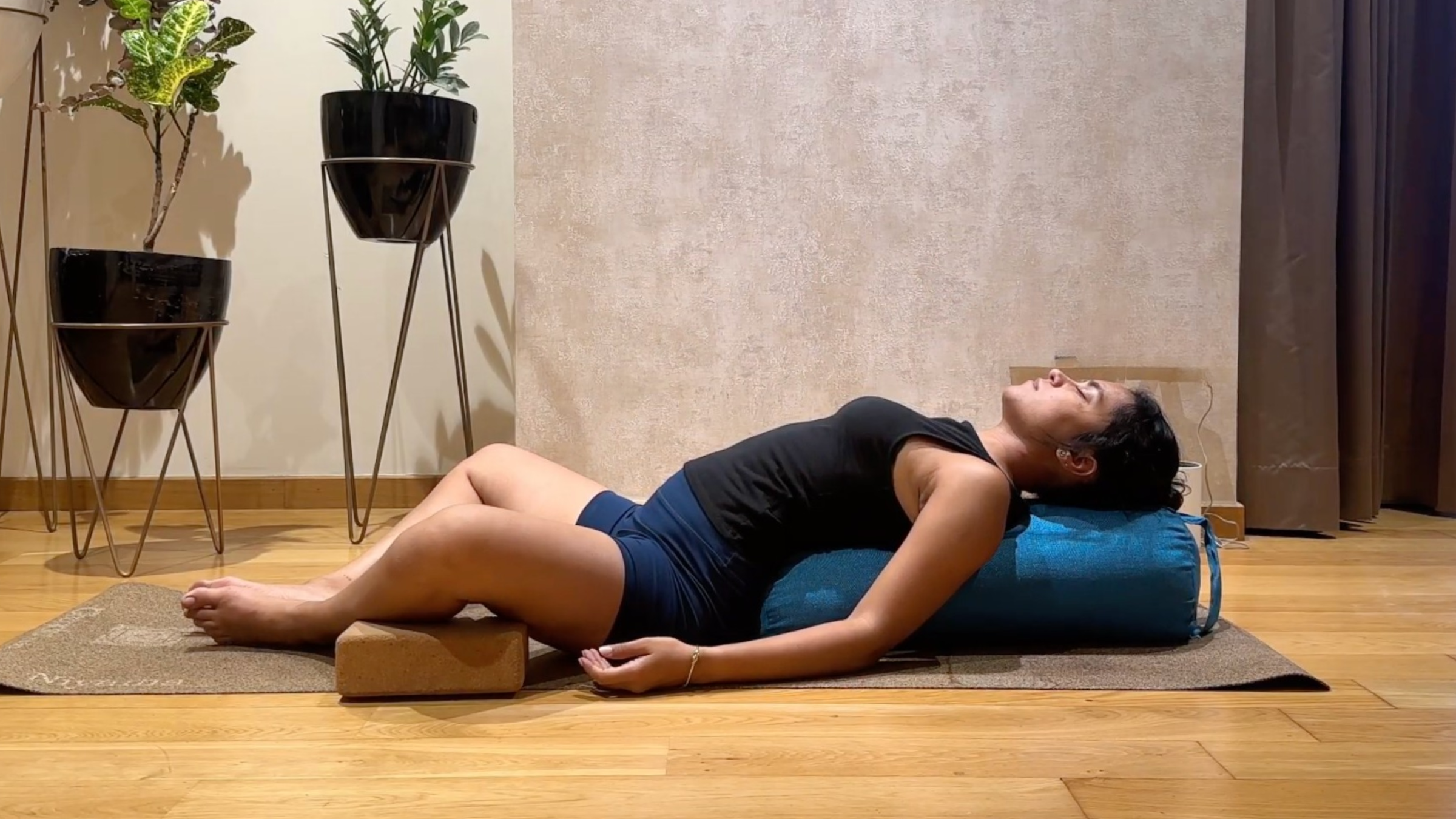
8. Savasana with a Bolster
The final transition is the classic Corpse Pose, modified with a bolster beneath the knees. This simple addition removes the tension from the lumbar spine that can occur when the legs are fully extended on a flat surface. By allowing the feet to fall open and the palms to face up, you physically signal openness and receptivity, finalizing the transition from "wired" to "restored."
Implications for Daily Health
The transition from a high-stress, high-stimulation state to one of rest is not a luxury; it is a clinical necessity for long-term health. Chronic elevation of the sympathetic nervous system is linked to systemic inflammation, impaired immune function, and cardiovascular strain.
By integrating these restorative practices into a nightly or weekly routine, individuals can effectively "re-wire" their response to external stressors. The goal is not to eliminate stress entirely—an impossibility in the modern age—but to build the internal capacity to return to a baseline of calm. As the practice of restorative yoga becomes more mainstream, it serves as a reminder that health is not merely the absence of disease, but the presence of a resilient, adaptable nervous system.
Whether you are a corporate professional, a student, or a caregiver, these eight poses offer a bridge back to yourself. By choosing to prioritize stillness, you are choosing to honor your biological need for recovery. In a world that never stops, the act of stopping is, perhaps, the most radical and necessary choice you can make.