







Ayurveda, the ancient Indian system of healing, transcends the modern definition of massage as a mere luxury or relaxation technique. Instead, it views the application of intentional, rhythmic touch—guided by the sophisticated principles of the Tridosha—as a potent medical intervention. For millennia, this practice has served as a cornerstone of both Shamana (palliative care) and Shodhana (purificatory therapy), functioning as a sophisticated bridge between the physical body and the subtle mind.
The Foundations: Ancient Wisdom and Historical Context
The methodologies of Ayurvedic massage are deeply rooted in the Brhat Trayi, the "Great Three" foundational texts of Ayurveda: the Charaka Samhita, the Sushruta Samhita, and the Ashtanga Hridaya (authored by Vagbhata). Later treatises, including Bhavaprakasha and Yogaratnakara, further refined these techniques, detailing their application for diverse purposes ranging from the maintenance of athletic performance and support for warriors to the delicate requirements of postpartum recovery and preventative longevity.
In these ancient traditions, touch was never arbitrary. It was a calculated application of energy, designed to realign the individual’s biological rhythm with the natural order. By understanding the five great elements—Space, Air, Fire, Water, and Earth—practitioners could influence the doshas (Vata, Pitta, and Kapha), effectively returning the body to a state of equilibrium and bliss.
The Tridosha Framework: Understanding Elemental Dynamics
To grasp the mechanics of Ayurvedic massage, one must first understand the doshas. These three energetic forces govern all physiological functions:
- Vata (Space and Air): Governs movement, communication, and the nervous system.
- Pitta (Fire and Water): Governs metabolism, digestion, and thermoregulation.
- Kapha (Water and Earth): Governs structure, lubrication, and immunity.
Ayurvedic treatment adheres to the foundational philosophy of "like increases like" and "opposites balance." Consequently, a Vata-imbalanced individual, characterized by dryness and irregularity, requires warm, grounding, and heavy oil treatments. Conversely, a Kapha-dominant individual, who may struggle with stagnation and heaviness, benefits from stimulating, warming, and lighter treatments.
Individualized Care: The Clinical Approach
Unlike standardized Western massage protocols, Ayurvedic massage is strictly personalized. The practitioner assesses the individual’s Prakruti (inherent constitution) and Vikruti (current state of imbalance) before selecting the appropriate techniques.
The Role of Digestive Fire and Toxins
A primary consideration is the state of Agni (digestive fire) and the presence of Ama (metabolic toxins). If an individual has a significant accumulation of Ama, traditional oil massage is often contraindicated. Oils, being heavy and unctuous, can "trap" toxins if the system is already clogged. In such cases, practitioners may shift to Udvartana, a dry, vigorous massage using herbal powders that act as a systemic exfoliant, stimulating circulation and breaking down metabolic waste.
The Science of Oils and Herbs
The selection of the base oil and the herbs infused within it is a clinical decision. Sesame oil, with its warming, heavy, and deeply penetrating qualities, is the gold standard for pacifying Vata. Cooling coconut or sunflower oils are preferred for Pitta-related inflammation, while lighter, heating oils like mustard are utilized to move stagnant Kapha. The volume of oil used is also a critical metric: high volume for Vata, moderate for Pitta, and minimal for Kapha.
Special Considerations: Vata, The Mind, and The Skin
According to Samkhya philosophy, the air element is intimately linked to the Sparshendriya (the sense of touch). Because Vata is composed of air and space, the nervous system is uniquely receptive to tactile intervention. This makes Ayurvedic massage an unparalleled tool for treating anxiety, insomnia, and nervous system dysregulation.
Furthermore, the skin—the body’s largest organ—is considered a primary site for Bhrajaka Pitta, which governs complexion and luster. By applying medicated oils, we essentially "feed" the skin. This nutrition penetrates the deeper tissues, influencing muscles, bones, nerves, and organs. It is not merely a superficial treatment; it is a systemic infusion of nutrients that enhances the resilience of the body’s entire structure.
Categories and Techniques: From Abhyanga to Marma
The breadth of Ayurvedic massage is vast, categorized by specific goals and methodologies.
Abhyanga: The Practice of Love
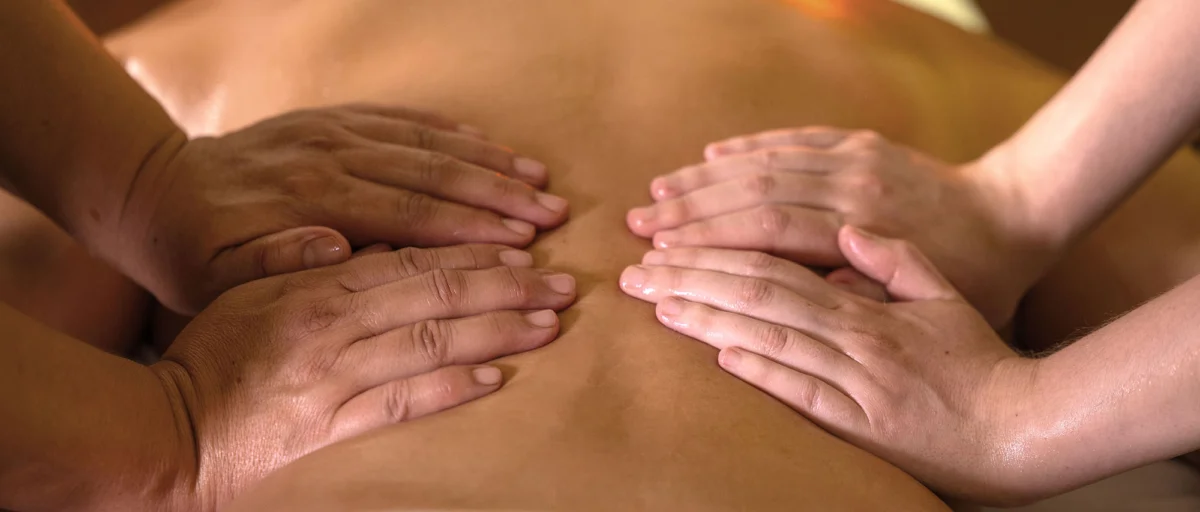
Abhyanga is the most recognized form of Ayurvedic bodywork. The Sanskrit word Snehan means both "oil" and "love." In this context, the physical application of oil is considered a vibration of love, intended to harmonize the body’s cells. Whether performed as self-massage or administered by two practitioners in a four-handed sequence, Abhyanga facilitates the movement of toxins into the digestive tract for elimination, particularly when used in conjunction with Panchakarma.
Specialized Modalities
- Udvartana & Udsadana: These use dry, hot herbal powders to stimulate the skin and reduce fat or fluid retention.
- Deha Samvahana: General whole-body massage focusing on structural alignment.
- Kesha Mardana: Specialized head massage to soothe the mind and improve hair health.
Strokes and Directionality
The direction of strokes is critical to the outcome. Anuloma (away from the heart) is grounding and calming, ideal for Vata. Pratiloma (towards the heart) is stimulating and often used to promote lymphatic drainage and circulation. Practitioners utilize a specific lexicon of strokes, including Peedana (kneading), Udvesthana (wringing), and Sandhi Calana (joint mobilization), to address specific musculoskeletal needs.
Marma Therapy: The Energetic Gateway
Perhaps the most sophisticated aspect of this discipline is Marma Therapy. Marma points are energetic intersections where muscles, veins, ligaments, bones, and joints meet. By stimulating these points, a practitioner can influence the flow of Prana (life force) to specific organs and glands. While often compared to Chinese acupuncture, Marma therapy typically involves larger, more diffuse points of contact, focusing on the activation of the "body’s inner pharmacy" to initiate self-healing.
Implications for Modern Wellness
The integration of Ayurvedic massage into modern health protocols offers a profound alternative to symptom-based treatment. By addressing the doshas and utilizing the skin as a gateway to the deeper tissues, this practice promotes long-term health rather than temporary relief.
Clinical Implications
The shift from symptomatic care to constitutional care represents a significant evolution in integrative medicine. As research continues to validate the impact of therapeutic touch on cortisol reduction and nervous system regulation, the centuries-old wisdom of the Brhat Trayi is finding new relevance in the 21st-century clinic.
The Future of Training
As interest in holistic modalities grows, professional training programs—such as the Masterclass series on Marma therapy—are becoming essential. These programs ensure that the nuance of this ancient science is preserved. As practitioners like Beatrice Voss emphasize, the lineage of these subtle therapies is not merely technical; it is heart-centered. It requires a practitioner who understands that the healing potential of the touch is as much about the intent of the provider as it is about the medicinal properties of the oil.
Conclusion: A Return to Wholeness
Ayurvedic massage is more than a therapeutic regimen; it is a philosophy of existence. By recognizing that the body is a reflection of the elements and that the mind is susceptible to the power of touch, Ayurveda provides a roadmap for sustainable health. Whether one is seeking to alleviate a specific ailment, balance a chaotic mind, or simply maintain the luster of the skin, the ancient practice of intentional touch offers a path back to the natural state of balance. In an increasingly fragmented world, the rhythmic, personalized, and deeply nourishing application of Ayurvedic principles remains one of the most effective ways to reclaim our innate wellbeing.