







Published June 17, 2026 | Originally appeared in the July-August 1996 Yoga Journal Archives
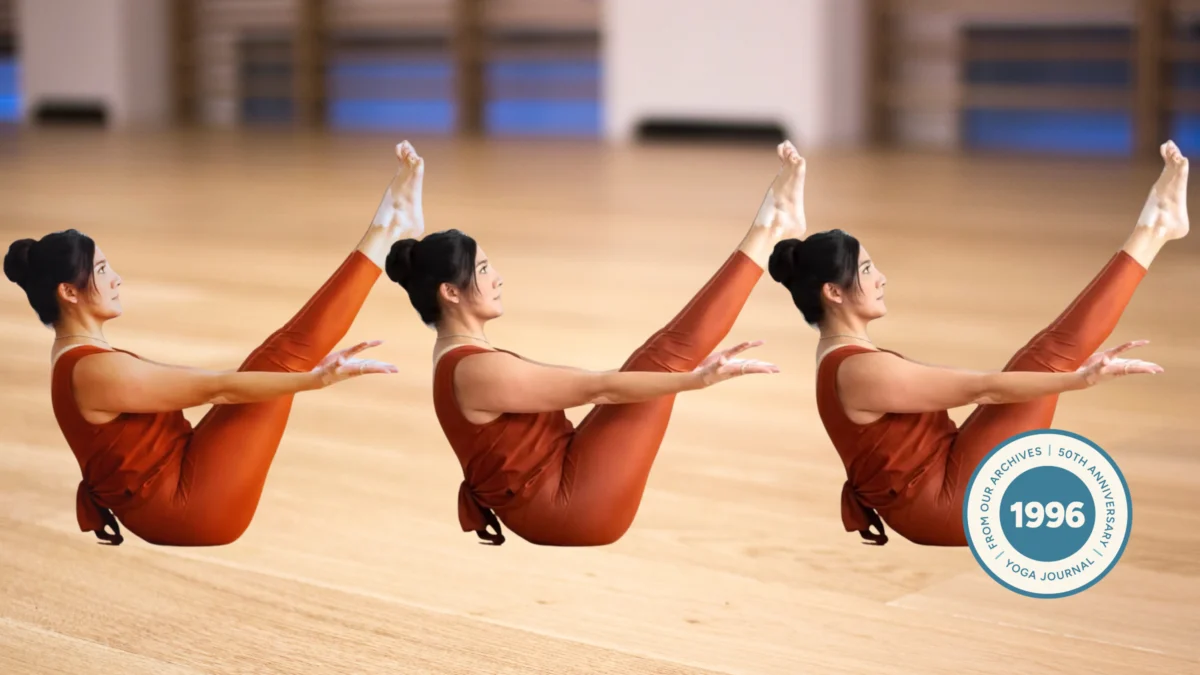
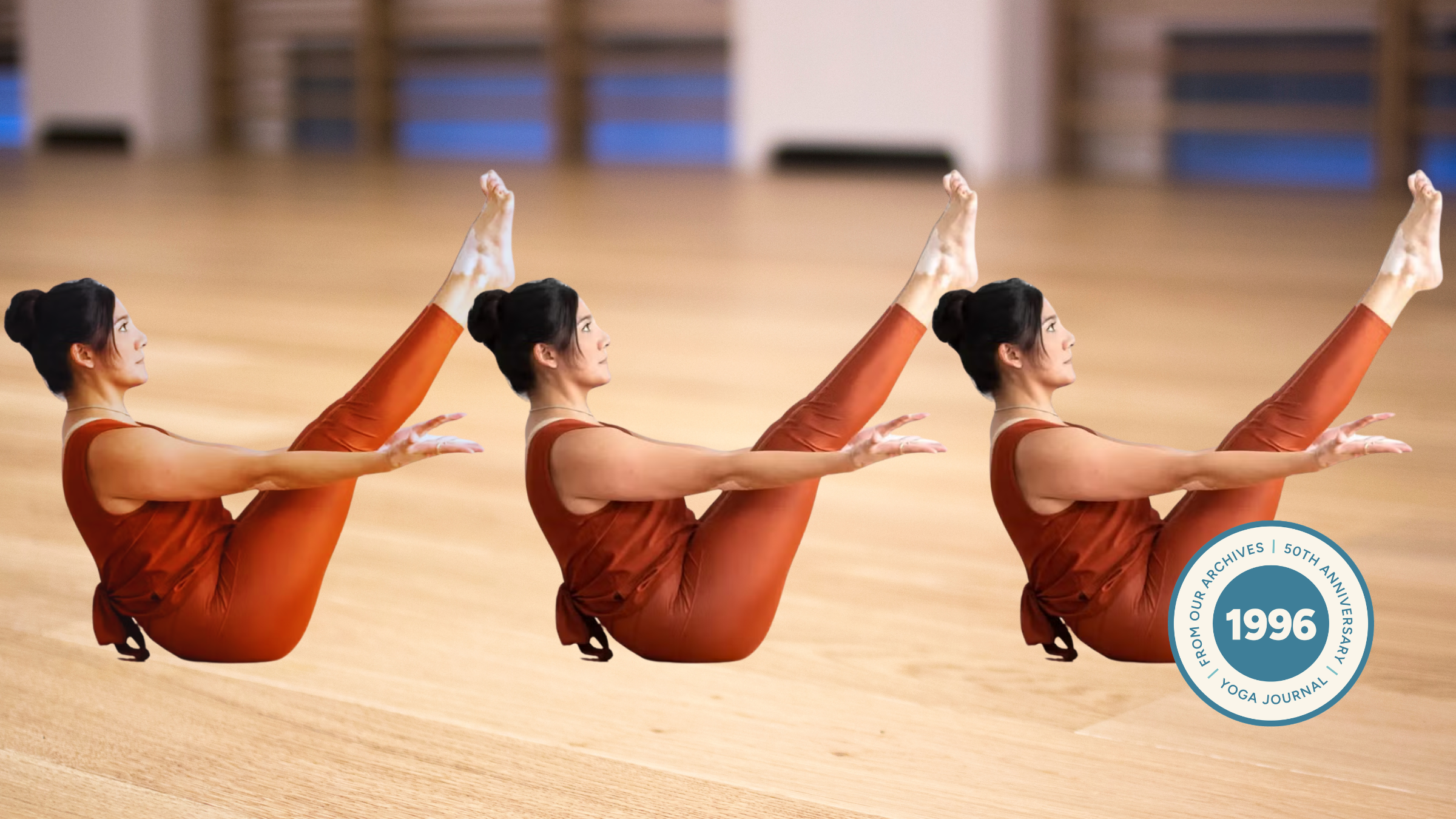
In the landscape of yoga, few postures possess as intimidating a reputation as Boat Pose (Paripurna Navasana). It is the perennial "should-do" of the yoga world—a posture universally recognized for its core-strengthening potential, yet frequently relegated to the end of a practice session or avoided entirely. For many practitioners, the Boat is a vessel that feels prone to sinking, characterized by trembling limbs, collapsing chests, and an over-reliance on superficial abdominal gripping that leaves the practitioner feeling strained rather than empowered.
However, as the Yoga Journal archives reveal, the struggle with Boat Pose is rarely a failure of willpower; it is a failure of mechanics. By shifting our focus from "gutting" through the movement to engaging the deep, stabilizing structures of the pelvic bowl, we can transform this challenging posture from a source of frustration into a foundation of core integrity.
The Anatomy of the Keel: Redefining Core Strength
The common misconception surrounding Paripurna Navasana is that it is purely a test of the "six-pack" muscles—the rectus abdominis that spans the front of the torso. When we rely solely on these superficial muscles to hold our legs and torso aloft, we create a rigid, strained tension that inevitably causes the "Boat" to lose its buoyancy.
To achieve true lift, we must look deeper. The secret lies in a "truss" of muscles that connects the lumbar spine (the lower back) to the inner thighs, right where they meet the pelvis. This area acts as the keel of the body. By drawing the bony attachments of the legs and torso toward one another, we create a structural integrity that supports the weight of the limbs without requiring the superficial muscles to bear the brunt of the load.
The primary line of movement in this refined approach is the shortening of the distance between the pubis and the 12th thoracic vertebra (T12). By mentally and physically visualizing the pubis moving up and into the torso while T12 moves down and in toward the pubis, we activate the deep stabilizers. When these muscles engage, the core strengthening happens naturally as a byproduct of structural alignment.
Chronology of Practice: From Stillness to Sail
The path to a stable Boat Pose is not a race; it is a methodical progression that begins on the floor. To retrain the body, one must first learn to quiet the mind and isolate the target muscles.
Phase 1: Internal Mapping (The Passive Foundation)
Before attempting the pose, practitioners are encouraged to spend 10 to 20 minutes in a passive, supported state. Using two towel bolsters—one for the neck and one for the lumbar spine—one can lie on the floor to map the internal terrain. By physically locating the pubis and mentally tracing the spine to the T12 vertebra, the student creates a neurological map.
The exercise involves visualizing a string stretched between these two points, threaded with two beads that slowly glide toward one another. This "imagined movement" is a powerful tool in yoga science; by allowing the body to remain still while the mind traces these lines of force, the nervous system begins to recognize the intended engagement. Over time, this practice clears the circuits, resulting in a torso that spreads wider on the floor and a breath that becomes deeper and more rhythmic.
Phase 2: Staff Pose (Dandasana) as the Embarkation Point
Once the internal connection is established, we move to Dandasana (Staff Pose). This is the "front spine" of our practice. The configuration of the body in Staff Pose is nearly identical to the final Boat, save for the 90-degree angle of the hips. By using a block between the wall and the sacrum, practitioners can learn to stabilize the pelvis. This preparatory work teaches the practitioner how to firm the inner thighs and lengthen the spine, preventing the common pitfalls of a rounded back or collapsed chest.
Phase 3: The Ascent
Moving away from the wall, the student begins to transition from the bent-knee position. By rocking back onto the buttocks—the space between the sitting bones and the coccyx—the legs lift. This is the moment where most boats spring "leaks." If the connection between the pubis and T12 is lost, the chest collapses. If the inner thighs are not engaged, the knees buckle. Success here requires a patient, incremental approach: starting with knees bent, holding the thighs, and only straightening the legs once the torso is fully supported by the internal "keel."
Supporting Data: The Physics of the Boat
Why does the "keel" method succeed where traditional abdominal crunches fail? The answer lies in the distribution of force.
- Scapular Engagement: The muscles of the back pull downward toward the coccyx, providing the counter-leverage necessary to keep the front torso lifted.
- Inner Thigh Activation: By squeezing the inner thighs (using a prop if necessary), we recruit the adductor muscles, which help suspend the weight of the legs, offloading the work from the lower back.
- Geometric Precision: Maintaining an angle of 60 to 65 degrees between the legs and the floor, while keeping the chest open, prevents the lumbar spine from taking on excessive strain.
When these components function in harmony, the Boat does not quiver. The balance point is found not through muscle force, but through structural equilibrium.
Official Perspectives: The Teacher’s Role
In the 1996 archives, the guidance emphasizes that teachers must be vigilant about sacral health. For students with existing sacroiliac (SI) joint issues, the use of props like blocks or blankets is not merely helpful—it is essential for safety.
"If you build it, the core strengthening will come," the original text advises. This pedagogical shift—from "working hard" to "building structure"—remains the gold standard in therapeutic yoga. It encourages a long-term view of practice, where the goal is not to achieve the pose as quickly as possible, but to cultivate a body that is capable of sustaining the pose with ease and breath.
Implications for Future Voyages
The implications of this "keel-first" philosophy extend far beyond a single yoga posture. By learning to identify and engage the deep stabilizing muscles of the pelvic bowl, practitioners gain a blueprint for movement that can be applied to nearly every other posture in the yoga canon.
Furthermore, the practice of daily, subtle engagement—the 10 to 20 minutes of quiet, internal mapping—highlights a vital lesson: the most profound progress often happens when we appear to be doing the least. In an era of high-intensity fitness, the return to these foundational, internal movements serves as a necessary corrective.
As you return to your mat, remember that the Boat is not about the "gutting" of the abs; it is about the quiet, internal orchestration of the spine, the thighs, and the breath. When the keel is set and the truss is secure, the journey becomes less about survival and more about the grace of the voyage itself. Whether you are a beginner struggling to lift your feet or an advanced practitioner looking to refine your center, the path remains the same: align the structure, steady the breath, and wait for the boat to rise.