






In the landscape of modern exercise, the spotlight is almost always stolen by the "big three": cardiovascular endurance, absolute strength, and flexibility. Yet, there is a silent, foundational pillar of human physiology that dictates how these traits manifest in the real world: balance.
Balance is far more than the ability to stand on one foot without toppling over; it is the ultimate indicator of neurological health, muscular coordination, and, increasingly, long-term longevity. As we age, the ability to maintain a stable center of gravity becomes the primary defense against falls—the leading cause of injury-related mortality in older adults. By mastering the art of the single-leg stance, you are not merely "working out"; you are investing in a future of independence and fluid movement.
The Foundation: Why Balance Defines Functional Aging
At its core, balance is the body’s ability to distribute its weight in a way that allows it to remain upright and steady. Whether you are navigating a crowded sidewalk, stepping over an obstacle, or simply reaching for a glass on a high shelf, every action requires a complex, split-second collaboration between your visual system, your inner ear, and your proprioceptors—the sensory receptors in your muscles and joints.
Every time you take a step, you are effectively performing a series of single-leg hops. If your stabilization muscles are weak or your nervous system lacks the coordination to engage them, that brief moment of instability compounds over time. This is why balance deficiencies are often the "canary in the coal mine" for broader mobility issues. By the time someone notices they are unsteady, the physiological erosion of their stabilizers may have been occurring for years.
Single-leg exercises are the gold standard for assessment because they remove the "safety net" of a wide, two-footed base. When you stand on one leg, you force the ankle, knee, hip, and core to communicate in real-time to prevent a collapse. It is a total-body engagement that reveals asymmetries and weaknesses that traditional weightlifting often masks.
The Chronology of Stability: From Static to Dynamic Control
To truly gauge your physical age, one must look at how balance evolves from a static hold to a dynamic movement. The following four exercises are structured in a progression that tests your neurological "processing speed" and physical resilience.
1. The Single-Leg Stand: The Diagnostic Baseline
The single-leg stand is the foundational test of your body’s alignment. It forces you to resist the natural tendency to lean or "hip-hitch" (where the pelvis drops on the unsupported side).
Why it matters: This movement exposes the "weak links" in your kinetic chain. If you find that your standing ankle is trembling or your knee is caving inward, your body is struggling to stabilize the joint through the gluteus medius—a crucial muscle for gait and spinal health.
How to execute: Stand tall with your feet hip-width apart. Shift your weight onto your left leg and slowly lift your right foot off the ground, bending the knee to roughly 90 degrees. Keep your pelvis level and your core engaged. Aim for a 30-second hold without touching the floor or wobbling significantly. Repeat on the opposite side.
2. The Single-Leg Clock Reach: Introducing Dynamic Instability
Once you have mastered the static hold, the "Clock Reach" introduces the element of shifting centers of gravity. By reaching your free leg toward the numbers on an imaginary clock face, you force your standing leg to adjust its tension constantly.
Why it matters: Real-world movement is rarely static. We reach for objects, dodge obstacles, and pivot constantly. The Clock Reach challenges your hip stabilizers to maintain a level plane while your limbs move through space. This is the difference between a car that handles well at a stoplight versus one that handles well on a winding road.
How to execute: Stand on one leg. Imagine you are in the center of a clock. Reach your free leg forward toward 12 o’clock, tap your toe lightly, and return to center. Repeat this at 3 o’clock and 6 o’clock. Do not let your torso collapse; maintain a rigid, tall spine throughout the transitions.
3. The Single-Leg Romanian Deadlift (RDL) Reach: The Hinge Test
The Single-Leg RDL Reach is perhaps the most sophisticated test of posterior chain integrity. It requires you to hinge at the hip while keeping your spine neutral and your hips squared to the floor.
Why it matters: This movement tests the "triple threat" of balance: hamstring flexibility, gluteal strength, and core stability. Most people lack the proprioception to keep their hips from rotating during this movement. If you can perform this with a smooth, controlled motion, your risk of lower back pain and knee injury is statistically lower, as you have mastered the mechanics of a safe hinge.
How to execute: Shift your weight onto one leg. Hinge forward at the hips, extending your free leg straight back behind you as a counterweight. Your torso should drop toward the floor while your back remains flat. Reach your hands toward the floor, then return to the starting position with control.
4. The Single-Leg Knee Drive Hold: The Athletic Transition
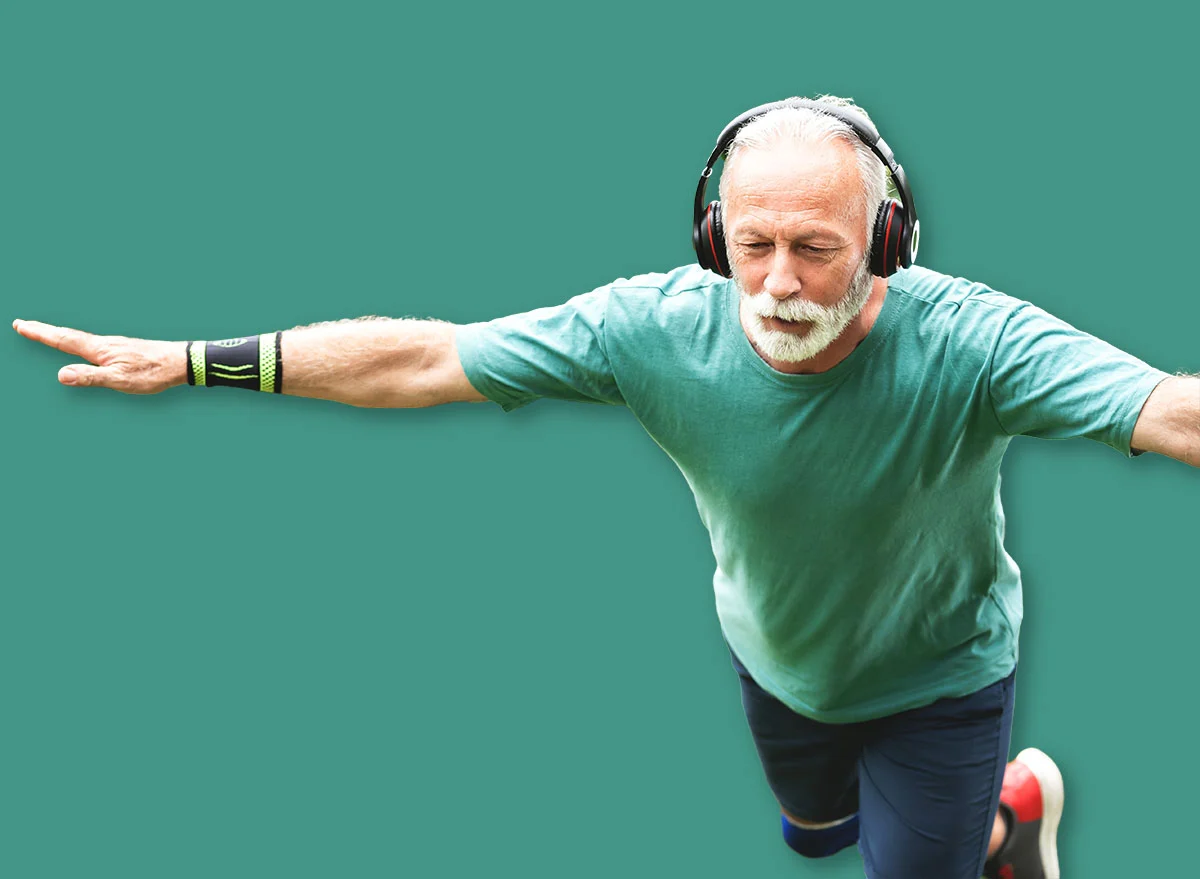
The final test, the Knee Drive Hold, requires you to actively pull your knee toward your chest while balancing. This simulates the mechanics of climbing stairs or sprinting.
Why it matters: This exercise highlights the coordination between your hip flexors and your glutes. It requires the ability to maintain a powerful, upright posture while the body is in a state of active tension. It is the ultimate test of "postural confidence."
How to execute: Stand on your right leg and drive your left knee upward toward your chest. Use your core to pull the knee higher, ensuring you are not rounding your shoulders. Hold for 30 seconds. Your standing leg must remain perfectly still, acting as a sturdy pillar for the movement occurring above it.
Supporting Data: What the Research Says
Recent clinical studies have bolstered the importance of these tests. A notable study published in the British Journal of Sports Medicine found that individuals who could not stand on one leg for 10 seconds were significantly more likely to face health challenges in the following decade.
The data suggests that balance is a "biomarker" for systemic health. When your brain, nerves, and muscles struggle to hold a simple position, it often indicates an accumulation of minor injuries, lack of physical activity, or even early-stage neurological fatigue. Conversely, those who score highly on these tests typically show higher levels of lean muscle mass and greater cardiovascular efficiency, as their bodies have developed the necessary neural pathways to move with economy and grace.
Official Perspectives: The Expert Viewpoint
"Balance is not an innate talent; it is a perishable skill," says Tyler Read, a seasoned personal trainer with over 15 years in the field. "Too many people spend their days in chairs and their workouts on machines that support their weight for them. When you remove that support, the body is forced to re-learn how to stabilize itself. These four movements are not just exercises—they are check-ins with your own physiology."
From a physical therapy perspective, these movements act as a preventative measure. By consistently challenging your stability, you are thickening the neural pathways that signal your muscles to fire during a trip or a slip. You are effectively "training the reflex" before the accident ever happens.
Implications for Long-Term Health
The implications of mastering these exercises extend far beyond the gym. Improving your balance:
- Reduces Fall Risk: By strengthening the stabilizing muscles around the ankle and hip, you create a reactive system that can catch you when you stumble.
- Improves Athletic Performance: Better stability means more power output in movements like running, cycling, or lifting.
- Enhances Cognitive Engagement: Balancing requires focus. Regular practice improves your mind-body connection and can even help sharpen focus and concentration.
- Promotes "Healthy Aging": It preserves your ability to live independently, travel, and remain active well into your later years.
Conclusion: The Path Forward
You do not need fancy equipment or a high-end gym to improve your balance. You simply need the floor beneath your feet and a commitment to consistency. Start by integrating these four moves into your morning routine. If you wobble, don’t be discouraged—that wobble is the sound of your nervous system learning.
The goal is not to reach perfection in a day, but to build a body that is responsive, stable, and resilient. In the grand scheme of health, the ability to stand tall on one leg is perhaps the most significant measure of how you will move through the world for years to come. Start today, find your center, and secure your future.