In February, a disclosure by Waymo’s chief safety officer before the U.S. Senate sent ripples through the tech industry. The revelation was stark: even as Waymo’s autonomous vehicles traverse public roads, the system is backed by remote human operators in the Philippines. The headline focused on the logistics of outsourcing, but the deeper, more profound truth was a concession of limitation. Despite billions of dollars in R&D and years of algorithmic refinement, the industry admitted that human judgment remains an non-negotiable variable.
This technological "reality check" offers a cautionary tale for the healthcare sector. As AI vendors and digital health platforms scramble to automate patient engagement, medication adherence, and pharmacy workflows, they are running headlong into a similar wall. While the technology is scaling at an unprecedented pace, the fundamental, messy, and deeply emotional reality of the human patient is being left behind.
The Chronology of an Automation Obsession
The trajectory of AI in healthcare has followed a predictable, yet concerning, pattern:
- The Rise of Digital-Only Interventions (2015–2020): Healthcare innovators, buoyed by the success of consumer tech, began flooding the market with app-based health management tools. The goal was scalability: if we can automate reminders and data tracking, we can reach millions.
- The Reality Gap (2020–2023): Systematic reviews began to show that "digital-only" solutions were failing. High abandonment rates—with up to 98% of users disengaging from chronic disease apps within months—revealed that technology alone was not driving long-term behavior change.
- The Generative AI Gold Rush (2023–Present): With the advent of Large Language Models (LLMs), investment in healthcare AI has surged, with total investment nearing $18 billion in 2025 alone. However, the disconnect between system capabilities and patient trust has widened.
- The Current Impasse: We are now at a juncture where the healthcare industry possesses the tools to revolutionize care, yet the majority of patients express deep discomfort with AI-reliant diagnostic and treatment plans.
Supporting Data: The Cost of Ignoring the Human Element
The urgency to integrate AI is driven by a massive economic incentive. Medication nonadherence costs the U.S. healthcare system more than $500 billion annually. However, the data suggests that our current approach—attempting to solve a human problem with a purely digital solution—is fundamentally flawed.
The Failure of Frictionless Models
The assumption that a patient’s health journey is a series of rational cost-benefit decisions is a fallacy. In reality, a diagnosis is often accompanied by fear, denial, and social isolation. When apps replace human touchpoints, these emotional barriers remain unaddressed. Research indicates that patients who lack emotional support are significantly more likely to abandon their treatment regimens.
The Trust Deficit
Trust is the currency of healthcare, yet it is currently in short supply. A recent global study revealed that only 51% of patients trust their healthcare system to deliver optimal care. When that trust is fractured, clinical efficacy drops. Without a safe, human-centered space to voice concerns about side effects or treatment anxiety, patients simply stop taking their medication. The system is not failing the patient; the system is failing to provide the psychological safety required for honesty.
The Implications: Why AI Must Serve, Not Replace
The paradox of the modern healthcare digital transformation is that we are building faster than patients are willing to follow. The implications of this are significant.
The Misalignment of Objectives
When AI is deployed solely for operational efficiency—such as automating messages to patients—it often treats the patient as a data point rather than a person. If a patient is scared of a new medication but the AI only sends a "ping" notification to take a pill, the underlying anxiety remains, eventually leading to a complete cessation of therapy.
The Role of "Human-in-the-Loop"
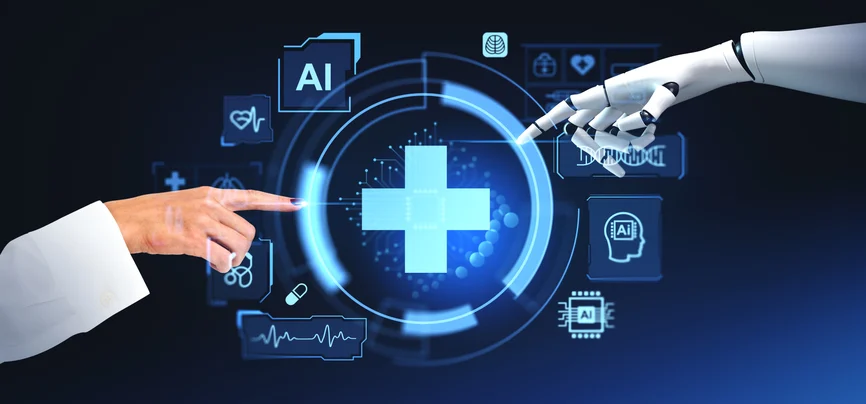
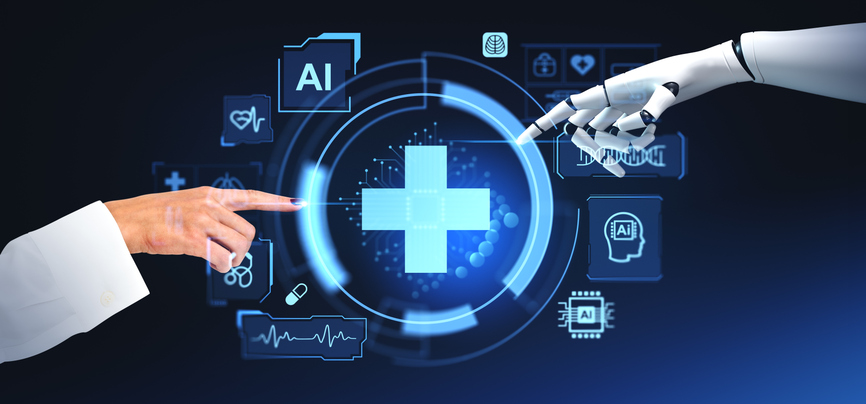
The Waymo model proves that the most advanced AI is not a replacement for human cognition, but a force multiplier for it. In healthcare, the "human-in-the-loop" isn’t just a safety feature; it is the product itself. AI can excel at identifying which patients are at risk of disengaging by analyzing behavioral patterns, surfacing emotional red flags, and handling administrative burdens. However, the intervention—the conversation, the empathy, the reassurance—requires a human counterpart.
Official Perspectives and Industry Responsibility
Industry leaders are facing a mounting pressure to justify the "AI-first" mandate. While the efficiency metrics look good in quarterly reports, the clinical outcomes often tell a different story.
"We are seeing a trend where vendors prioritize the ‘shiny object’ of AI over the foundational requirements of patient care," notes one healthcare analyst. "The leaders who will survive this bubble are those who use AI to give clinicians more time with patients, not less."
For innovators, the challenge is shifting from "how much can we automate?" to "how can we use technology to foster deeper connection?" Organizations that have successfully navigated this transition are those that utilize AI to handle the back-end complexity, while protecting and even enhancing the human-to-human touchpoints.
The Path Forward: What Leaders Should Demand
As the deployment of AI accelerates, healthcare leaders, investors, and policymakers must adopt a more rigorous set of criteria for the technologies they adopt. The following questions should be the baseline for any new healthcare technology procurement:
- The Emotional Quotient: How does this solution handle the "scared patient" scenario? Does it provide a path to a human connection when the user displays signs of distress?
- The Limit-Case Protocol: When the technology reaches its algorithmic limit, what is the protocol for escalation? Who steps in, and with what level of urgency?
- Long-Term Engagement Metrics: Forget the "launch" metrics. What does engagement look like at the six-month and one-year marks? Is the technology sustaining the patient, or just exhausting them with notifications?
- Trust-Centric Design: Is the technology designed to increase transparency and communication between the provider and the patient, or is it designed to create distance?
Conclusion: Lessons from the Road
The irony of the current healthcare landscape is that we are attempting to engineer the humanity out of a field that is defined by it. The lesson from Waymo is clear: there are decisions in this world that are too consequential, too laden with nuance, and too critical to be left to an automated script.
In healthcare, almost every decision is a high-stakes moment. Whether it is a cancer patient navigating a complex chemotherapy schedule or an elderly patient managing hypertension, the barrier to adherence is rarely a lack of information. It is a lack of feeling seen, heard, and supported.
The future of healthcare technology should not be judged by the sophistication of its neural networks, but by its ability to facilitate the kind of human connection that drives healing. We must stop trying to automate the patient out of the equation and start building systems that recognize the patient as the central, indispensable, and human core of the entire enterprise.
As we look toward the next decade of healthcare innovation, the winners will not be the companies that build the "quietest" or most "automated" systems. The winners will be those who recognize that even in an age of artificial intelligence, the most powerful tool in the clinician’s bag remains the capacity for human empathy—and that the best use of technology is to ensure that, whenever a patient needs it, there is always a human on the other end of the line.