4 June, 2026
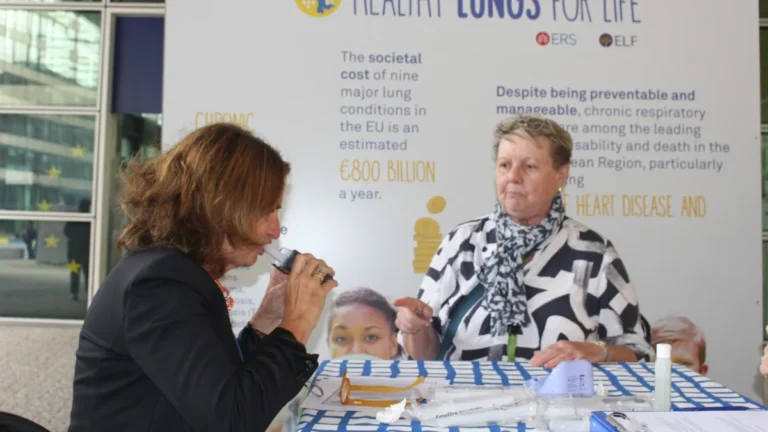
In an unprecedented show of unity, the European Respiratory Society (ERS), alongside a coalition of nearly 500 healthcare organizations, research institutions, and patient advocacy groups, has issued a stark ultimatum to the European Union’s leadership: prioritize health as a formal strategic pillar or risk the continent’s long-term economic and societal stability.
As negotiations regarding the European Union’s next Multiannual Financial Framework (MFF)—the bloc’s long-term budget—reach a critical juncture, this coalition is demanding that health be elevated from a secondary consideration to a ringfenced, dedicated budgetary priority. The appeal, directed at European Commission President Ursula von der Leyen, European Council President António Costa, and the governments of EU Member States, marks one of the largest and most coordinated advocacy efforts in the history of European public health.
Main Facts: The Demand for Fiscal Recognition
At the heart of the debate is a fundamental argument: Europe cannot sustain a competitive economy without a healthy population. The coalition contends that the current trajectory of EU policy risks sidelining public health just as the bloc pivots toward a new era of competitiveness, resilience, and economic security.
The joint letter emphasizes that health must no longer be treated as a reactive policy area but as a cornerstone of the European project. The key request is the creation of a "ringfenced" budget for health—a move that would prevent health funding from being diluted or redirected to other policy sectors during fiscal fluctuations.
The European Parliament has already set the stage, having adopted a firm position earlier in the spring of 2026. Legislators have proposed a €10 billion investment specifically for health in the upcoming MFF, signaling a clear legislative appetite for reform. The challenge now lies with the European Council, where Member State representatives must reach a consensus that aligns with this vision.
Chronology: A Multi-Year Path to This Moment
The push for a dedicated health budget did not materialize overnight. It is the culmination of years of systemic challenges that have forced the health sector to reassess its influence within the Brussels bureaucracy.
- 2020–2022 (The Pandemic Catalyst): The COVID-19 pandemic exposed the fragility of European health systems. While the subsequent "EU4Health" program was a significant step forward, advocates argue it was a temporary response to an emergency rather than a long-term strategic fixture.
- Early 2025: As discussions for the post-2027 MFF began, civil society groups began coalescing, recognizing that without a formal structural change, health funding would likely be cannibalized by defense and green transition priorities.
- Spring 2026: The European Parliament solidified its stance, formalizing the proposal for a €10 billion health allocation, a move celebrated by the health community as a vital legislative milestone.
- June 2026: The current letter marks the transition of the debate from parliamentary chambers to the European Council, where Member State governments now hold the keys to the final budget configuration.
Supporting Data: The High Cost of Inaction
The coalition’s argument is underpinned by sobering economic data. According to the World Health Organization (WHO), the economic toll of non-communicable diseases (NCDs) in Europe is staggering. The continent loses approximately €442 billion annually in productivity due to avoidable deaths related to these conditions.
These figures are not merely statistics; they represent a hemorrhage of human capital. As Europe faces an aging population and a shrinking workforce, the burden of chronic diseases—such as respiratory illnesses, cardiovascular issues, and cancer—directly threatens the Union’s industrial and economic output.
Furthermore, the "cost of inaction" is a recurring theme in the coalition’s analysis. While proponents of fiscal austerity might view a €10 billion health budget as a significant expenditure, the coalition argues that this is a pittance compared to the multi-billion-euro losses incurred by healthcare systems struggling to manage preventable crises. Preventive care, they argue, is the most effective economic stimulus a nation can provide.
Official Responses and Expert Voices
The campaign has garnered support from the highest echelons of the scientific and medical community. Prof. Barbara Hoffmann, Chair of the ERS Advocacy Council, has become the public face of this initiative, articulating a message that blends human rights with fiscal pragmatism.
"Health is not a luxury—it is a human right," Prof. Hoffmann stated in a recent briefing. "It is paramount that the importance of health is recognised as a priority area in the next MFF, with its own ringfenced budget allocated. Without this, Europe’s future is at risk, given the public health and economic implications of a failure to act."
Hoffmann’s perspective reflects a growing consensus among experts that the "siloing" of health policy within the EU framework is a strategic error. By treating health as a separate entity from economic policy, the EU fails to account for the reality that a healthy workforce is the engine of the "European competitiveness" that President von der Leyen has frequently championed.
While some Member States have signaled tentative support, the coalition acknowledges that a broad, cross-border commitment remains elusive. The coming months of negotiations in the European Council will be the ultimate test of whether the rhetoric of "European resilience" translates into actual, ringfenced funding.
Implications: A Crossroads for the European Project
The outcome of these negotiations will have profound implications for the future of the European Union.
1. The Integration of Health and Economy
If the coalition succeeds, it will represent a paradigm shift. It would move health policy from the periphery into the center of the EU’s economic agenda. It would acknowledge that fiscal stability is inextricably linked to the physical and mental well-being of the populace.
2. Strategic Autonomy
In an era where Europe is striving for strategic autonomy in defense and technology, the coalition argues that "health autonomy" is equally critical. Dependence on external sources for pharmaceuticals, medical equipment, and the ability to manage future pandemics depends entirely on the strength of the domestic health infrastructure. A dedicated budget is seen as the primary tool to achieve this level of internal security.
3. The Future of the MFF
The MFF is a zero-sum game. Every euro allocated to health is a euro that must be taken from another area, such as agriculture, infrastructure, or defense. By making such a vocal and public demand, the health community is forcing EU leaders to justify their priorities. If health is excluded from the final MFF, the coalition suggests that the EU will be failing its citizens at a time when they need the protection of the bloc most acutely.
4. Civil Society Influence
Finally, this coordinated action serves as a test of the health community’s political muscle. By mobilizing nearly 500 organizations, the sector has demonstrated that it is no longer content to act as an advisor to policy, but intends to be a driver of it. Whether this pressure can overcome the inertia of established budgetary processes remains to be seen.
Conclusion: The Mandate for Change
As the debate intensifies, the message from the ERS and its partners remains clear: the future of Europe is being written in the upcoming MFF negotiations. The "cost of inaction" is no longer a theoretical risk but a present-day reality characterized by lost productivity, burdened healthcare systems, and diminished economic potential.
The European Council now holds the mandate to determine whether the Union will continue to treat health as an peripheral concern or elevate it to the status of a fundamental strategic priority. With the European Parliament already on board and the economic data clearly illustrating the perils of the status quo, the pressure on Member States to act is mounting.
For the millions of citizens represented by the coalition, the demand is simple: invest in health today to safeguard the prosperity of Europe tomorrow. As Prof. Hoffmann aptly put it, "Spending for health and prevention may seem significant now, but the cost of inaction will be much higher in the future."
The eyes of the European health community, and indeed the European public, are now fixed on the Council chambers. The decisions made in the coming months will resonate for years to come, defining whether the EU truly values the well-being of its people as the bedrock of its competitive future.
To track the progress of this initiative or to review the full text of the joint letter, stakeholders and citizens are encouraged to visit the ERS Advocacy portal and the official European Cancer Organization policy hub.