As we cross the threshold into our fifties and beyond, the physiological landscape of the human body shifts. Muscle mass—a phenomenon known as sarcopenia—begins to decline at an accelerated rate if left unchallenged. However, the prevailing fitness myth that "more is better" often leads to burnout, injury, or chronic inflammation. For the aging athlete or the individual simply looking to maintain independence, the strategy must pivot from high-intensity, high-impact strain to intentional, compound movement.
Building strength after 50 is not about mirroring the workouts of your twenties; it is about precision, consistency, and structural integrity. By integrating a low-impact, high-reward morning routine, you can fortify your body against the demands of daily life without the debilitating soreness that sidelines progress.
The Paradigm Shift: Why Morning Consistency Trumps Intensity
For decades, the fitness industry championed the "no pain, no gain" mantra. But after 50, the body’s recovery capacity slows, and joints become less forgiving. Research suggests that the most effective way to sustain strength gains is through movements that prioritize neuromuscular control, joint mobility, and core stability.
Morning exercise serves as the ultimate "reset" button. By waking up the body with purposeful movement, you increase blood flow, lubricate the joints, and prime the nervous system for the day ahead. Compound movements—exercises that utilize multiple muscle groups simultaneously—are the gold standard for this age group. They mimic the natural mechanics of life, whether that involves reaching for a high shelf, squatting to pick up a grandchild, or maintaining balance on uneven terrain.
1. Sit-to-Stand Squats: The Foundation of Independence
The ability to rise from a chair without assistance is one of the most reliable predictors of long-term mobility. Sit-to-stand squats are the functional backbone of lower-body strength.
The Mechanics of the Movement
When you perform a sit-to-stand, you are engaging the quadriceps, glutes, and core. Crucially, this exercise teaches you to drive force through the heels and hips rather than relying on momentum or upper-body leverage. Over time, this restores the "power" phase of your stride, improving everything from stair climbing to walking gait.
How to Execute Properly
- Sit on a sturdy chair with your feet hip-width apart.
- Engage your core and lean slightly forward, keeping your chest tall.
- Drive through your heels to stand up fully, squeezing your glutes at the top.
- Slowly lower yourself back down with control—do not "plop" into the seat.
- Aim for 3 sets of 10–12 repetitions.
2. Wall Push-Ups: Upper-Body Resiliency
Upper-body strength is vital for posture and the ability to navigate the physical world, yet many people avoid floor-based push-ups due to wrist or shoulder sensitivity. The wall push-up offers an elegant solution.
Supporting the Kinetic Chain
By shifting the angle of the push-up to the wall, you reduce the load on your joints while still forcing the pectorals, deltoids, and triceps to fire. This movement promotes "scapular stability," which is essential for correcting the "slump" that often accompanies sedentary lifestyles.
Execution Tips
- Stand facing a wall, arms distance away.
- Place your palms on the wall at shoulder height.
- Keep your body in a straight line, core braced.
- Lower your chest toward the wall by bending your elbows, then push back to the start.
- Focus on smooth, controlled motions rather than speed.
3. Standing Knee Drives: Balance and Coordination
Balance is a "use it or lose it" skill. As we age, our proprioception—the body’s ability to sense its position in space—can diminish. Standing knee drives challenge the stabilizing muscles of the standing leg while engaging the hip flexors of the moving leg.
The Impact on Daily Movement
This exercise mimics the mechanics of walking and running. By strengthening the hips and core, you minimize the risk of falls and increase your movement confidence. It also serves as a mild cardiovascular stimulant, effectively waking up the metabolism.
How to Execute
- Stand tall, holding a wall or chair for balance if necessary.
- Lift one knee toward your chest while keeping your torso perfectly upright.
- Lower the foot back to the ground with control.
- Alternate legs for 10 repetitions per side.
4. Glute Bridges: Protecting the Posterior Chain
The gluteal muscles are the most powerful in the body, yet they are often "turned off" by prolonged sitting. A weak posterior chain puts excessive pressure on the lumbar spine and knees.
Why Glute Strength Matters
The glute bridge is a corrective exercise. It teaches the body to extend the hips using the glutes rather than the lower back. By strengthening this area, you provide a natural "corset" of support for your entire lower body, reducing chronic back pain and improving pelvic alignment.
Execution Guide
- Lie on your back with knees bent and feet flat on the floor.
- Push through your heels to lift your hips toward the ceiling.
- Squeeze your glutes at the peak of the movement.
- Slowly lower your hips back to the floor.
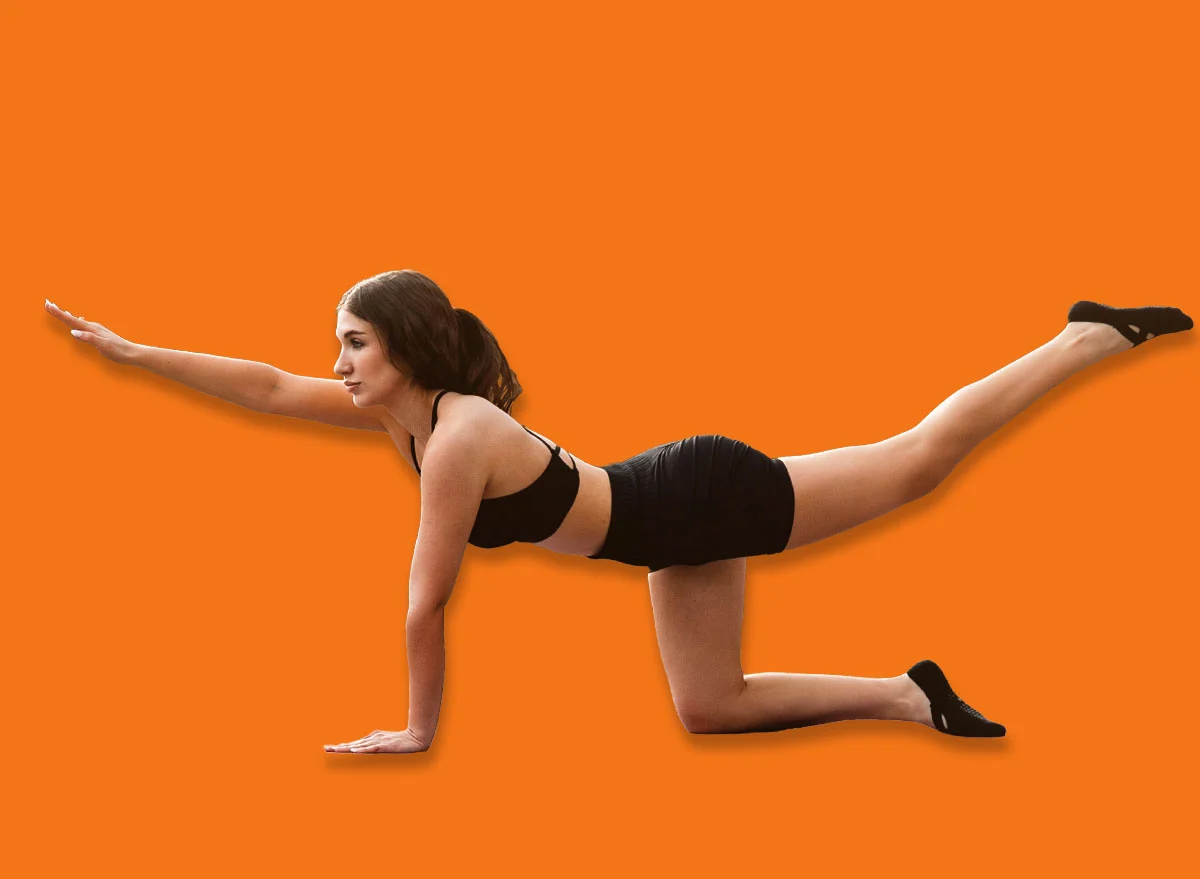
5. Bird Dogs: The Ultimate Core Stabilizer
The Bird Dog is a masterclass in spinal stability. It forces the core to work against rotational forces, training the muscles that protect the spine during everyday twisting or reaching motions.
Enhancing Body Awareness
Beyond strength, the Bird Dog improves coordination. By moving opposite limbs, you are forcing the left and right sides of the brain to communicate with the musculoskeletal system, a vital process for neurological health after 50.
Execution Steps
- Start on your hands and knees in a tabletop position.
- Simultaneously extend your right arm forward and your left leg backward.
- Keep your back flat and your hips level—do not let them tilt.
- Hold for 2–3 seconds, then return to center and switch sides.
The Implications of a Consistent Routine
Adopting this five-move morning sequence does not require a gym membership or hours of free time. The beauty of this routine lies in its efficiency. When performed consistently—ideally 4 to 5 mornings a week—these movements create a compounding effect.
The physiological implications are profound:
- Bone Density: Compound movements encourage bone remodeling, which is critical for preventing osteoporosis.
- Metabolic Health: Maintaining muscle mass helps regulate blood sugar levels, reducing the risk of type 2 diabetes.
- Mental Clarity: The discipline of a morning routine provides a psychological boost, setting a tone of self-care and intentionality for the rest of the day.
A Note from the Expert
As Tyler Read, a personal trainer with 15 years of experience, notes, "The most important part of any fitness program is its sustainability. If a program is too complex, you won’t stick with it. These five movements represent the most efficient way to maintain a strong, capable body without the burnout associated with high-intensity training."
Conclusion: The Path Forward
Rebuilding strength after 50 is a marathon, not a sprint. By moving away from the "burnout" culture and toward a framework of joint health, functional strength, and consistency, you ensure that your body remains a reliable vessel for the years to come. Start small, maintain your form, and listen to your body. Your future self will thank you for the foundation you are building today.