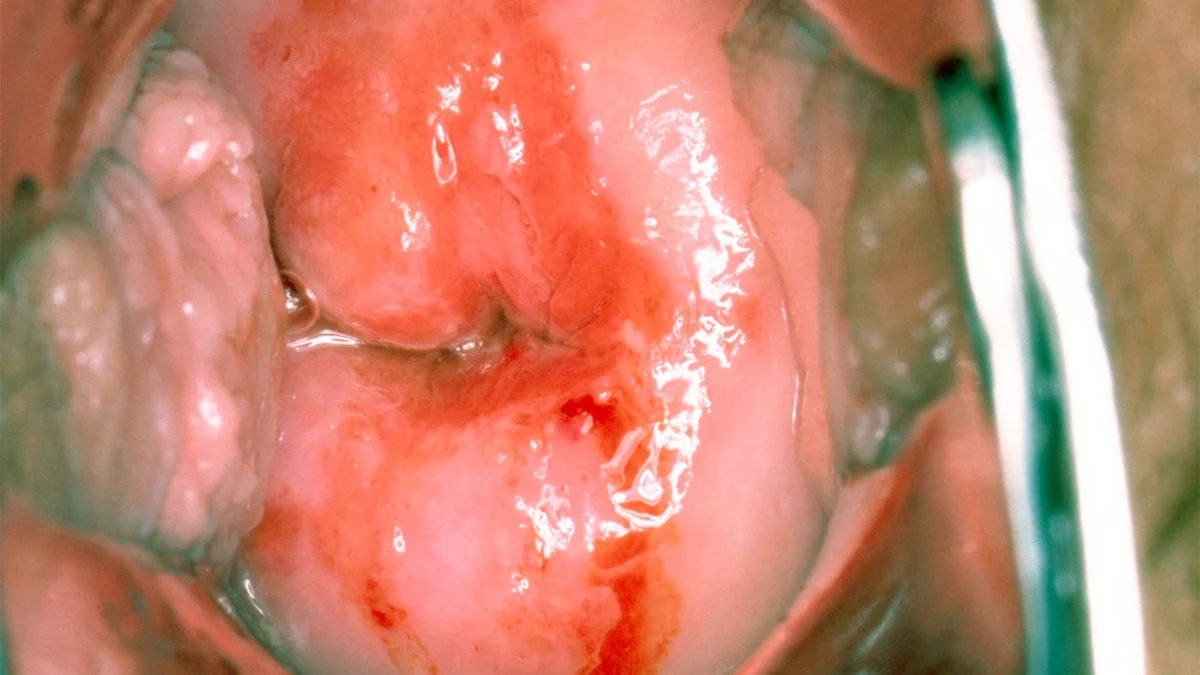
In a major shift that could redefine clinical standards for gynecological oncology, a new observational "target trial" emulation suggests that the immediate surgical treatment of cervical intraepithelial neoplasia grade 2 (CIN2) may not be necessary for many patients. The study, published in the Annals of Internal Medicine, indicates that delaying treatment for CIN2 is not associated with an increased risk of invasive cervical cancer over a three-year period and, significantly, reduces the rate of unnecessary surgical excisions.
The findings, led by Dr. Li C. Cheung of the National Cancer Institute’s Division of Cancer Epidemiology and Genetics, challenge the long-standing "treat-all" mentality that has characterized the management of CIN2 for decades. By leveraging a massive dataset of over 12,000 women, the researchers have provided a robust empirical argument for a more nuanced, risk-stratified approach to cervical health.
Main Facts: The Shift in Management Strategy
CIN2 represents a middle ground in the spectrum of cervical precancerous lesions. While there is universal consensus regarding the necessity of treating CIN3—the more advanced stage—the diagnosis of CIN2 has historically been plagued by ambiguity. It is frequently considered a "grey area" diagnosis, characterized by high rates of spontaneous regression, particularly in younger women.
The study compared two primary management strategies:
- Immediate Treatment: Defined as surgical excision (loop electrosurgical excision procedure or LEEP) within six months of a biopsy-confirmed CIN2 diagnosis.
- Delayed Treatment: Defined as a strategy involving continued surveillance with colposcopy and screening, with excision performed only if necessary after at least six months.
The results were striking: the three-year risk of developing invasive cervical cancer was nearly identical between the two groups—0.39% for those treated immediately versus 0.43% for those who opted for delayed intervention. Furthermore, the risk for developing CIN3+ (the more severe grade) at three years was 8.85% for the immediate treatment group and 10.31% for the delayed group.
Perhaps most importantly, the researchers identified a substantial reduction in "potentially unnecessary" procedures. Among those who underwent immediate excision, 36.2% of the tissue samples showed less than CIN2, suggesting that the surgery might have been avoided. In the delayed group, that number dropped to just 7.8%.
Chronology of the Research
The investigation, conducted using data from Kaiser Permanente Northern California, spanned from January 2017 to October 2023. The researchers identified a cohort of 12,012 women who had received a biopsy-confirmed CIN2 diagnosis.
Phase 1: Cohort Selection
The criteria for inclusion were stringent. Participants had to have a biopsy-confirmed CIN2 diagnosis without concurrent CIN3, no prior history of more severe lesions, and no history of hysterectomy or other destructive cervical procedures.
Phase 2: Stratification and Methodology
Because a traditional randomized controlled trial (RCT) is notoriously difficult to execute in this field—largely due to strong patient and physician preferences regarding cancer prevention—the researchers employed "target trial emulation." This statistical method uses observational data to mirror the design of a randomized study, adjusting for variables to estimate the "intention-to-treat" effect.
Phase 3: Monitoring and Outcome Assessment
Patients were tracked over a three-year window. The study measured:
- Clinical Outcomes: The incidence of invasive cervical cancer or progression to CIN3+.
- Surgical Outcomes: Categorization of tissue pathology post-excision to determine if the procedure was "appropriate" (CIN3+), "intermediate" (CIN2 with high-grade cytology), or "potentially unnecessary" (less than CIN2).
Supporting Data: Risk Stratification
One of the study’s most critical takeaways is that one size does not fit all. The research clearly differentiates between women based on their underlying risk factors, such as HPV 16/18 status and cytology results.
For women identified as "higher risk"—those testing positive for HPV 16 or 18 or exhibiting high-grade cytology—the risk of progression to CIN3+ remained elevated regardless of whether they were treated immediately or monitored. In this specific subgroup, the rates of unnecessary excisions were relatively similar across both management strategies.
However, the benefit of delayed treatment was most pronounced in "lower-risk" women: those who tested positive for high-risk HPV but maintained normal or low-grade cytology. In this cohort, immediate treatment was significantly more likely to result in an unnecessary surgical excision, exposing patients to the potential harms of surgery without a clear oncological benefit.
Official Responses and Clinical Perspectives
Dr. Li C. Cheung, in an interview with MedPage Today, emphasized the importance of balancing cancer prevention with the preservation of reproductive health. "This study provides evidence that treatment of CIN2, especially for those with lower-risk profiles, may be safely delayed," Dr. Cheung noted.
The medical community has long been aware of the "over-treatment" problem. Previous research has indicated that as many as 57% of CIN2 cases naturally regress, while only 22% progress to CIN3+. By rushing to excise tissue in every case, clinicians may be inadvertently causing obstetric complications—such as cervical insufficiency or preterm birth—that could have been avoided.
Dr. Cheung cautioned, however, that "delayed treatment" does not mean "no treatment" or "no follow-up." He stated, "Women with a CIN2 diagnosis remain at higher risk than women with less-than-CIN2 diagnoses and require continued, rigorous monitoring." The message is not to abandon vigilance, but to replace automatic surgery with a more thoughtful, evidence-based observation period.
Implications for Future Practice
The implications of this study are profound for both policy-making and daily clinical practice.
1. Moving Toward Precision Medicine
The research supports a transition to a risk-based management approach for cervical precancer. By utilizing biomarkers like HPV 16/18 and cytologic surveillance, clinicians can more accurately identify which patients truly require surgical intervention and which patients can safely wait.
2. Reducing Obstetric Risks
By reducing the number of unnecessary excisions, the healthcare system may lower the incidence of iatrogenic complications. Given that CIN2 is frequently diagnosed in younger, reproductive-age women, the reduction of surgical intervention is a critical step in improving long-term reproductive health outcomes.
3. Future Research Directions
Despite the strength of the data, the authors acknowledge limitations. The study is observational, meaning there is a potential for "residual confounding"—factors that might have influenced a physician’s decision to treat that were not captured in the electronic health records. Furthermore, because invasive cervical cancer is rare, the absolute numbers are small, making the estimates less precise than in a larger, multi-decade study.
Dr. Cheung noted that the next phase of research will focus on the "how": determining the optimal frequency and modality for monitoring patients who choose the delayed treatment path. Is a six-month interval appropriate for everyone, or should it be shorter for some and longer for others? These are the questions that will define the next generation of cervical cancer prevention guidelines.
4. A Shift in Patient-Provider Dialogue
The study empowers patients to have more informed conversations with their gynecologists. Instead of viewing a CIN2 diagnosis as an automatic prompt for surgery, patients and providers can now discuss the trade-offs of immediate excision versus active surveillance. This aligns with the broader medical trend toward shared decision-making, where the patient’s values, reproductive goals, and personal risk tolerance are integrated into the treatment plan.
Conclusion
The Annals of Internal Medicine study marks a significant maturation in how we handle cervical precancer. By proving that immediate surgery is not always the superior path for CIN2, the researchers have opened the door for a less invasive, more personalized, and equally effective standard of care. As clinical guidelines continue to evolve, this research will likely serve as a foundational pillar for a new, smarter era of women’s health.