











By Jonathan Gardner | June 23, 2026
In an escalating strategic maneuver to fortify the domestic life sciences sector, the U.S. federal government has launched an ambitious regulatory overhaul dubbed "Operation Trialblazer." This initiative, detailed in a comprehensive blueprint published by the Department of Health and Human Services (HHS) this week, seeks to reverse a troubling trend: the exodus of American drug developers who have increasingly turned to China to conduct their early-stage clinical trials.
For years, the allure of China’s biotechnology ecosystem—fueled by massive state investment and a hyper-efficient regulatory pipeline that often enables first-in-human trials within 18 months of molecule discovery—has drawn U.S. companies away from domestic shores. With Operation Trialblazer, Washington is signaling that the era of regulatory friction that drove this migration is coming to an end.
Main Facts: The Anatomy of the Blueprint
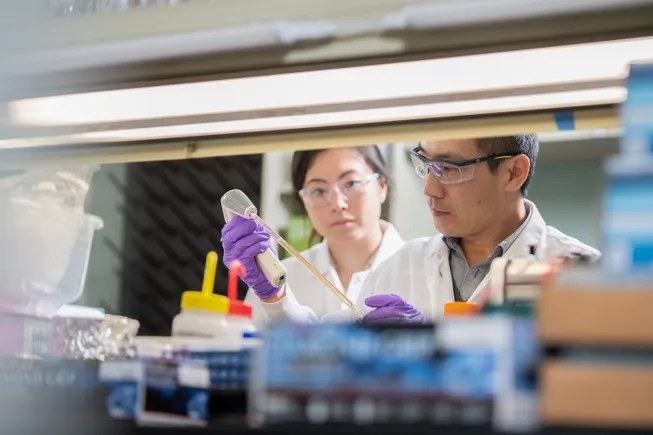
The central objective of Operation Trialblazer is to streamline the "valley of death"—the precarious phase between a laboratory discovery and the first human trial. The FDA, under the guidance of the new HHS policy, is moving to fundamentally alter how it interacts with sponsors during the Investigational New Drug (IND) application process.
The strategy hinges on three pillars:
- Regulatory Simplification: The FDA will now provide granular, explicit guidance on the minimum data sets required for IND filings, specifically aiming to prune excessive, redundant documentation related to toxicology, chemistry, and manufacturing controls (CMC).
- Protocol Flexibility: Recognizing that rigid trial designs often necessitate complex, time-consuming amendments, the agency is shifting toward a more agile framework. This allows sponsors to adjust trial parameters in real-time without triggering a cascade of administrative delays.
- Collaborative Consultation: A groundbreaking pilot project will connect drug developers with a centralized network of premier research institutions. This bridge is designed to provide "rolling submissions," where the FDA reviews institutional recommendations alongside developer data to provide iterative, timely feedback.
Chronology: The Road to "Trialblazer"
The U.S. government’s current pivot is the culmination of years of mounting concern regarding the "de-risking" of the American pharmaceutical supply chain.
- 2023–2024: Industry analysts begin tracking a sharp uptick in "in-licensing" deals, where U.S. biotech firms acquire early-stage assets developed in China to bypass the slow, expensive U.S. clinical entry process.
- Early 2025: President Donald Trump initiates a series of executive actions and public pressures, urging "Big Pharma" to repatriate manufacturing facilities. These efforts focus on securing the supply chain for active pharmaceutical ingredients (APIs) and critical biologic components.
- Late 2025: Congressional interest intensifies. Lawmakers propose bipartisan legislation to mandate rigorous reviews by the Treasury and Defense Departments for any licensing deals involving Chinese biotech entities, citing national security concerns.
- June 22, 2026: HHS officially releases the "Operation Trialblazer" blueprint, marking the first formal, systematic federal attempt to optimize the regulatory pathway for early-stage trials.
Supporting Data: Why the Shift Was Necessary
The data driving this policy shift is stark. Industry reports from late 2025 indicated that U.S.-based developers could save an average of 40% in initial development costs by initiating trials in Chinese facilities. Furthermore, the "time-to-first-patient" metric in China consistently outperformed the U.S. by an average of six to nine months.
However, the U.S. maintains a qualitative edge. The federal blueprint emphasizes that while China offers speed, the U.S. infrastructure for "proof-of-concept" studies—which require high-acuity medical care and complex monitoring—remains the global gold standard. By reducing the regulatory "tax" on domestic trials, HHS hopes to leverage this inherent advantage to bring companies back home.
Additionally, the proposal to modernize patient participation is backed by research indicating that enrollment is the single largest bottleneck in U.S. clinical trials. HHS is exploring the legality of offering patient stipends and subsidizing insurance cost-sharing. If approved, this would represent a massive departure from traditional trial models, potentially increasing enrollment rates by 20–30% in underserved demographic groups.
Official Responses and Industry Sentiment
The policy has drawn immediate, mostly favorable, responses from the scientific community. Former FDA Commissioner Scott Gottlieb, a vocal advocate for regulatory modernization, took to social media to endorse the move.

"The U.S. has an inherent advantage in conducting proof-of-concept studies because good medical care, which is vital for patients receiving complex, novel therapies, is simply handled better in the U.S. than anywhere else," Gottlieb wrote. "But the time and cost advantage cannot tilt so heavily against U.S.-based trials, or we will lose our edge in innovation."
Industry trade groups, including the Biotechnology Innovation Organization (BIO), have signaled cautious optimism. While some have questioned whether the FDA has the internal staffing capacity to handle the "rolling submissions" platform, the consensus is that the reduction in redundant toxicology requirements is a "win" that could save small firms millions in pre-clinical spending.
Implications: A New Era for U.S. Biotech
The implications of Operation Trialblazer extend far beyond mere regulatory paperwork.
For Domestic Manufacturers
By incentivizing early trials in the U.S., the government is creating a "sticky" ecosystem. Companies that begin their clinical journey in the U.S. are significantly more likely to keep their late-stage manufacturing in the country, creating a virtuous cycle of domestic job creation and industrial growth. This aligns with the administration’s broader protectionist strategy.
For Clinical Trial Diversity
The National Institutes of Health (NIH) is tasked with integrating "Trialblazer" with modern technology. By promoting the use of telehealth, decentralized monitoring, and AI-driven data collection, the NIH aims to reach populations in rural and underserved areas. This is not only a health equity initiative but a strategic one; expanding the pool of potential trial participants directly increases the speed at which trials can reach full enrollment.

For Global Geopolitics
This policy is a clear shot across the bow of international competitors. By making the U.S. a more attractive venue for initial investment, the government is effectively "sanctioning" the Chinese biotech advantage through competition rather than prohibition. It shifts the burden of proof to the market: if the U.S. regulatory system is as efficient as its scientific talent, the argument for outsourcing innovation to China weakens.
The Legal Frontier
Perhaps the most controversial aspect of the plan is the inquiry into anti-kickback laws. Historically, the U.S. has been extremely cautious about compensating trial participants to avoid the appearance of "coercion" or "inducement." If HHS successfully navigates the legal hurdles to allow stipends and expense reimbursements, it will rewrite the rulebook on how clinical research is conducted, making the U.S. a more attractive environment for patient-centric trial design.
Conclusion: The Road Ahead
Operation Trialblazer represents a bold, multi-faceted attempt to reclaim the crown of global biotech innovation. While the success of the initiative will ultimately depend on the FDA’s ability to execute these reforms without compromising safety standards, the intent is clear: the U.S. is no longer content to cede the early-stage development market.
As the industry digests the new blueprint, the message to investors and researchers is unequivocal: the United States is ready to compete on speed, cost, and access. The next few years will determine whether this pivot is enough to halt the migration of innovation and solidify the U.S. as the premier destination for the medicines of tomorrow.