










For decades, the American narrative surrounding cancer has been geographically tethered to specific, well-defined regions. Public health discourse frequently centered on the industrial corridors of the Deep South’s “Cancer Alley” or the Appalachian states, where high rates of tobacco use have long dictated health outcomes. However, a jarring shift in epidemiological data has forced a national reckoning in an unlikely place: the heart of the American Midwest.
Iowa, a state synonymous with rolling cornfields and agricultural abundance, now finds itself at the center of a public health crisis. Recent data indicates that Iowa has the second-highest cancer incidence rate in the United States. Perhaps more concerning is that it remains one of only three states in the nation where cancer rates are currently on an upward trajectory. As families across the state grapple with the devastating personal toll of this trend, researchers, policymakers, and industry leaders are locked in a complex debate over the root causes and the path forward.
The Human Cost: A Personal Perspective
The statistics, while sobering, only tell half the story. The reality of Iowa’s cancer surge is best understood through the experiences of those living in its shadow.
Becca Mataloni, a 35-year-old resident of the Des Moines area, first noticed something was wrong in 2019. It began with an auditory symptom—a rhythmic, crackling noise that accompanied every inhalation. "Kind of like dial-up internet," Mataloni recalls. By 2022, she was battling pneumonia, a condition that recurred in 2024. Subsequent scans and a consultation with a pulmonologist revealed the unthinkable: a cancerous tumor in her lung.
"It’s really devastating to get a cancer diagnosis in your 30s," Mataloni says. Beyond the immediate shock, the diagnosis required a life-altering surgery to remove two-thirds of her lung, leaving her to grapple with the uncertainty of her future physical capabilities.
In rural Northern Iowa, the trauma is often collective. Shelley Phelps, a resident who lost her sister to breast cancer in 2015, faced a secondary tragedy just two years later when her husband, Michael, was diagnosed with stage four colon cancer. The logistical burden of rural cancer care compounded their grief; Michael required hour-long drives for every treatment session. He passed away in 2020 at the age of 50. For Phelps, the anxiety is constant. "You’re always waiting for that next shoe to fall," she says. "Who’s going to be diagnosed next?"
Chronology of a Crisis
The current spike in Iowa is a departure from historical norms. Up until approximately 2013, the state’s cancer incidence trends largely mirrored those of the rest of the nation. However, following that year, the trajectory diverged sharply.
The rise is not limited to a single form of the disease; rather, it is driven by increases in prostate, breast, and lung cancers, as well as a concerning uptick in melanoma. Notably, the incidence rate among young Iowans is among the highest in the country. This divergence has triggered a decade of public concern and a frantic search for answers.
Supporting Data and Potential Culprits
Mary Charlton, who leads the Iowa Cancer Registry, has spent over 50 years tracking the state’s data. Her team is tasked with the monumental, and often maddening, challenge of identifying why Iowa’s rates are rising while other states have stabilized or declined.
"As much as we would love to reduce it down to one thing and figure this out and change Iowa’s rates, we would do that," Charlton explains. "But that’s not how cancer works." The complexity of the disease, she notes, is exacerbated by the fact that individuals exposed to the same environmental factors may have vastly different immune responses.
Behavioral and Environmental Factors
Charlton and her colleagues point to a trifecta of known risk factors that have historically plagued the state:
- Binge Drinking: Iowa consistently ranks among the states with the highest rates of excessive alcohol consumption, a known carcinogen.
- Tobacco Policy: The state has failed to increase its cigarette tax—a proven mechanism for reducing smoking prevalence—in nearly 20 years.
- Radon Exposure: The entire state is classified as high-risk for radon, a radioactive gas that naturally emanates from the soil and can accumulate in homes, serving as a leading cause of lung cancer for non-smokers.
The "Elephant in the Room": Agriculture
While behavioral factors are significant, there is a growing consensus that they do not account for the entirety of the surge. Adam Shriver, director of wellness and nutrition policy at The Harkin Institute of Drake University, argues that there is an "elephant in the room": the state’s intensive agricultural landscape.
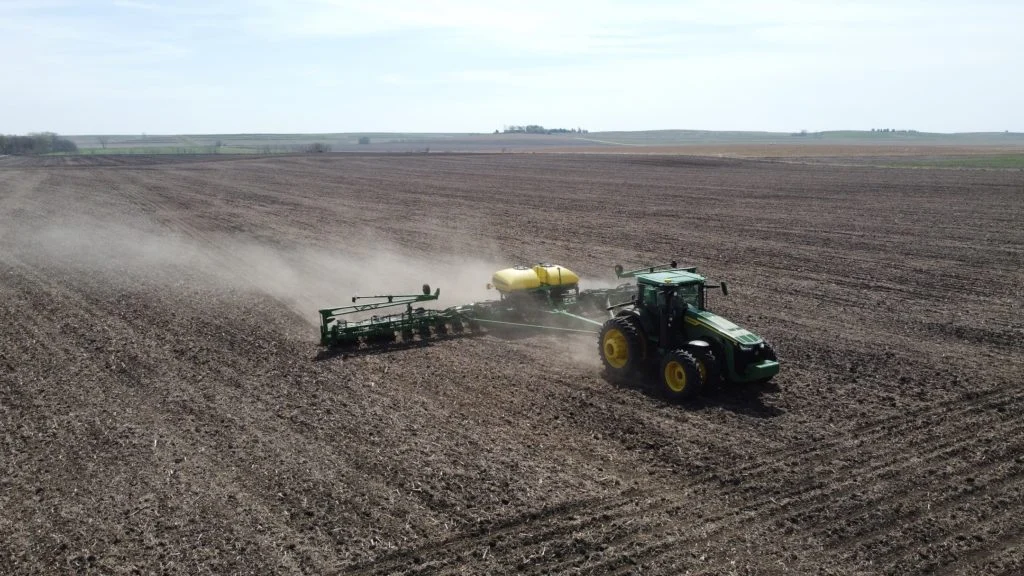
With over 80 percent of Iowa’s land dedicated to agriculture, the state leads the nation in the production of corn, eggs, and pork. A report released in March by Shriver’s team established correlations between common cancers in Iowa and environmental stressors such as pesticide exposure and nitrate runoff from synthetic fertilizers.
The impact is felt even within the agricultural community. Dan Voss, a fifth-generation corn and soybean farmer, has seen the disease touch his own life. His wife, Susan, survived liver cancer in 2012, and in 2024, Dan himself was diagnosed with non-Hodgkin’s lymphoma. "In my case, could it be ag? Well, I think there’s a chance," Voss admits. "I think the state needs to have a good honest discussion about where we’re at."
Official Responses and Industry Tensions
The dialogue between the public health sector and the agricultural industry is currently defined by a delicate tension.
Steve Kuiper, vice president of the Iowa Corn Growers Association, maintains that current farming practices are safe when labels are followed. "Too many people are poking farmers in the chest and saying, ‘you’re polluting,’" Kuiper says, emphasizing that farmers are willing to adapt but require robust data to justify significant operational changes. He notes that many agricultural products undergo years of rigorous testing before reaching the market.
However, advocates like Shriver argue that the oversight process is fundamentally flawed. "Right now, public health is not part of the equation when we’re deciding on agricultural policy," he asserts. "And it seems like it really should be."
Implications for the Future
The implications of this health crisis are beginning to reshape the state’s political landscape. With upcoming elections for governor, the U.S. Senate, and the agriculture secretary, cancer policy has migrated from academic journals to the campaign trail. Candidates are under increasing pressure to propose actionable solutions.
Medical professionals, such as Dr. Daniel Kollmorgen, medical director of oncology at Mahaska Health, suggest that the path forward requires a two-pronged approach. While he notes that Iowa’s mortality rates remain largely in line with the national average—likely due to the quality of care provided—he advocates for better screening accessibility in rural counties. Furthermore, he supports more stringent regulation of agricultural chemicals and improved water quality monitoring.
For the residents of Iowa, the wait for definitive answers is agonizing. As the state grapples with its status as a cancer hotspot, community-led initiatives are attempting to fill the void. Organizations like the one Shelley Phelps supports have assisted hundreds of families with the financial and emotional burdens of cancer, proving that while the scientific community debates the cause, the community itself is already mobilizing to manage the fallout.
The question of whether Iowa’s cancer crisis is a byproduct of modern farming, systemic policy neglect, or a confluence of environmental hazards remains unanswered. What is certain, however, is that for the thousands of Iowans facing a diagnosis, the time for academic debate is rapidly running out. The state stands at a crossroads, forced to balance its economic identity as an agricultural powerhouse against the urgent, life-saving necessity of safeguarding public health.