Correction: This story has been updated to clarify that while the Centers for Disease Control and Prevention (CDC) provides public health guidance, other federal agencies are responsible for oversight of official dietary recommendations.
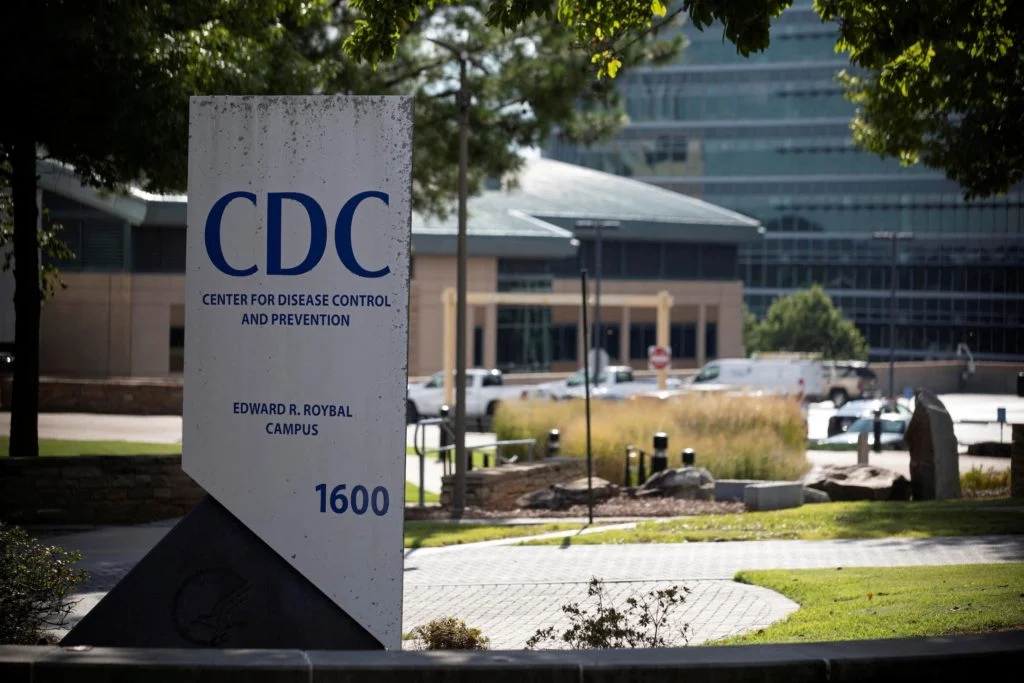
The bedrock of American public health—the perceived objectivity and reliability of federal agencies—is undergoing a profound transformation. According to a new poll released Tuesday by the Harvard T.H. Chan School of Public Health and the de Beaumont Foundation, trust in the Centers for Disease Control and Prevention (CDC) has plummeted, with only 50% of Americans currently expressing confidence in the agency’s recommendations. This figure marks a significant decline from the 77% approval rating recorded just one year ago.
The data, derived from a survey of 2,205 U.S. adults, suggests that the American public is increasingly viewing scientific guidance through a partisan lens. Half of all respondents indicated that their trust in federal public health recommendations has eroded since the beginning of President Donald Trump’s second term.
A Chronology of Declining Confidence
The trajectory of public trust in federal health institutions has been volatile, yet rarely as steep as the decline observed in the last twelve months. Following the global COVID-19 pandemic, trust in the CDC remained relatively stable, hovering between 74% and 78% from 2022 through 2025.
Gillian SteelFisher, director of the Harvard Opinion Research Program, notes that while public health institutions have experienced cycles of skepticism in the past, the current velocity of decline is unprecedented. "If you just say it’s one party or the other, that’s a mistake," SteelFisher explained. "We would look back at the COVID-19 era and say, ‘Okay, there’s lots of politics at play there, too.’ This is a culmination of long-term trends exacerbated by current leadership decisions."
The appointment of Robert F. Kennedy Jr. to lead the Department of Health and Human Services (HHS) has served as a focal point for this shift. Many Americans perceive the agency’s recent health recommendations as being filtered through the personal ideological biases of its leadership rather than the consensus of the scientific community. The poll reveals that 68% of Americans agree that CDC recommendations are being influenced by the personal beliefs of agency heads, while 66% feel that federal public health agencies have focused "too much" on the wrong priorities.
Supporting Data: The Partisan Divide
The poll highlights a striking divergence in how Americans perceive scientific integrity. For the first time in recent history, trust in the CDC has risen among one specific demographic: Republican voters. Confidence within this group ticked upward to 67%, compared to 63% when the poll was last conducted in April 2025. Conversely, only 14% of Democrats report approving of the actions taken by federal public health agencies under the current administration.
This partisan reversal is not merely a matter of political opinion; it represents a fundamental fracture in the nation’s relationship with scientific fact. Brian Castrucci, president and CEO of the de Beaumont Foundation, argues that the data demonstrates a "deep polarization of facts and science."
"We now live in a world where scientific fact is understood through a partisan lens," Castrucci said. "While we can create partisan differences between health facts, disease doesn’t discriminate. Measles, Ebola, and hantavirus don’t really care what we think. If we don’t have a united response, that is extraordinarily dangerous for our country."
Beyond the party divide, the loss of trust is remarkably consistent across almost all demographic subgroups. Whether categorized by gender, race, education level, or geography—urban, suburban, or rural—the sentiment of skepticism remains pervasive.
The Changing Landscape of Health Information
As trust in the federal "gold standard" of information fades, Americans are turning toward alternative sources. Kathleen Hall Jamieson, director of the Annenberg Public Policy Center at the University of Pennsylvania, suggests that the way Americans make health decisions is undergoing a fundamental change.
"The answer used to be that there was no difference in recommendations," Jamieson noted, observing that the public previously saw little daylight between government agencies and professional medical organizations. "Now, the answer is that they trust non-governmental organizations more than the CDC."
Research supports this trend. A March poll from the Annenberg Public Policy Center found that approximately three-quarters of Americans express higher confidence in entities such as the American Medical Association, the American Academy of Pediatrics, and the American Heart Association than they do in federal agencies like the CDC, the National Institutes of Health (NIH), or the Food and Drug Administration (FDA).
State and local public health departments also continue to outperform federal agencies in the trust department, though they have not been immune to the broader trend of decline. Currently, 66% of Americans trust their state health departments, and 70% trust their local counterparts—both significant drops from the 80% and 82% recorded in 2025.
Official Responses and Public Reaction to Policy Changes
The public’s response to recent policy shifts reveals a complex, nuanced reality. While trust in the institution is low, many Americans remain supportive of specific health directives.
For instance, there is broad support for new dietary guidelines that emphasize the reduction of added sugars and highly processed foods, with 90% of Americans backing these specific changes. Support is also high for increasing protein intake, though the recommendation to increase the consumption of beef and whole milk receives significantly less public backing, at 62%.
Vaccination policy remains perhaps the most contentious battleground. Despite recent federal government efforts to reduce the number of recommended childhood vaccinations—a move that has drawn sharp criticism from much of the medical establishment—the public remains largely supportive of routine immunization. However, the partisan divide is visible: 96% of Democrats view routine childhood vaccines as "very" or "somewhat" safe, compared to 85% of Republicans.
Implications for Future Public Health
The "monopoly" that scientists and doctors once held on public discourse has been effectively broken, according to Castrucci. The rise of social media and the rapid proliferation of misinformation have created a marketplace of ideas where scientific consensus must compete with ideological narratives.
"The CDC has lost its cachet as a trusted messenger," Castrucci said. "Just because we don’t trust the CDC doesn’t necessarily mean that we’ve abandoned the facts, but it does mean that public health officials have not yet adapted to a world where they must earn their credibility rather than assuming it."
The long-term implications are troubling for emergency preparedness. If a major health crisis were to strike, the ability of federal officials to mobilize a coherent and compliant public response is severely hampered by this lack of trust. If the government cannot serve as a unifying source of truth, the country risks a fragmented, inconsistent response to future threats.
As the nation looks ahead, the central question remains whether federal agencies can restore their standing or if the current fragmentation of public health authority is the new normal. For now, the "scientific lens" remains clouded by the political environment, leaving Americans to navigate their health and medical decisions in an era defined by deep-seated skepticism and the search for reliable, non-partisan guidance.