








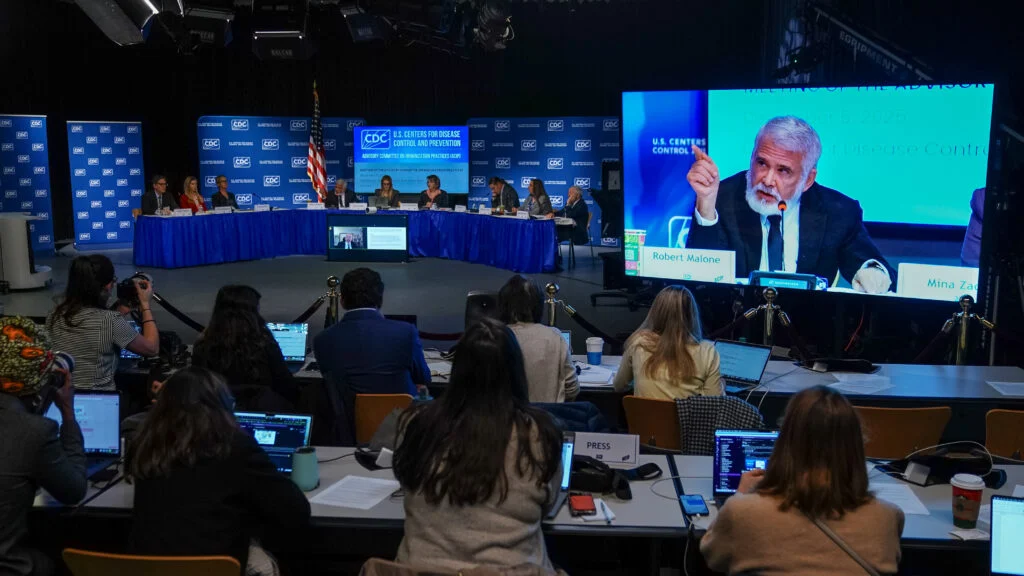
The landscape of American public health policy has shifted dramatically following the release of a new, revised charter for the Centers for Disease Control and Prevention’s (CDC) Advisory Committee on Immunization Practices (ACIP). The document, officially published on the agency’s website this past Thursday, marks a departure from decades of established protocol, effectively diluting the committee’s mandate to recommend new vaccines while broadening its scope to include the assessment of “alternatives” for disease prevention.
The move, orchestrated under the leadership of Health and Human Services (HHS) Secretary Robert F. Kennedy Jr., represents the latest maneuver in a protracted legal and administrative battle over the future of federal vaccine policy. By reconfiguring the foundational requirements for committee membership and redefining the panel’s primary mission, the administration appears to be attempting to insulate its controversial appointments from ongoing judicial scrutiny.
The Core Mandate: A Shift in Focus
For generations, the ACIP has functioned as the bedrock of American immunization strategy. Its recommendations have historically dictated the federal Vaccines for Children (VFC) program, insurance coverage mandates, and the public health guidance that underpins state-level school entry requirements.
The new charter substantively alters this mission. Where previous versions emphasized the evaluation of vaccine clinical trial data and the optimization of immunization schedules, the updated document shifts the committee’s focus toward a broader, more nebulous mandate: assessing a wide range of preventive measures. Critics argue that by prioritizing "alternatives" to vaccination, the charter creates a strategic opening to elevate unproven or non-traditional disease prevention methods, effectively sidelining the rigor of standard vaccine science.
Chronology of a Conflict: From Mass Firings to Judicial Limbo
The current state of the ACIP is the result of a deliberate, year-long campaign by the current administration to reshape federal health advisory bodies.
- June 2025: Secretary Robert F. Kennedy Jr. summarily dismissed the existing members of the ACIP, a group comprised of the nation’s leading infectious disease experts, pediatricians, and immunologists.
- June 2025 (Late): The Secretary announced a new slate of appointees. These individuals, largely known for their vocal skepticism of vaccine efficacy and safety, lacked the traditional credentials—such as experience in clinical trial design or large-scale epidemiological assessment—required by the previous charter.
- March 2026: A federal judge issued a preliminary ruling in response to a lawsuit brought by the American Academy of Pediatrics (AAP). The court found that the new committee members lacked the necessary qualifications mandated by the then-current charter, effectively paralyzing the ACIP.
- March 2026 (Later): An initial attempt to amend the charter to legalize the new appointments was signed by Secretary Kennedy but was ultimately deemed insufficient and legally invalid by the court.
- May 14, 2026: The current, finalized version of the charter was dated, though it was not made public until months later, leaving legal experts and the medical community questioning the delay.
- Present Day: The ACIP remains in a state of suspended animation. The committee, which previously adhered to a strict schedule of three annual meetings—in February, June, and October—has failed to convene a single session this calendar year.
The Membership Clause: Diluting Scientific Expertise
Perhaps the most significant change lies in the language governing who may serve on the committee. Historically, the ACIP charter explicitly required members to possess deep, research-relevant experience in vaccines and immunology.
The new charter discards these specific benchmarks in favor of a vague, catch-all requirement: the committee as a whole must “represent a balanced range of scientific, clinical, and public health expertise relevant to the Committee’s mission.”
Legal observers note that this "balanced range" language provides a loophole large enough to include individuals with little to no professional experience in vaccinology. By replacing concrete scientific requirements with broad, subjective terminology, the administration has effectively retrofitted the charter to grant legitimacy to the skeptics currently occupying the panel.
Implications for Public Health and the VFC Program
The stakes of this administrative restructuring extend far beyond bureaucratic maneuvering. The ACIP serves as the gatekeeper for the Vaccines for Children (VFC) program, a vital federal safety net that provides free, life-saving immunizations to millions of children from uninsured or underinsured families.
If the ACIP’s authority to recommend vaccines is diminished, or if the committee is used to cast doubt on existing immunization standards, the downstream effects could be catastrophic. Insurance companies often base their coverage mandates on ACIP recommendations; should those recommendations become polarized or inconsistent with the consensus of the broader global scientific community, access to standard, preventative care could be severely compromised.
Charlotte Moser, a former member of the ACIP who was among those terminated in 2025, expressed deep concern over the "gaps and limitations" language embedded in the new charter. "The revised text suggests that rather than focusing on how to effectively and safely use vaccines, the committee should be comparing vaccines with ‘other preventive measures,’" Moser stated. "It represents a fundamental pivot away from the committee’s core responsibility of ensuring the health and safety of the nation through proven science."
Expert and Legal Commentary: A Strategy of Avoidance
The legal community views the new charter as a tactical response to the judicial setbacks encountered by the administration. Richard Hughes, the attorney representing the American Academy of Pediatrics, argues that the document is a transparent attempt to evade the law.
"The March charter was an overt attempt to shift ACIP’s focus to match Kennedy’s vaccine agenda," Hughes noted. "Here, they are simply trying to minimize what they are doing on paper to avoid the legal consequences of their manipulation of the committee. The architecture remains the same: looser expertise requirements, the changed liaison mix, and less direct acknowledgement of how these recommendations drive access to the VFC program."
Sara Rosenbaum, professor emerita of health law and policy at George Washington University’s Milken Institute School of Public Health, described the move as an attempt to "superimpose" personal ideology over established medical evidence.
"When the court tells you that many of your appointments fail to meet the charter criteria and therefore the results of their deliberations must be set aside, change the charter," Rosenbaum said. "He has taken one of the nation’s most respected scientific advisory bodies, altered its mission to somehow support his preferred aim of proving that vaccines are dangerous, and stacked its operations with staff who share his views."
Paul Offit, a renowned pediatrician and vaccine expert at the Children’s Hospital of Philadelphia, echoed these sentiments, characterizing the effort as a deliberate degradation of the advisory process. "RFK Jr. is trying to retrofit the charter to make it so that the people he brought in actually qualify," Offit said. "He is trying to ensure we don’t have the expertise that can best advise the public."
The Path Ahead: Continued Litigation
As the administration appeals the federal judge’s ruling, the legal battle remains in an active phase. Both the government and the plaintiffs have recently filed status reports, though the proceedings remain shrouded in confidentiality disputes regarding the evidence being considered by the court.
For now, the ACIP remains a hollowed-out institution. The absence of regular meetings, combined with the loss of its most experienced voices, leaves a vacuum in federal public health guidance. As the legal wrangling continues, the broader question remains whether a cornerstone of modern American public health—the evidence-based, expert-led vaccine advisory process—can survive this fundamental transformation, or if it will be permanently reshaped to serve the ideological objectives of its current overseers.