











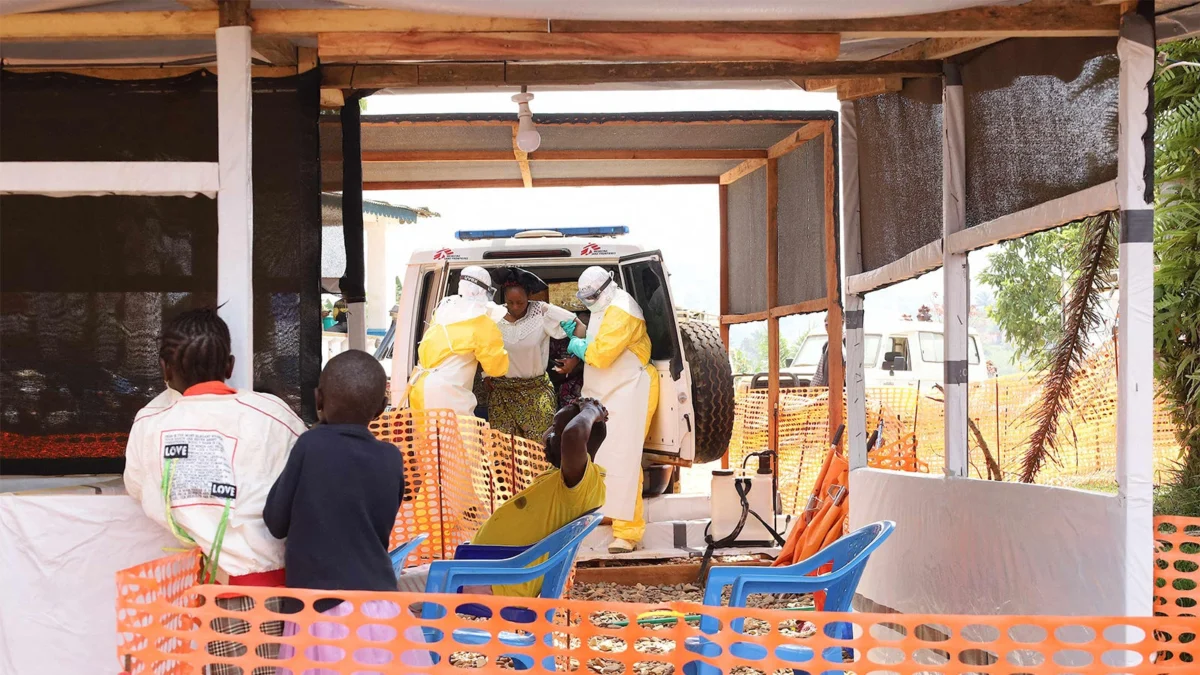
In a significant departure from the clinical expectations established by decades of Filovirus research, the current outbreak of Bundibugyo virus disease (BVD) is presenting a paradoxical challenge to public health officials. According to a preliminary report published in the New England Journal of Medicine, approximately 90% of patients testing positive for BVD are exhibiting no signs of the hallmark hemorrhagic symptoms—uncontrolled bleeding—that have historically defined Ebola virus disease (EVD) in the public consciousness and medical literature.
This clinical shift, while potentially signaling a less aggressive disease course in some patients, is creating a "stealth" contagion scenario. By presenting with milder, more generalized symptoms, the virus is becoming increasingly difficult to distinguish from other endemic tropical illnesses, complicating early detection, patient isolation, and the strategic deployment of limited diagnostic resources.
The Clinical Shift: Decoding the Bundibugyo Presentation
The study, led by Placide Mbala-Kingebeni, PhD, of the National Institute of Biomedical Research in Kinshasa, Democratic Republic of Congo, analyzed a database of 2,351 recorded BVD cases between May 3 and June 8. Of these, researchers focused on 505 laboratory-confirmed cases and 635 suspected cases that ultimately tested negative.
Hemorrhage: An Outdated Metric?
Historically, unexplained bleeding—the clinical hallmark of Ebola—is observed in roughly 40% of cases. In a notable 2007 study of a previous BVD outbreak, researchers recorded bleeding in 54% of confirmed cases. However, the current cohort presents a stark contrast: the bleeding rate among confirmed cases was just 10.4%, a figure statistically indistinguishable from the 10.3% observed in patients who tested negative for the virus.
“Hemorrhagic signs were infrequent at presentation,” the research team noted. While they acknowledged that discrepancies could stem from variations in reporting practices, the data suggests a fundamental change in how this specific strain is manifesting in the human host.
Identifying the Signature Symptoms
Because BVD’s early symptoms—fever, muscle pain, and headache—are common to a wide range of diseases, differential diagnosis is notoriously difficult. The study identified a specific cluster of indicators that correlate more strongly with positive BVD status than with other illnesses. Confirmed BVD patients were significantly more likely to exhibit:
- Systemic Symptoms: Fever (74.3% vs. 64.9%) and anorexia (39.5% vs. 17.2%).
- Gastrointestinal Distress: Vomiting (66.7% vs. 50.8%), diarrhea (67.4% vs. 49.6%), and abdominal pain (37.3% vs. 16.3%).
- Respiratory and Pharyngeal Issues: Difficulty breathing (34.1% vs. 10.9%) and difficulty swallowing (32.8% vs. 10.7%).
The researchers suggest that these specific indicators should be used to triage patients in resource-limited settings, allowing medical staff to prioritize those most likely to be infected before laboratory confirmation is available.
Chronology of the Outbreak
The current BVD epidemic has unfolded rapidly across the Democratic Republic of Congo and parts of neighboring Uganda, testing the resilience of regional health systems.
- Early 2026: Initial cases of an unidentified febrile illness are reported in rural provinces of the DRC.
- May 3, 2026: Commencement of the primary data collection period for the Mbala-Kingebeni study, capturing the initial surge of the outbreak.
- June 8, 2026: Data cutoff for the New England Journal of Medicine analysis, which provided the first comprehensive look at the clinical characteristics of the current strain.
- June 23, 2026: The World Health Organization (WHO) issues a formal status update, reporting 1,138 confirmed cases and 293 deaths.
- Late June 2026: WHO and international health experts begin public warnings that the "milder" nature of the disease is inadvertently facilitating community transmission by encouraging patients to seek care later or remain in their homes.
Supporting Data and Viral Dynamics
The research team highlighted a concerning trend regarding the timeline of care. On average, there is a week-long delay between the onset of symptoms and the collection of a biological sample for testing. This delay represents a critical window of vulnerability.
Viral Load as a Predictor of Mortality
One of the most compelling findings from the study involves the use of cycle-threshold (Ct) values, which serve as a proxy for viral load. Patients who did not survive their infection showed significantly lower Ct values (median 24.4) compared to survivors (median 28.7). This confirms that higher concentrations of the virus in the body remain a primary driver of mortality, even when the classic, visually alarming symptom of hemorrhage is absent.
Fatality Ratios
As of the latest reports, the case fatality ratio stands at approximately 26%. While this is lower than the 30% and 50% fatality rates seen in the 2007 and 2012 BVD outbreaks, respectively, experts caution against premature optimism. The 18.8% mortality rate observed among the study’s confirmed subset by the June 8 cutoff is not necessarily the final case fatality rate, as many patients remained in treatment or under observation.
Official Responses and Public Health Implications
The World Health Organization has expressed significant concern that the altered clinical presentation of this BVD strain may complicate the global response. When a disease is perceived as "mild" or "flu-like" rather than "hemorrhagic," the urgency for community quarantine and strict contact tracing can wane.
The "Stealth" Containment Problem
WHO officials have warned that because the symptoms mimic common endemic diseases, the threshold for seeking medical help is higher, and the likelihood of community-based transmission is significantly increased. If a patient does not feel "sick enough" to be terrified by symptoms, they are less likely to isolate themselves from family members or seek professional medical intervention until the disease has progressed to a critical, high-viral-load state.
Strategic Recommendations
In their report, Mbala-Kingebeni and his colleagues advocate for several key policy shifts:
- Earlier Advocacy: There is an urgent need for public health campaigns that emphasize the importance of seeking care for persistent fever and gastrointestinal issues, even in the absence of bleeding.
- Targeted Diagnostics: Using the identified symptom clusters—specifically difficulty swallowing and breathing—to prioritize diagnostic testing when supplies are limited.
- Tailored Response: Clinical protocols should be updated to reflect that a lack of hemorrhagic signs does not rule out BVD. Infection control measures, such as cohorting and PPE usage, must be strictly enforced regardless of whether the patient appears to be "bleeding out."
Future Outlook: A New Paradigm for Filoviruses
The current BVD outbreak serves as a sobering reminder that pathogens evolve, and clinical benchmarks that hold true for decades can shift overnight. The ability of the Bundibugyo virus to maintain a high level of transmissibility while avoiding the most "alarming" symptoms has created a perfect storm for public health authorities.
"These early data from the current BVD outbreak suggest a clinical syndrome largely compatible with that of other Filoviruses," the authors wrote, "enabling clinical and public health responses to be tailored to this expected disease course." However, the underlying message is clear: the medical community can no longer rely on the presence of blood to trigger the alarm.
As the epidemic continues to evolve, the focus must move toward rapid, community-based diagnostic access. If the medical community fails to adapt its response to this "silent" version of the virus, the outbreak risks dragging on far longer than previous iterations, potentially leading to a higher total death toll despite a lower individual fatality rate. The shift in symptoms is not just a clinical curiosity—it is a significant epidemiological hurdle that requires a recalibration of how the world detects and defeats the threat of Ebola.