











Introduction: The Looming Crisis of Added Sugars
In June 2026, the Global Food Institute at George Washington University released a landmark report titled Changing the Default: A Policy Roadmap for Reducing Added Sugars in U.S. Children’s Diets. Authored by researchers P. Fielding-Singh, D. Cherlin, and M. Maitin-Shepard, the report arrives at a critical juncture in American public health. As the 2025-2030 Dietary Guidelines for Americans establish the most aggressive targets to date for limiting sugar intake among youth, the report serves as both a diagnostic tool for the current crisis and a strategic manual for systemic change.
The core premise of the report is stark: the contemporary American food environment is engineered to prioritize the consumption of added sugars, creating a public health trajectory that is increasingly unsustainable for children. By moving beyond the traditional reliance on individual willpower, the authors argue that the burden of health must shift from the consumer to the structural systems that govern what children eat.
Main Facts: The Structural Challenge
The central argument of Changing the Default is that the current food environment is a "default" system—it is easier, cheaper, and more convenient for families to provide sugar-laden options than nutrient-dense alternatives. The report identifies three primary pillars for reform:
- Educational Empowerment: Providing families with the nutritional literacy to navigate the complexities of food labeling and marketing.
- School Nutrition Reform: Elevating the standards of the National School Lunch Program and school breakfast initiatives to serve as the gold standard for children’s nutrition.
- Market Intervention: Reshaping the supply and demand landscape through fiscal policy, supply chain transparency, and aggressive regulation of food marketing directed at minors.
Unlike previous initiatives that focused primarily on awareness campaigns, this roadmap posits that meaningful progress is impossible without altering the economic and physical architecture of the food supply chain.
Chronology: The Evolution of U.S. Dietary Policy
To understand the significance of the June 2026 report, one must look at the historical timeline of U.S. dietary interventions:
- 1980: The USDA and HHS release the first Dietary Guidelines for Americans, focusing primarily on preventing deficiencies rather than chronic disease.
- 2010: Increased focus on "empty calories" and the introduction of stricter standards for school snacks, though enforcement remains inconsistent.
- 2020: Growing medical consensus links high added-sugar intake directly to the rise in pediatric Type 2 diabetes and non-alcoholic fatty liver disease.
- 2025 (January): The release of the 2025-2030 Dietary Guidelines, which codify the most ambitious limits on added sugars for children under 18.
- 2026 (June): The Global Food Institute publishes Changing the Default, providing the implementation strategy for the 2025 guidelines.
The progression shows a shift from general advice ("eat more vegetables") to specific policy mandates ("limit added sugars to X percent of total calories"). The 2026 roadmap represents the transition from academic goal-setting to operational policy.
Supporting Data: Why the Current Model Fails
The data underpinning the Global Food Institute’s report paints a troubling picture of modern pediatric health. According to the report’s findings:
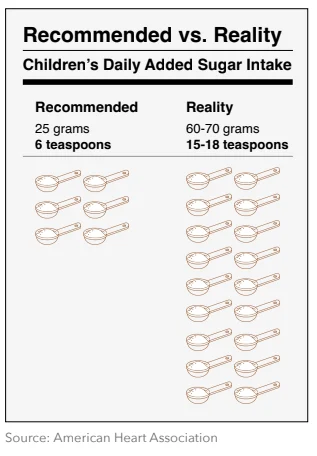
- Consumption Patterns: A significant percentage of American children derive more than 15% of their daily caloric intake from added sugars alone, far exceeding the recommended thresholds suggested by pediatric nutritionists.
- The School Environment: While school nutrition programs have improved over the last decade, the report highlights that "competitive foods"—those sold in vending machines or à la carte lines—often circumvent the nutritional standards applied to the main lunch line.
- Marketing Exposure: Children are exposed to thousands of digital and physical advertisements for ultra-processed foods annually. The report notes that these marketing budgets dwarf the combined funding of federal nutritional education programs.
The report highlights that the "default" choices in school cafeterias and grocery stores are often the most heavily processed. By manipulating the "choice architecture," the authors suggest that children could be nudged toward healthier outcomes without needing to restrict their autonomy entirely.
Official Responses and Stakeholder Perspectives
Since the release of the report, the reaction from the public health community has been largely supportive, though industry stakeholders remain cautious.
The Public Health Consensus
Nutritionists and pediatricians have lauded the report for its pragmatic approach. Dr. Elena Rodriguez, a consultant in pediatric metabolic health, noted, "For too long, we have blamed parents for the systemic failings of our food supply. This report acknowledges that a parent trying to provide a healthy breakfast in a food desert is fighting a rigged game."
The Industry Perspective
Representatives from the food and beverage industry have expressed concern over the report’s recommendations regarding fiscal interventions, such as sugar taxes. A statement from a leading industry trade group emphasized that "voluntary industry initiatives to reformulate products are more effective than top-down government mandates." They argue that supply chain disruptions and inflation could make food less accessible if these regulations are implemented too aggressively.
Policy Makers
Congressional aides have indicated that while the report provides a compelling roadmap, the political feasibility of school nutrition reform remains tied to the upcoming Farm Bill negotiations. The challenge lies in balancing the agricultural subsidies that currently support high-fructose corn syrup production with the health goals outlined by the Global Food Institute.
Implications: The Path Toward Implementation
The report concludes with a series of actionable recommendations that, if implemented, would represent a fundamental shift in the U.S. food economy.
Reshaping the School Environment
The report advocates for a total phase-out of high-sugar items in all school-related food venues, not just the lunch tray. This includes the elimination of sports drinks, sugary yogurts, and highly processed cereals. By making the "default" lunch the only viable option, schools can normalize the consumption of whole foods.
Fiscal Policy and Supply
The authors argue for a "Sugar Supply Reform," which would involve reallocating government subsidies away from sugar-intensive agricultural sectors and toward the production of fresh fruits and vegetables. This would theoretically lower the cost of produce, making it more competitive with ultra-processed alternatives.
The Role of Transparency
Increased pressure on manufacturers to clearly label the "percent of daily value" of added sugars on the front of packaging is another key recommendation. The report argues that current back-of-package nutrition labels are insufficient for the speed at which parents shop.
Conclusion: A Call to Action
The Global Food Institute’s Changing the Default is more than an academic exercise; it is an indictment of the status quo. The report provides a clear, succinct, and technically feasible pathway to improving the dietary habits of the next generation. However, as noted in the concluding commentary of the report, the true challenge lies in the "implementation gap."
Translating these suggestions into federal policy requires not only scientific consensus but the political will to challenge entrenched agricultural and manufacturing interests. The report serves as a timely reminder that health is not merely a matter of personal choice—it is a consequence of the environment we create. As the researchers aptly put it: "It is time to get to work."
The roadmap is now on the table. Whether legislators, schools, and industry leaders possess the resolve to follow it will determine the health outcomes of the next generation of American citizens. The 2025-2030 guidelines set the target, but Changing the Default provides the ammunition to hit it. The question remains: is the political system capable of prioritizing child health over the convenience of the status quo?
Key Takeaways for Stakeholders
- For Parents: The report suggests that while individual choices matter, policy change is the only way to ensure the healthy option is the easy option.
- For Schools: The report provides a framework to transition away from high-sugar, low-nutrient vending options.
- For Legislators: The roadmap offers a multi-pronged legislative strategy, from agricultural subsidy reform to mandatory front-of-package labeling.
The era of merely suggesting dietary changes has passed; the era of structural reform must begin. As the Global Food Institute has demonstrated, the data is clear, the problem is identified, and the solutions are ready for adoption.