










In the quiet industrial landscape of Dowagiac, Michigan, a high-stakes collision between 21st-century automation, national security, and community quality of life is unfolding. Hyperscale Data, a firm at the forefront of the commercial data center boom, has announced the deployment of 142 humanoid robots manufactured by Shanghai-based AgiBot at its Dowagiac campus. While the company touts this as a revolutionary leap toward "autonomous workflows," the initiative has sparked a two-front war: a class-action noise lawsuit from local residents and a intensifying scrutiny from Washington regarding the geopolitical risks of Chinese-made robotics.
The Dowagiac Deployment: A New Frontier for Embodied AI
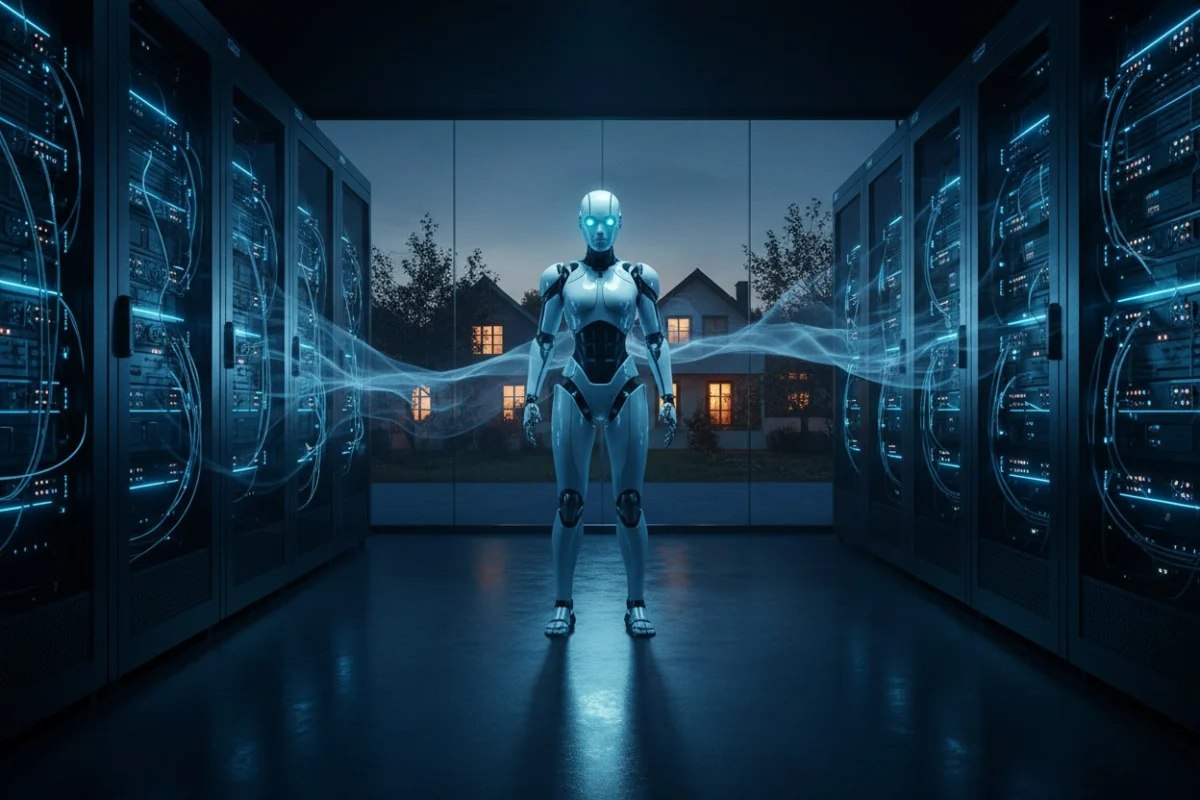
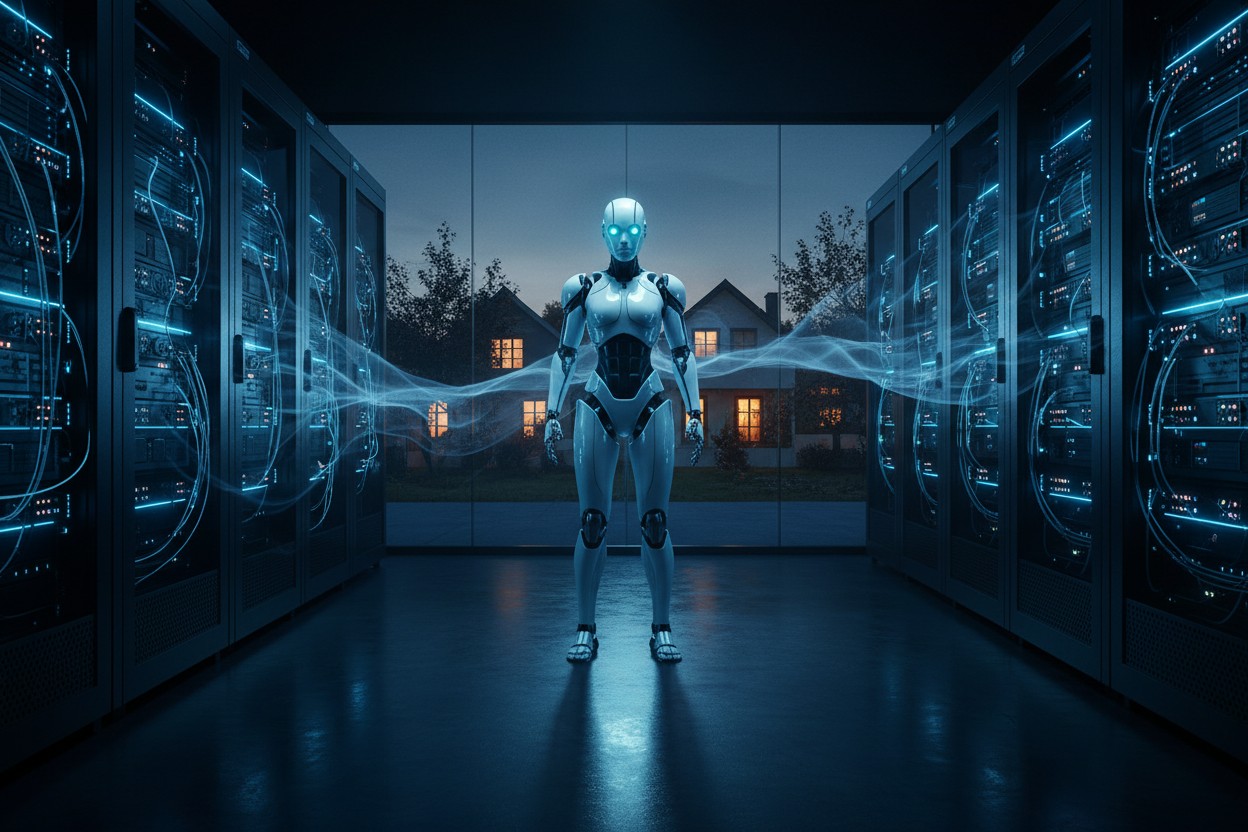
The scale of the project in Michigan is significant. Hyperscale Data, through its subsidiary Omnipresent Robotics, has confirmed that an initial wave of 30 humanoid units will be integrated into its operations, with the remaining 112 expected to follow by year-end. These robots are designed to work alongside human staff, performing maintenance, logistical tasks, and hardware diagnostics within the climate-controlled confines of the data center.
Beyond the immediate deployment, the company has unveiled plans for a 100,000-square-foot "Robotics Research, Testing, and Innovation Center" in the same region. Hyperscale’s executive leadership cites Michigan’s storied industrial history and skilled workforce as the primary motivators for the site selection. However, the reliance on AgiBot—a company that has rapidly scaled its manufacturing capacity to over 10,000 units in a mere three-month window—has transformed a local expansion into a focal point of the U.S.-China technology cold war.
Chronology of Escalation: From Innovation to Litigation
The trajectory of this project reflects the accelerated pace of the robotics industry.
- January 2026: AgiBot announces a massive expansion in its Shanghai manufacturing facilities, aiming to corner the global market for "embodied AI."
- March 30, 2026: AgiBot reports it has produced its 10,000th unit, marking a 100% production increase in just one fiscal quarter.
- April 2026: Hyperscale Data formalizes its partnership with AgiBot, signaling a shift toward foreign-sourced automation in U.S. critical infrastructure.
- May 2026: Residents in Dowagiac begin documenting severe noise pollution emanating from the facility, claiming the 30-megawatt cooling systems and robotic logistics create an inescapable hum.
- June 2026: A class-action lawsuit is filed in Michigan state court, representing over 1,300 local homeowners. Simultaneously, U.S. Senators introduce the American Security Robotics Act.
The Security Dilemma: Washington’s Response to "Dual-Use" Tech
The decision to utilize AgiBot technology has drawn sharp rebukes from Capitol Hill. Lawmakers and national security experts are increasingly alarmed by the "military-civil fusion" strategy employed by Chinese robotics firms. The concern is not merely about the robots themselves, but the potential for these units to act as sophisticated, mobile surveillance platforms embedded within the heart of American data infrastructure.
The American Security Robotics Act
In March 2026, Senators Tom Cotton and Chuck Schumer introduced the American Security Robotics Act. The legislation seeks to prohibit all federal agencies from purchasing or operating ground-based robotic systems from "foreign entities of concern." While the bill currently targets government procurement, industry analysts suggest it serves as a legislative precursor to broader bans on private entities operating in sensitive sectors like telecommunications and data storage.
The Commerce Department’s Stance
Commerce Secretary Howard Lutnick has been vocal regarding the Trump administration’s intent to curb subsidized robotics imports. By designating competitors like Unitree as Chinese military companies, the administration has signaled that the era of unfettered access to Chinese robotics is coming to a close. The primary argument is that humanoid robots are inherently "dual-use"—a machine designed to lift heavy server racks in a data center today can, with a software update, be utilized for military logistics or surveillance tomorrow.
The Human Cost: The Noise Pollution Crisis
While Washington focuses on the abstract threat of geopolitical espionage, the residents of Dowagiac are grappling with a visceral, physical threat: the constant, low-frequency hum of the Hyperscale data center.
The lawsuit filed in Michigan state court paints a harrowing picture of daily life in the shadow of the facility. Plaintiffs describe a persistent, low-frequency sound—likely produced by the high-velocity cooling fans required to keep the facility’s servers and robots running—that penetrates walls, ruins sleep, and prevents the use of outdoor spaces.
"It’s like living in a prison," one resident stated in a local affidavit. "You close the windows, you wear earplugs, but the sound—the vibration—is always there. It’s a constant reminder that our comfort has been sacrificed for a machine."
The legal challenge is significant. With over 1,300 homes cited as being impacted by the 30-megawatt facility, the class action seeks not only financial damages but an injunction that could force Hyperscale Data to either overhaul its noise-dampening systems or cease 24/7 operations.
Implications: The Future of Automation in America
The Dowagiac situation serves as a microcosm of the challenges facing the next decade of industrial evolution. As society moves toward an "augmented life"—a concept explored by futurist Brett King in his work Augmented Life in the Smart Lane—the integration of robots into the workforce will inevitably reshape the social contract.
1. The Erosion of Public Trust
When private entities prioritize efficiency and cost-cutting (through Chinese imports) at the expense of community well-being, the public backlash is immediate. The Dowagiac lawsuit suggests that the "not in my backyard" (NIMBY) movement is evolving into a more sophisticated critique of automated industrialization.
2. Economic Sovereignty vs. Efficiency
Hyperscale Data’s reliance on AgiBot underscores a painful reality: American robotics firms have struggled to match the production volume and price points of their Chinese counterparts. If the U.S. moves to ban these robots, domestic companies may face a "productivity gap" that could hamper the country’s AI infrastructure ambitions.
3. Regulatory Uncertainty
For investors, the uncertainty is palpable. Will the American Security Robotics Act lead to mandatory retrofitting of existing facilities? Will tariffs on Chinese humanoid robots make the deployment of 142 units in Michigan financially unviable? The outcome of the ongoing legal and legislative battles will likely set the precedent for how the U.S. manages the intersection of private profit and national security in the age of embodied AI.
Conclusion: A Turning Point
The Dowagiac facility is no longer just a server hub; it is a battleground. On one side, the drive for rapid, low-cost automation is fueled by global competition; on the other, the fundamental rights of a community are being asserted through the court system.
As we look toward the future, the integration of humanoid robots will require more than just technical feasibility. It will require social license. If corporations like Hyperscale Data continue to ignore the environmental and social externalities of their infrastructure, they may find that the regulatory hurdles in Washington are only the beginning of their troubles. The "robot revolution" promised to reshape jobs and communities, but as the residents of Dowagiac have learned, the cost of that change is currently being paid by those who live closest to the machines.
Whether the American Security Robotics Act passes or the class-action lawsuit forces a shutdown, the events in Michigan serve as a warning to the tech sector: the deployment of autonomous systems cannot exist in a vacuum, divorced from the human, environmental, and security realities of the nation they seek to serve.