










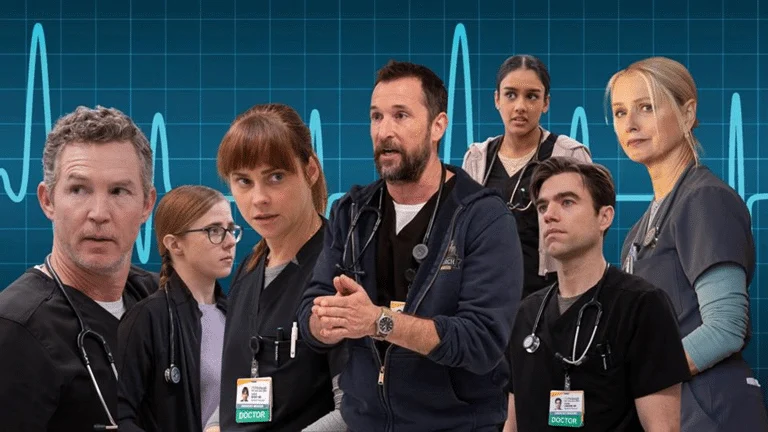
If you haven’t yet immersed yourself in the gritty, high-stakes corridors of HBO Max’s The Pitt, you are missing what is arguably the most authentic portrayal of the American healthcare crisis currently on television. While medical dramas have long been a staple of pop culture—often prioritizing soap-opera romance over medical realism—The Pitt strikes a different chord. It is relentless, technically precise, and profoundly unsettling.
Set within the frantic, high-pressure environment of a Pittsburgh emergency department, the show’s second season elevates itself from a standard procedural to a social commentary. By focusing on a single, brutal shift, the series forces viewers to confront the systemic failures of our healthcare infrastructure. For those of us dedicated to aging research and policy, The Pitt is not just entertainment; it is a mirror reflecting the mounting challenges faced by our aging population.
The Reality of the "Caregiver Burden"
A Portrait of Exhaustion
One of the most poignant through-lines in The Pitt is its unflinching look at caregiver burden. In the show, the medical staff frequently interacts with families pushed to their breaking points. We see the adult daughter struggling to balance her own career with the mounting needs of her aging parent, and the husband attempting to anchor his family while his wife battles terminal illness.
The show hits a visceral high point in Season 1, when an exhausted daughter, overwhelmed by the increasing dependency of her mother, goes missing for hours—only to be found asleep in her car. It is a quiet, devastating moment that rings true for millions of Americans. These characters are not mere plot devices; they represent the silent backbone of the U.S. healthcare system.
Supporting Data: The Hidden Crisis
The reality outside the script is even more stark. According to the Caregiver Action Network, approximately 63 million U.S. adults are currently providing care for a spouse, elderly parent, relative, or child with special needs. Perhaps most alarming is that one in five of these caregivers is simultaneously juggling full-time employment. The physical and psychological toll is measurable: these individuals face significantly higher rates of depression, anxiety, and their own chronic health conditions, often as a direct result of neglecting their personal well-being to serve others.
The Geriatrician Shortage: A Looming Demographic Cliff
Drama vs. Clinical Reality
In one particularly contentious exchange between the seasoned Dr. Robby and his colleague Dr. Mohan, a geriatrics fellowship is framed as a "lesser" path—a dig implying that the specialty is slower and less demanding. While intended as an insult within the show’s narrative, it serves a higher purpose: highlighting the dangerous, systemic lack of respect and resources for geriatric medicine.
The Numbers That Keep Policy Makers Up at Night
The United States is hurtling toward a demographic tipping point. By 2030, every baby boomer will have crossed the age-65 threshold, meaning one in five Americans will be a senior citizen. Despite this, our medical infrastructure is woefully unprepared.
Currently, the U.S. has only about 7,000 board-certified geriatricians. To put this in perspective, there are over 60,000 pediatricians in the country. The U.S. Department of Health and Human Services has projected a shortfall of nearly 27,000 geriatric providers—a deficit that has essentially already arrived. Even more damning is the fact that only one in ten U.S. medical schools requires a dedicated geriatrics clinical rotation, despite the statistical certainty that every physician will spend the majority of their career treating older adults.
The Erosion of Care in Overwhelmed ERs
Chronology of a Shift
The Pitt excels at showing the "cascading failure" of an overwhelmed emergency department. In one harrowing sequence, Dr. Langdon reveals that he has seen 16 patients in a single morning. The result? A loss of continuity of care so profound that he fails to recognize a patient he treated just four hours earlier.
This is not a fictional exaggeration. The American Medical Association identifies emergency medicine as the specialty with the highest rates of physician burnout. When staff are stretched this thin, older adults are the most vulnerable. They face longer wait times, a higher likelihood of "boomeranging" (being readmitted shortly after discharge), and significantly worse health outcomes. The environment itself becomes an obstacle to healing.
The Transportation Barrier
The show also highlights the logistical nightmare of discharging vulnerable patients. In a heartbreaking scene, an older patient named Vera is medically cleared for discharge but has no way to return home. Her neighbor cannot drive at night, and she lacks the funds for a taxi. It falls to a medical student to pay for a ride-share out of pocket just to ensure she reaches her front door.
This scene underscores a chronic, underreported issue: transportation. Research suggests that 3.6 million Americans report missing or delaying necessary medical appointments because they simply cannot get there. Fifty percent of older adults express concern that they will be forced to forgo medical care in the future due to these same logistical constraints.
The Financial Dread: A System in Debt
The "GoFundMe" Culture of Healthcare
Perhaps the most biting critique in The Pitt is its exploration of financial toxicity. We watch as families navigate the labyrinth of insurance, Medicaid cuts, and the crushing weight of medical debt.
In one episode, a patient discharges himself early to avoid burdening his family with further debt, only to suffer a catastrophic decline that necessitates an immediate return to the hospital. The scene concludes with the daughter creating a "GoFundMe" page—a grimly modern solution to a systemic failure. This is not just drama; it is the current standard of care for far too many families.
Official Responses and Policy Implications
The issues raised by The Pitt are currently being debated at the highest levels of government. Policy experts and advocacy groups, such as the Alliance for Aging Research, have long lobbied for:
- Expanded Geriatric Training: Integrating mandatory geriatrics training into all medical school curricula to ensure that primary care providers are equipped to handle the complexities of aging.
- Caregiver Support Initiatives: Expanding tax credits and respite care programs to alleviate the immense pressure on family caregivers.
- Healthcare Financing Reform: Addressing the "coverage gap" for low-income seniors and those with chronic conditions who find themselves caught between inadequate insurance and rising costs.
While the Centers for Medicare & Medicaid Services (CMS) has implemented various value-based care models to improve outcomes for older adults, the speed of demographic change continues to outpace the speed of legislative reform.
Conclusion: The Mirror We Must Face
The Pitt is more than a show about doctors; it is a show about a society that is struggling to care for its own. As we watch the fictionalized struggles of the Pittsburgh Trauma Medical Center, we are being asked to look at our own communities.
Caregiver burnout, the geriatrician shortage, and the spiraling costs of healthcare are not just plot points; they are the most pressing public health challenges of the 21st century. The decisions we make today—in Congress, in medical boardrooms, and in our own homes—will determine the quality of life for the largest generation of older adults in American history.
Television can provide the drama, but it is up to us to provide the solutions. Let’s make sure those decisions are good ones, before the credits roll on our own opportunity to act.
Katrin Werner-Perez is the Director of Health Programs at the Alliance for Aging Research. Her work focuses on bridging the gap between clinical reality and policy solutions to ensure a healthier, more supported aging experience for all Americans.