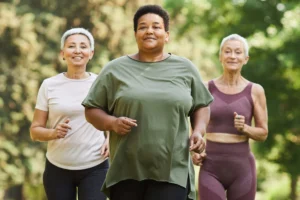
As the global population ages, the search for the "fountain of youth" has moved away from miracle elixirs and toward the tangible, evidence-based science of exercise physiology. For decades, the conventional wisdom for older adults—those over 65—has been to stick to steady-state, moderate-intensity exercise, such as brisk walking or light cycling. However, a groundbreaking study led by the University of the Sunshine Coast (UniSC) is challenging this paradigm.
The research suggests that High-Intensity Interval Training (HIIT) is not merely a tool for young athletes looking to shave seconds off their sprint times, but perhaps the most effective strategy for older adults to strip away body fat while stubbornly protecting their lean muscle mass. As we enter a new era of proactive health management, these findings offer a blueprint for maintaining metabolic health, functional independence, and overall vitality well into our later years.
The Core Findings: Preserving the Body’s Engine
The study, published in the esteemed journal Maturitas, represents a significant shift in how we understand body composition changes in the elderly. Conducted by the Healthy Ageing Research Cluster at UniSC in collaboration with The University of Queensland, the trial followed over 120 healthy older adults from the Greater Brisbane region.
The primary takeaway is both simple and profound: while all exercise intensities—high, moderate, and low—can contribute to a reduction in total body fat, only HIIT acts as a protective mechanism for lean muscle tissue.
"We found that high, medium and low intensity exercises all led to modest fat loss, but only HIIT retained lean muscle," explains lead author and exercise physiologist Dr. Grace Rose. This distinction is critical. In many weight-loss interventions, the body burns both fat and muscle. For older adults, the loss of muscle—a condition known as sarcopenia—is a leading cause of frailty, falls, and metabolic decline. By selectively targeting fat while sparing muscle, HIIT offers a unique dual-benefit that moderate or low-intensity training currently lacks.
A Chronological Breakdown of the Study
To understand the weight of these findings, one must look at the rigor applied over the course of the six-month study.
Phase 1: Recruitment and Baseline Assessment
The research team recruited 120 participants with an average age of 72. At the onset, the group exhibited an average Body Mass Index (BMI) of 26kg/m², which is within the healthy range for the over-65 demographic. Before beginning the intervention, each participant underwent comprehensive physiological screening to ensure they were healthy enough to undertake varying intensities of supervised exercise.
Phase 2: The Six-Month Intervention
For half a year, participants were subjected to a strictly supervised, gym-based exercise regimen. They were required to complete three sessions per week, ensuring consistency and adherence. The participants were divided into cohorts based on the intensity of their prescribed exercise, ranging from low-effort endurance to high-intensity interval bursts.
Phase 3: Monitoring and Data Collection
Throughout the 26-week period, the research team monitored body composition changes, focusing specifically on fat mass, visceral adipose tissue (fat stored around the midsection), and skeletal muscle mass.
Phase 4: Analysis and Peer Review
Following the completion of the sessions, the data was synthesized. The researchers compared the changes in body composition across the cohorts, leading to the identification of the "HIIT Advantage." The findings were then subjected to the rigorous peer-review process required for publication in Maturitas.
Supporting Data: The Physiology of Intensity
The study provides a nuanced look at how our bodies respond to different levels of exertion. One of the most striking revelations was the side effect of moderate-intensity training. While effective for fat loss, it was associated with a slight decline in lean muscle mass.
"While moderate training reduced fat mass, it also caused a small decline in lean muscle," Dr. Rose noted. "Both high and moderate intensities improved the composition of weight carried around the middle. Further analysis is needed of the low-intensity results."
This "middle-weight" reduction—specifically visceral fat—is a major health win. Visceral fat is the metabolically active tissue that wraps around internal organs and is linked to chronic conditions like type 2 diabetes, cardiovascular disease, and hypertension. However, the trade-off of losing muscle mass during moderate training is a significant concern for the elderly, as muscle is the primary driver of glucose metabolism and physical strength.
Official Responses and Expert Insights
The research team, including UniSC Associate Professor of Physiology and study co-author Mia Schaumberg, emphasizes that this data is not just for the elite fitness enthusiast; it is for everyone.
"With the festive season now behind most of us and New Year’s resolutions in full swing, this research can help inform people’s plans for healthy aging in 2026," says Associate Professor Schaumberg. She highlights that the study arrives at a perfect time for those looking to pivot their fitness strategy toward more sustainable, health-promoting practices.
What constitutes HIIT for an older adult?
A common misconception is that HIIT requires the intensity of a professional athlete. Dr. Rose clarifies the reality of the training used in the study: "High-intensity training in this study involved repeated short bursts, or intervals, of very hard exercise—where breathing is heavy and conversation is difficult—alternated with easier recovery periods."
The mechanism behind why this works is rooted in metabolic signaling. "HIIT likely works better because it puts more stress on the muscles, giving the body a stronger signal to keep muscle tissue rather than lose it," Dr. Rose explains. Essentially, the "fight or flight" stress of a high-intensity burst forces the body to prioritize the maintenance of the muscle fibers required to perform that high-output movement, whereas lower-intensity, steady-state training may signal the body that such large amounts of muscle are not strictly necessary for the task at hand.
Implications for Public Health and Longevity
The implications of these findings are far-reaching, particularly for the healthcare systems that support an aging population. As Dr. Rose notes, changes in body composition are directly linked to the development and progression of many chronic diseases.
1. The Fight Against Sarcopenia
Sarcopenia is the silent epidemic of the elderly. By demonstrating that HIIT can preserve lean muscle while reducing fat, this research offers a practical intervention to delay or prevent the loss of physical autonomy.
2. Metabolic Health and Chronic Disease
By reducing visceral fat, older adults can significantly lower their risk of metabolic syndrome. The fact that this can be achieved without the "cost" of muscle wasting makes HIIT a superior candidate for prescription exercise in clinical settings.
3. A Shift in Exercise Prescription
For decades, doctors have often been hesitant to recommend high-intensity exercise to older adults for fear of injury. However, the success of the supervised sessions in this study suggests that, when performed correctly and safely, HIIT is not only tolerable but highly beneficial. This may lead to a shift in how personal trainers and geriatric specialists structure fitness programs for their clients.
4. Psychological and Behavioral Benefits
Beyond the physiological, the study highlights the value of structured, goal-oriented programs. The participants, who maintained a three-session-per-week schedule for six months, showed that age is no barrier to high-level engagement with exercise.
Conclusion: Looking Ahead to 2026 and Beyond
The UniSC research team has provided a compelling piece of evidence that changes how we view exercise in the later stages of life. We are no longer limited to "taking it easy." Instead, by incorporating controlled, short bursts of high-intensity activity, older adults can protect their most valuable physical asset—their muscle—while simultaneously improving their body composition.
As we look toward the future of healthy aging, the integration of HIIT into daily life promises to be a vital strategy. It is not merely about adding years to life, but adding life to years. By challenging the muscles through interval training, we send a powerful, biological signal to the body that it is not yet time to slow down. As Dr. Rose and her colleagues have demonstrated, with the right guidance, the body is capable of remarkable adaptation, regardless of the calendar year.