




By Kari McBride
The milestones of motherhood are often etched into our memory with a clarity that defies the passage of time. I remember my daughter’s first steps as vividly as if they occurred this morning. After eighteen grueling months defined by a blur of clinical appointments, sterile hospital rooms, and intensive therapy sessions, those small, determined feet finally propelled her forward. Watching her swagger and sway down the hallway, the exhaustion of the preceding months evaporated, replaced by an overwhelming tide of joy and profound relief. It was a singular moment of triumph—a pinnacle of development I vowed to hold onto forever.
Back then, well-meaning friends and family often reminded me, “Savor this moment; it won’t happen again.” I nodded, believing I understood the weight of their sentiment. I thought savoring meant engraving the memory into my mind, a mental photograph to be pulled out during difficult times. I did not realize then that life would evolve into a journey where the capacity to "savor" would become less of a luxury and more of a vital survival mechanism.
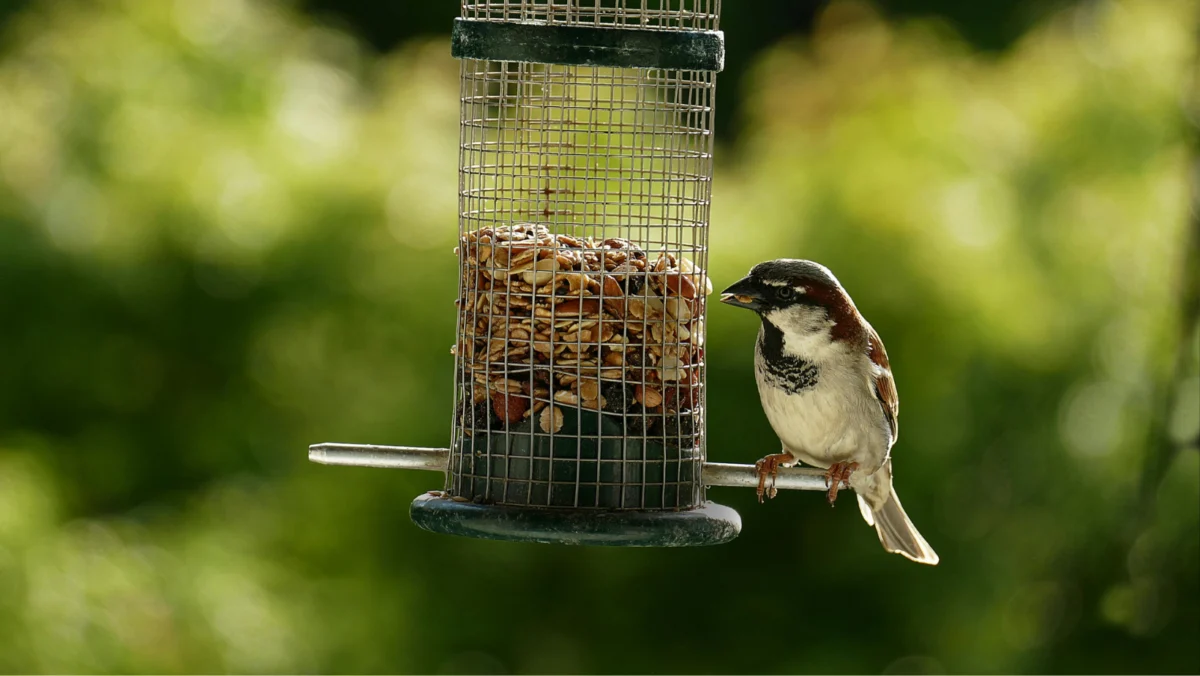
Today, my daughter is a teenager, and our shared reality has been fundamentally reshaped by the presence of chronic pain—a condition that now dictates the tempo of both our lives. Yet, amidst the medical complexities and the persistent ache, we have found an unlikely tether to the present: a humble bird feeder.
The Chronology of a Quiet Shift
The journey to the bird feeder began not with a grand vision, but with a typical teenage insistence. My daughter, whose world is often restricted by the limitations of her physical health, developed an interest in the local avian population. She argued that our yard was a missed opportunity, a barren space that could be transformed into a sanctuary for the neighborhood’s winged residents.
After a period of negotiation—the kind familiar to any parent of a teenager—I relented. We installed feeders in both the front and back yards. Initially, I viewed this addition through the lens of a weary caregiver. I saw it as one more item on an already exhaustive to-do list: cleaning the feeders, purchasing seed, managing the inevitable mess. I expected the birds to be a distraction; I did not expect them to be a remedy.
However, as the weeks progressed, the rhythm of the backyard began to shift. The arrival of a mourning dove, the skittish hop of a mockingbird, and the territorial posturing of a blue jay provided a living, breathing theater. What started as a chore transformed into a meditative practice. I found myself pausing in the middle of a frantic day, standing perfectly still by the kitchen window. I was no longer merely watching birds; I was observing life in its most unburdened form.
The Landscape of Chronic Pain: Supporting Data and Context
The experience of living with chronic pain is, by definition, a life of narrowed horizons. According to the Centers for Disease Control and Prevention (CDC), chronic pain affects approximately 20% of the U.S. adult population, contributing to significant limitations in daily activities and overall quality of life. For families managing pediatric chronic pain, these statistics are more than numbers; they represent a fundamental alteration of the family structure, social interaction, and emotional well-being.
The medical literature suggests that chronic pain is not merely a physical sensation but a psychological burden that triggers a constant state of hyper-vigilance. When the body is in pain, the brain is occupied with the threat, making it nearly impossible to engage with the present moment. This is where the concept of "micro-moments"—the small, fleeting instances of positive sensory input—becomes clinically relevant.
Psychologists often refer to the "broaden-and-build" theory of positive emotions. By intentionally focusing on small, non-threatening stimuli, individuals suffering from chronic stress or pain can briefly interrupt the cycle of negative rumination. The bird feeder acts as an external anchor. It does not cure the pain, but it provides a "cognitive reset." When I watch a sparrow, my brain is momentarily diverted from the internal signaling of my pain receptors to the external movement of the bird. This shift is not a triviality; it is a neurological intervention.
Implications: The Science of Savoring
The act of "savoring" is defined in psychological research as the capacity to attend to, appreciate, and enhance the positive experiences in one’s life. While it is easy to savor a major milestone—a graduation, a wedding, or, as in my case, those first steps—savoring the mundane is a skill that requires conscious cultivation.
For those of us living in the shadow of chronic illness, the "big moments" are often hijacked by symptoms. A planned outing can be canceled due to a flare-up; a celebratory dinner might be ruined by fatigue. Consequently, relying on grand events for joy is a losing strategy. The implications of my experience with the birds suggest that we must recalibrate our expectations of what constitutes a "meaningful" moment.
The Anatomy of a Reprieve
When I stand at the window, the pain and uncertainty that typically fill my days do not vanish, but their grip loosens. This is not a mystical occurrence; it is a physiological one. By slowing my breath and narrowing my focus to the birds, I am engaging in a form of mindfulness that lowers cortisol levels and promotes parasympathetic nervous system activity.
This is a lesson I am working to pass on to my daughter. When she is struggling with a flare-up, we don’t need to plan a trip to the beach or a major excursion. We simply watch the yard. We notice the color of a feather or the specific flight pattern of a finch. We are learning that the quality of our life is not determined by the absence of pain, but by the presence of these intentional, quiet intervals.
Official Perspectives on Chronic Pain Management
Healthcare professionals are increasingly integrating mindfulness and cognitive-behavioral therapies (CBT) into standard pain management protocols. Dr. Elena Rodriguez, a specialist in pain management, notes: "The goal for patients with chronic conditions is often to find a way to exist alongside the pain without being defined by it. Techniques like ‘micro-mindfulness’—using small, sensory-rich activities to ground the patient—can significantly improve patient-reported outcomes regarding anxiety and perceived pain intensity."
The medical consensus is shifting away from purely pharmacological interventions toward a biopsychosocial model. This model recognizes that pain is exacerbated by social isolation and emotional distress. By fostering an interest in nature, even from the confines of a home, patients can mitigate the feelings of helplessness that often accompany long-term illness. The bird feeder, in this context, becomes a therapeutic tool that facilitates a connection to the world outside the bedroom or the doctor’s office.
Conclusion: Redefining the "First"
There is a pervasive myth that life is made of a series of monumental "firsts." We are taught to look forward to the next big milestone, the next victory, the next chapter. But for those navigating the rugged terrain of chronic pain, life is often made of "seconds"—the quiet, unremarkable seconds that pass in the blink of an eye.
I have realized that I was wrong all those years ago when I thought I knew what it meant to savor a moment. I thought it was about preservation—holding onto the past. I now understand that savoring is about participation—fully inhabiting the present, no matter how small or seemingly insignificant that present may be.
The birds will fly away. The season will change. The feeder will eventually go empty, and the cycle of filling it will begin again. My daughter’s chronic pain will not magically disappear, nor will my own. But in those moments when I choose to stand still—when I choose to notice the way the light catches a wing or the rhythmic rustle of leaves—I am reclaiming a piece of my life.
These are not the big moments of first steps. They are the quiet, steady steps of endurance. They are the moments that, if we are not careful, we will miss entirely. But if we are deliberate, if we are awake, they become the fabric of a life lived with intention. Perhaps this, truly, is what it means to savor: to find the beauty in the brief, to breathe through the pain, and to watch, with quiet gratitude, as the world continues to move—one wingbeat at a time.