As federal budgetary shifts and evolving healthcare policies place unprecedented strain on state-level social safety nets, a growing number of Democratic-led states are looking toward a controversial fiscal lever: imposing direct fees on large corporations whose employees rely on Medicaid for health insurance.
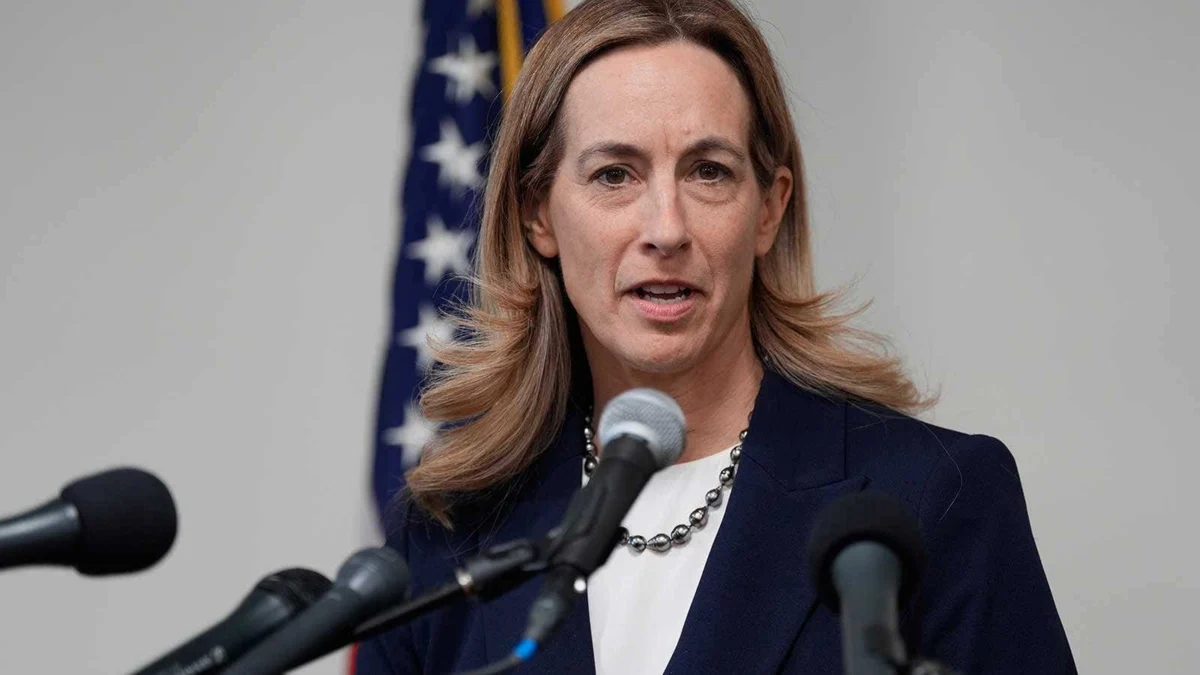
New Jersey has recently spearheaded this shift, with Governor Mikie Sherrill signing legislation that mandates companies with 50 or more Medicaid-enrolled employees to contribute to the state’s healthcare fund. As other states, including California, Colorado, and Connecticut, weigh similar measures, the debate has ignited a firestorm of controversy, pitting the urgent need for fiscal sustainability against the concerns of business leaders and even some liberal policy advocates who fear unintended consequences for the workforce.
The New Jersey Mandate: A Fiscal Blueprint
The legislative move in New Jersey is arguably the most aggressive attempt to date to address the "Medicaid gap"—the phenomenon where private-sector employees utilize public health insurance despite their employment status. Under the new law, the state expects to generate approximately $145 million in annual revenue to bolster the state’s Medicaid budget.
The fee structure is tiered based on the volume of Medicaid-enrolled employees at a given company. For firms with between 50 and 249 beneficiaries on their payroll, the cost is set at $325 per person per year. For larger corporations with 500 or more recipients, that fee climbs to $725 annually. Governor Sherrill’s administration argues that this is not merely a tax, but a necessary mechanism to ensure that the state budget can absorb the rising costs of healthcare coverage in an era of tightening federal support.
Chronology of a Growing Policy Trend
The push to hold employers accountable for their workers’ reliance on public assistance is not entirely new, but it has gained significant momentum in the current legislative cycle.
The Maryland Precedent (2006)
The debate traces its roots back to 2006, when Maryland attempted to pass legislation specifically targeting major retailers like Walmart. The law, which essentially mandated that large companies spend a certain percentage of payroll on healthcare or pay the difference into a state fund, was short-lived. Industry groups successfully challenged the law in federal court, arguing that it violated the Employee Retirement Income Security Act (ERISA), a federal law governing self-insured health plans.
The Massachusetts Experiment (2017–2019)
Over a decade later, Massachusetts took a broader approach, implementing a charge of up to $750 per non-disabled worker who received coverage through Medicaid or state-subsidized exchanges. While the program generated revenue for two years, it was allowed to expire in 2019, failing to gain the political traction necessary for long-term renewal.
The Current Wave (2024–2025)
Following the passage of major federal tax and healthcare legislation under the previous administration, Democratic lawmakers in several states have revisited the concept.
- California: Legislators recently passed a bill requiring the state administration to draft a framework for employer charges, setting the stage for a potential rollout under the next gubernatorial administration.
- Colorado and Oregon: Both states saw similar legislation progress through at least one chamber of their respective legislatures this year, signaling a shift in the regional policy climate.
- Connecticut: Governor Ned Lamont has explicitly campaigned on the necessity of such a charge, aiming to integrate it into the state’s long-term budget planning.
Supporting Data and Federal Pressures
The impetus for this legislative trend is rooted in the Congressional Budget Office’s (CBO) sobering projections. By 2034, the CBO anticipates that more than 10 million Americans will lose health coverage due to shifting federal policies. These changes include stricter work requirements, mandatory school or volunteer participation, and increased documentation burdens for Medicaid beneficiaries.
Proponents of the state-level fees argue that because federal policy is forcing more people to prove their "work-readiness," states are effectively being left to plug the gaps in coverage that private employers are failing to fill. State Senator John Laird of California, a primary architect of that state’s legislative efforts, frames the issue as one of fundamental fairness.
"If you’re a small business person in California, you are quite likely paying for health insurance for your employees," Laird stated. "And through your taxes, you’re paying for health insurance for some of the biggest employers in California. And that’s not fair."
Official Responses: A House Divided
The reaction to these measures has been sharply polarized, reflecting a classic conflict between fiscal responsibility and corporate autonomy.
The Business Perspective
Business advocacy groups, such as the New Jersey Business and Industry Association (NJBIA), have voiced vehement opposition. Christopher Emigholz, the association’s chief government affairs officer, argues that the legislation unfairly penalizes employers for choices made by their workers.
"The fact remains that many job-creators are still going to be penalized for something they have no control over," Emigholz noted. "If an employee declines an employer-provided health plan because they’d rather be on Medicaid, it is unfair to penalize the employer for that employee’s decision."
The Liberal Policy Critique
Perhaps more surprising than the business pushback is the opposition from some left-leaning policy organizations. Dr. Gideon Lukens of the Center on Budget and Policy Priorities argues that while the intent is to protect state coffers, the mechanism is fundamentally flawed.
Lukens suggests that by placing a "tax" on hiring Medicaid-eligible workers, the policy creates a perverse incentive for companies to avoid hiring low-income individuals, single parents, or those with complex healthcare needs. "Usually, when I see a tax on something, it’s going to discourage whatever’s being taxed," Lukens explained. He fears that companies will adjust their hiring strategies or geographic footprints to avoid the fees, ultimately harming the very population the legislation aims to support.
Implications for the Future of Healthcare
As states like New Jersey push forward, the long-term implications for the labor market and public health remain uncertain.
Potential Economic Impacts
If successful in generating revenue, these fees could provide a stable, recurring funding stream for state Medicaid programs, potentially shielding them from the volatility of federal budget cuts. However, the risk of "job-locking"—where employers become increasingly cautious about hiring individuals who might qualify for public assistance—could lead to higher unemployment rates among vulnerable demographics.
Legal Hurdles
The specter of the 2006 Maryland litigation looms large. The architects of the current generation of bills are acutely aware of the ERISA preemption issue. By drafting legislation that does not explicitly reference or mandate the management of corporate health plans, states hope to sidestep the legal pitfalls that felled previous attempts. Whether these new, carefully crafted laws can withstand a high-court challenge remains an open question that likely will be settled in the coming years.
The Shift in Responsibility
Ultimately, these measures represent a broader philosophical shift in American governance. By attempting to bridge the gap between private employment and public support, states are signaling that they can no longer bear the cost of subsidized labor for large corporations. As the political debate heats up in statehouses across the country, the resolution of this issue will likely define the relationship between state governments and the private sector for the next decade.
While proponents maintain that the policy is a necessary move toward economic equity, opponents warn that it is an ill-conceived tax that could destabilize the labor market. With New Jersey leading the charge, the nation is effectively watching a high-stakes policy laboratory unfold, where the outcome will determine whether employer-linked Medicaid fees become a standard feature of the American social contract or a failed experiment in fiscal policy.