










For most of us, the alphabet is the first foundational tool we acquire in life. It is the bedrock upon which we build the architecture of our knowledge, our professional success, and our ability to interface with the world around us. Yet, while we are meticulously taught how to construct sentences and articulate thoughts, we are rarely provided with the equivalent linguistic tools to navigate our internal emotional landscape—specifically, the often-overwhelming terrain of anxiety.
Anxiety, in its biological essence, is a normal, evolutionary human emotion. It is the internal sentry designed to protect us from genuine danger. However, in the modern world, the "alarm system" of the human body is frequently miscalibrated. When anxiety strikes, many individuals find themselves paralyzed, not because they are inherently weak, but because they lack the conceptual framework to deconstruct and manage their reactions. They simply have not learned their "Anxiety ABCs."
The ABCtracker™—a specialized framework centered on the acronym Alarm, Belief, and Coping—is emerging as a vital instrument for those seeking to recognize, monitor, and master their triggers. By formalizing the way we observe our mental state, this model allows users to transform uncomfortable, often chaotic feelings into manageable data points, ideally under the guidance of physicians, psychologists, or licensed mental health professionals.
Main Facts: The Anatomy of the ABCtracker™
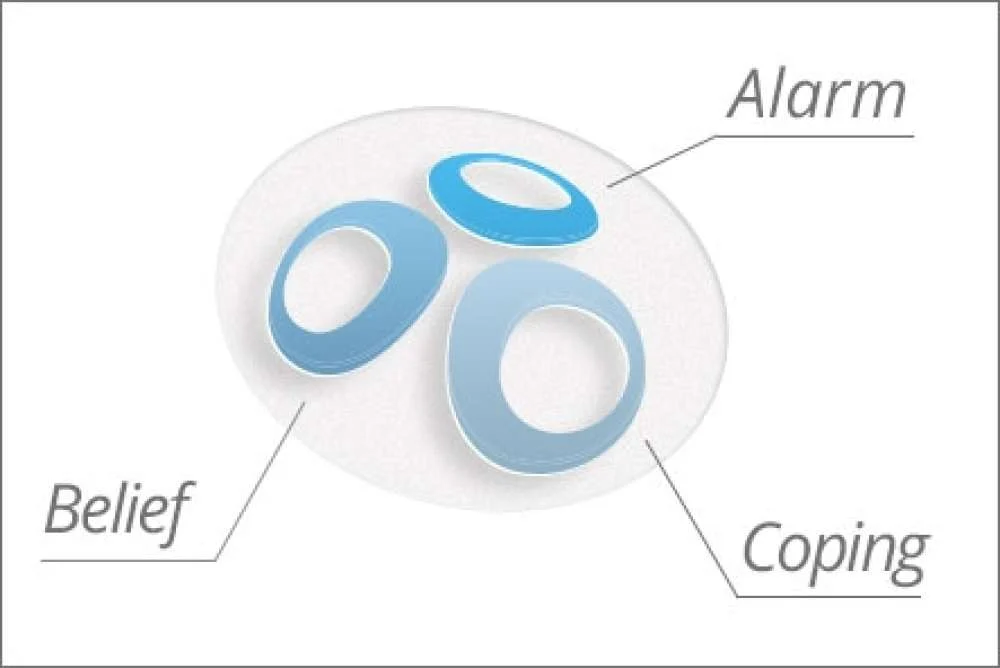
The core philosophy of the ABCtracker™ is that anxiety is not a monolithic "feeling" that simply happens to us; it is a three-part process. By breaking the cycle down into its constituent parts, the tracker allows individuals to move from a state of reactive panic to one of objective observation.
- A – Alarm: The physiological activation. This is the body’s instinctive response to perceived threats, ranging from a racing heart to a sudden surge of adrenaline.
- B – Belief: The cognitive appraisal. This is the brain’s immediate, often subconscious, interpretation of the alarm. It is the story we tell ourselves about why our heart is racing or why we feel unsafe.
- C – Coping: The behavioral response. This is the action taken—or avoided—to restore a sense of safety. These responses can be adaptive (healthy) or maladaptive (counterproductive).
The significance of this model lies in its simplicity. By identifying these three stages, users can isolate where the "glitch" in their internal software is occurring. Is the alarm being triggered by a false signal? Is the belief system skewed toward catastrophe? Is the coping mechanism inadvertently reinforcing the anxiety?
Chronology: The Evolution of Emotional Regulation
To understand the necessity of tools like the ABCtracker™, one must look at the historical evolution of how we manage stress.
Pre-Industrial Era: Human anxiety was primarily tied to immediate survival—predators, food scarcity, and environmental threats. The "Alarm" was almost always accurate, and the "Coping" was physical (fight or flight).
The Mid-20th Century: As the field of psychology transitioned into the Cognitive Behavioral Therapy (CBT) era, clinicians began to realize that for most modern humans, the danger was no longer in the woods, but in the mind. The focus shifted from the physical alarm to the "Belief" system. Researchers like Aaron Beck established that our thoughts, not just external events, dictate our emotional responses.
The Current Era: We are currently in the age of the "Self-Tracking Revolution." With the rise of wearable technology and the proliferation of mental health apps, there is a societal shift toward quantifying emotional data. The ABCtracker™ represents the latest milestone in this timeline, bridging the gap between clinical CBT principles and accessible, real-time personal monitoring.
Supporting Data: Why We Need a Framework
The data regarding the prevalence of anxiety disorders is staggering. According to the Anxiety and Depression Association of America (ADAA), anxiety disorders are the most common mental illness in the U.S., affecting 40 million adults in the United States age 18 and older, or 18.1% of the population every year.
Crucially, the "Alarm" component of the ABC model is supported by neurobiological research. When a person with an anxiety disorder experiences a "false alarm," the amygdala—the brain’s fear center—is hyper-reactive. Research indicates that this hyper-reactivity can be dampened through systematic intervention.
Furthermore, studies on maladaptive coping strategies have shown that avoidance—a common "C" response—actually strengthens the anxiety cycle. When an individual avoids a situation that triggers their alarm, the brain receives a "reward" signal for escaping the discomfort. This reinforces the "Belief" that the situation was dangerous, effectively trapping the individual in a self-perpetuating loop of anxiety. The ABCtracker™ provides the necessary data to interrupt this reinforcement loop.
Official Responses: Clinical Perspectives on Cognitive Mapping
The integration of structured tools like the ABCtracker™ into clinical practice has received significant support from the psychological community.
Dr. Elena Vance, a clinical psychologist specializing in anxiety disorders, notes: "The problem for most of my patients isn’t that they feel anxious; it’s that they don’t know why they are feeling it, or how to stop the momentum once it starts. The ABC model is brilliant because it removes the shame. It turns an ‘anxiety attack’ into a ‘data collection opportunity.’ When you ask a patient to identify their ‘A,’ their ‘B,’ and their ‘C,’ you are asking them to step into the role of a researcher of their own mind. This creates an immediate cognitive distance from the distress."
Furthermore, healthcare professionals emphasize that the ABCtracker™ is not a replacement for therapy, but a force multiplier. By having a client track their experiences using this specific nomenclature, therapists can identify patterns in session that the client might otherwise have forgotten or mischaracterized.
Implications: Changing the Future of Mental Health
The widespread adoption of frameworks like the ABCtracker™ has profound implications for how we view mental hygiene.
Breaking the Cycle of Misinformation
Many people live with the false belief that they are "just an anxious person." By using the ABC framework, they discover that anxiety is not an identity, but a process. When you recognize that your "Belief" is currently generating an incorrect sense of reality, you grant yourself the power to challenge that belief. You move from being a victim of your emotions to an architect of your internal state.
The Role of Technology
As we move further into the digital age, the implementation of such trackers via mobile applications allows for real-time intervention. Instead of waiting for a weekly therapy session to process an event, users can log their ABCs in the moment. This provides a longitudinal view of their mental health, allowing for the identification of seasonal, environmental, or interpersonal triggers that would otherwise remain hidden.
Professional vs. Personal Responsibility
While the ABCtracker™ encourages self-sufficiency, it also clarifies the boundaries of personal responsibility. It teaches individuals how to monitor their own symptoms, which makes them more effective partners in their own healthcare. When a patient enters a doctor’s office with a record of their ABCs, the clinical conversation shifts from vague complaints to targeted, evidence-based strategy sessions.
Mastering Your ABCs: A Path Forward
Every master of a craft starts as a beginner. The beauty of the ABCtracker™ is that it is designed for ease of implementation.
Understanding ‘A’ (Alarm): Start by identifying the physical markers. Is it a tightening of the chest? A racing heart? Shallow breathing? By externalizing these physical signals as a "car alarm," you strip them of their power to intimidate you. You aren’t "dying"; you are simply receiving a signal that is misfiring.
Understanding ‘B’ (Belief): This is the investigative phase. Ask yourself: "What story am I telling myself right now?" Is your belief grounded in evidence, or is it a projection of past trauma? By labeling your thoughts as "beliefs" rather than "facts," you create the mental space necessary to dispute them.
Understanding ‘C’ (Coping): This is where you reclaim your agency. If your current coping mechanism (e.g., social withdrawal, substance use, or rumination) is maladaptive, the tracker will make this painfully obvious. Once identified, you can consciously swap it for an adaptive technique, such as box breathing, grounding exercises, or cognitive restructuring.
In conclusion, the ABCs of anxiety are not just a tool; they are a language of liberation. By learning to name our alarms, challenge our beliefs, and choose our coping mechanisms, we do more than just manage anxiety—we transform our relationship with our own humanity. We learn that while we cannot always control the alarms that the world triggers within us, we have absolute authority over how we interpret those signals and how we respond to them.
The path to emotional mastery is not found in the suppression of feeling, but in the clarity of understanding. By adopting a structured approach to our mental well-being, we ensure that we are not just surviving our anxieties, but actively learning from them, building a more resilient, self-aware, and capable self with every single letter of the alphabet.