











In the modern fitness landscape, the "core" is frequently misunderstood. For decades, the industry has prioritized anti-movement exercises—static holds like the plank or the hollow body hold—as the gold standard for abdominal development. While these movements are essential for spinal stability, they represent only one half of the equation. To truly unlock human performance, one must move beyond resisting force and learn to generate, transfer, and decelerate it.
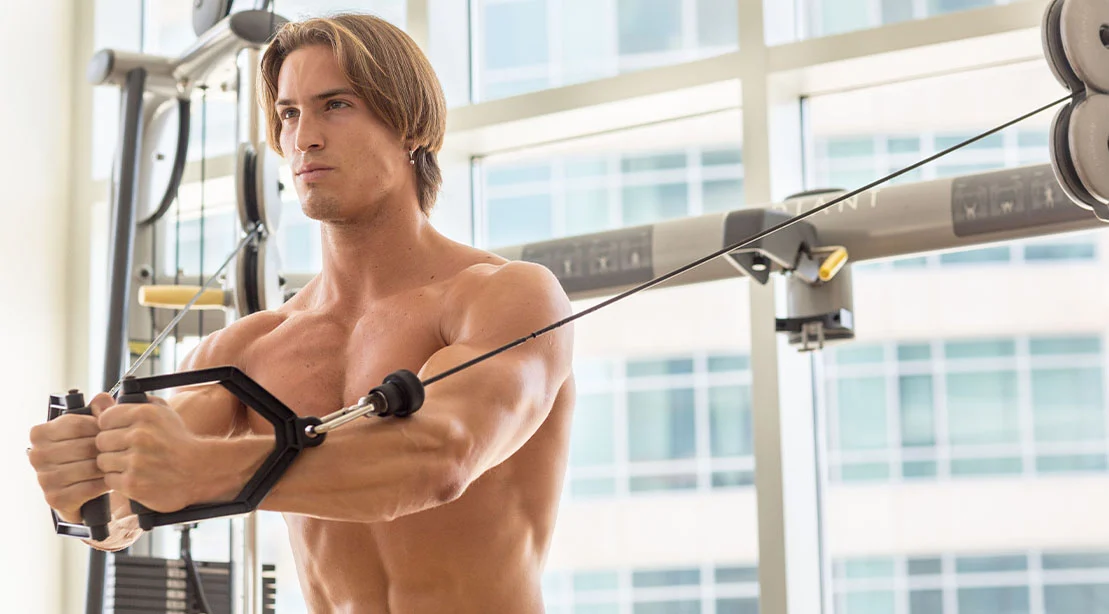
Enter the Cable Push-Pull Rotation. This dynamic, standing movement serves as the bridge between isolated strength training and high-level athletic performance. By integrating the ground, the hips, the core, and the upper body into a single, kinetic chain, this exercise mimics the reality of human movement: generating force from the floor to express power through the limbs.
The Mechanics of Force: Why Rotation Matters
Whether you are a professional golfer swinging a driver, a boxer throwing a cross, or a construction worker lifting heavy equipment, your body relies on rotational power. In these real-world scenarios, the core does not act as a static wall; it acts as a transmission.
The Cable Push-Pull Rotation trains this transmission. When performed correctly, the feet drive into the floor, initiating a torque that travels through the hips, is refined by the core, and is ultimately expressed by the upper body. This movement teaches the body to synchronize these disparate parts, creating a level of efficiency that stationary exercises simply cannot replicate.
The Anatomy of the Movement: Under the Hood
The Cable Push-Pull Rotation is a complex, multi-joint exercise that engages a significant portion of the kinetic chain. Understanding which muscles are firing is the first step toward optimizing your output.
1. The Obliques: The Rotational Engines
Your obliques are the primary drivers of rotation. They do not just create the movement; they control it. During the push-pull phase, the obliques transfer force from the hips to the torso. During the return phase, they function eccentrically, acting as a braking system to decelerate the body, which is critical for injury prevention.
2. The Glutes: The Ground-Up Generators
Power begins at the contact point with the floor. The glutes are responsible for initiating hip rotation and stabilizing the pelvis. Without glute engagement, the "rotational" movement often shifts into the lumbar spine, which is a recipe for back pain rather than athletic gain.
3. The Transverse Abdominis (TVA): The Internal Weight Belt
The TVA provides the structural integrity required for heavy rotation. By stiffening the torso, the TVA ensures that the force generated by the lower body is effectively transferred rather than "leaked" through a soft midsection.
4. The Lats, Chest, and Shoulders: The Expressive Force
While these muscles are often viewed as the "stars" of the show, their role in this exercise is secondary. They serve as the conduits for force, transmitting the power generated by the lower body to the cable handles.
A Chronology of Execution: How to Perform the Movement
To extract the maximum benefit from this exercise, one must follow a strict, systematic approach. The movement should be treated as a skill-based drill rather than a grind-it-out strength exercise.
Step 1: The Setup
Position a cable machine at chest height. Stand perpendicular to the weight stack, feet shoulder-width apart, knees slightly bent. Grasp the handle with both hands, arms extended, creating tension on the cable before the movement begins.
Step 2: The Initiation
The movement begins at the feet. Drive the lead foot into the ground, initiating a rotation of the hips. Your sternum and belly button should move in unison.
Step 3: The Push-Pull Phase
As your torso rotates, allow one arm to pull toward your chest while the other pushes away. This creates a "scissoring" effect that forces the core to stabilize against asymmetrical resistance.
Step 4: The Controlled Return
The return is as important as the initiation. Slowly guide the handles back to the center, resisting the pull of the cable stack. This eccentric control is where much of the functional strength is built.
Coaching Tips: Auditing Your Form
Without a professional coach present, you must become your own auditor. Use these checkpoints to ensure you are moving with intent.
You Are Doing It Right If:
- You feel a distinct "wind-up" in your trailing hip.
- Your breathing remains rhythmic and steady.
- The tension in the cable remains constant throughout the entire arc of motion.
What It Should Feel Like:
You should experience a "coiled spring" sensation. The feeling should not be localized to the arms; rather, you should feel a deep, intense connection between your lead heel, your oblique muscles, and your shoulder girdle.
Visual Checkpoints:
- The Spine: Your head, shoulders, and hips should remain aligned. If you are leaning forward or arching backward, you are bypassing the core.
- The Feet: If your feet are sliding or lifting, you are pushing with too much aggression and not enough stability.
Common Pitfalls and Professional Fixes
Even seasoned athletes often fall into common traps when attempting the Cable Push-Pull Rotation.
The Ego-Weight Trap
The most common mistake is using too much weight. When the load is too heavy, the body compensates by turning the exercise into an arm-dominant press. The Fix: Lower the weight by 20%. If you cannot control the return phase smoothly, you are too heavy.
The "Stiff-Torso" Error
Some individuals attempt to keep their torso perfectly still, moving only their arms. This defeats the purpose of a rotational exercise. The Fix: Visualize your upper body and hips as a single unit rotating around a vertical axis.
Lumbar Compensation
The lower back is designed for stability, not massive rotational torque. Forcing rotation through the lumbar spine is the fastest route to a disk injury. The Fix: Ensure all rotation is coming from the thoracic spine (the rib cage) and the hips. Keep your core braced as if you are about to take a punch.
Implications for Athletic Performance
The implications of mastering this movement extend far beyond the gym floor. By training the body to manage rotational force, athletes see a direct carryover to their chosen disciplines.
Explosive Power Development
By integrating the Cable Push-Pull into a training regimen, athletes improve their "rate of force development." This is the ability to produce maximum force in minimal time—the hallmark of speed and agility.
Injury Mitigation
Many sports injuries occur during the deceleration phase of a movement. Because this exercise requires the body to control and stop rotational force, it builds the connective tissue and muscular durability needed to handle the "braking" forces encountered in cutting, jumping, and landing.
Practical Programming
To integrate this into a routine, treat it as a cornerstone of your dynamic warm-up or as a secondary power movement.
- Warm-up: 2 sets of 8 reps per side to prime the nervous system.
- Core Accessory: 3 sets of 10–12 reps with a focus on tempo (3 seconds on the return).
Expert Perspective: The Future of Core Training
The consensus among strength and conditioning professionals is shifting. While the "plank culture" of the early 2000s provided a baseline for stability, the modern athlete requires more. The ability to express force through rotation is what separates the elite from the average.
"We are moving away from isolating muscles and moving toward integrating patterns," says a lead consultant in professional athletic training. "The Cable Push-Pull is the gold standard for teaching an athlete how to connect their foundation to their expression of power."
Conclusion: Intentional Movement
The Cable Push-Pull Rotation is more than just a gym exercise; it is a fundamental pattern for human movement. It challenges you to stop treating your core as a passive stabilizer and start using it as an active participant in force production.
When you incorporate this movement into your routine, you are not just building muscles; you are building a more efficient, more powerful, and more resilient human body. Don’t settle for static stability when you can achieve dynamic mastery. Start with lighter weights, focus on the coordination between your hips and your hands, and watch as your athletic performance reaches new heights. Your core is capable of more than just holding still—it is the engine of your movement. It is time you started using it that way.