







As we navigate our fifties and beyond, physiological changes often manifest in the abdominal region. The emergence of a "tummy roll" is a common point of frustration for many, yet it is rarely the result of a single lifestyle failure. Instead, it is a marker of broader systemic changes, including shifting hormonal profiles, a natural decline in lean muscle mass—a process known as sarcopenia—and a slower metabolic rate.
However, the narrative that midsection concerns are inevitable or irreversible is scientifically inaccurate. By shifting the focus from "spot reduction"—a physiological myth—to a holistic, trainer-approved strength model, individuals over 55 can achieve a firmer, more functional midsection. The key lies in strategic, compound resistance training that enhances metabolic output, supports posture, and builds the foundational muscle required to sustain long-term vitality.
The Physiology of the Midsection After 55: Main Facts
The primary reason body composition shifts after 55 is the intersection of decreased muscle density and changes in metabolic demand. When muscle mass decreases, the body’s "resting metabolic rate" drops, meaning it burns fewer calories even at rest. Simultaneously, many individuals become more sedentary, creating a caloric surplus that often deposits as visceral and subcutaneous fat around the waistline.
To counter this, trainers advocate for "metabolic demand" training. By utilizing compound movements—exercises that engage multiple joints and large muscle groups simultaneously—you force the body to utilize more energy. This approach does not just target the abs; it recruits the quads, glutes, lats, and shoulders, creating a "full-body" calorie-burning engine that helps preserve muscle mass while targeting body fat stores.
A Chronological Approach to Building Your Routine
Consistency is the cornerstone of fitness after 55. A workout that is too intense leads to burnout, while one that is too easy yields no results. The following five-exercise circuit is designed to be performed as a cohesive unit.
Phase 1: The Warm-Up (5 Minutes)
Before beginning the circuit, spend five minutes increasing your core body temperature through dynamic movements such as arm circles, gentle torso twists, and marching in place. This prepares the joints for the load they are about to carry.
Phase 2: The Circuit (The Core Movements)
Perform these exercises in sequence. If you are a beginner, start with one full round. As your capacity grows, aim for three full rotations of the circuit.
1. Dumbbell Squat to Press
This is the ultimate compound movement. It bridges the gap between lower-body power and upper-body stability. By driving through the heels to stand, you engage the posterior chain; the subsequent press forces the core to stabilize the spine against the overhead load.
- Muscles Targeted: Quadriceps, glutes, hamstrings, shoulders, triceps, core.
- Protocol: 3 sets of 8–10 reps. Rest 60 seconds between sets.
2. Incline Push-Up
Traditional floor push-ups can be daunting and hard on the wrists. An incline push-up—using a sturdy bench or counter—allows you to maintain perfect spinal alignment while working the pectoral muscles and deep core.
- Muscles Targeted: Chest, shoulders, triceps, core, glutes.
- Protocol: 3 sets of 8–12 reps. Rest 45 seconds between sets.
3. Dumbbell Bent-Over Row
Posture is the "hidden" secret to a flat stomach. Strengthening the upper back muscles (the rhomboids and lats) pulls the shoulders back, naturally lengthening the torso and tightening the midsection.
- Muscles Targeted: Upper back, lats, biceps, core, forearms.
- Protocol: 3 sets of 10–12 reps. Rest 45 seconds between sets.
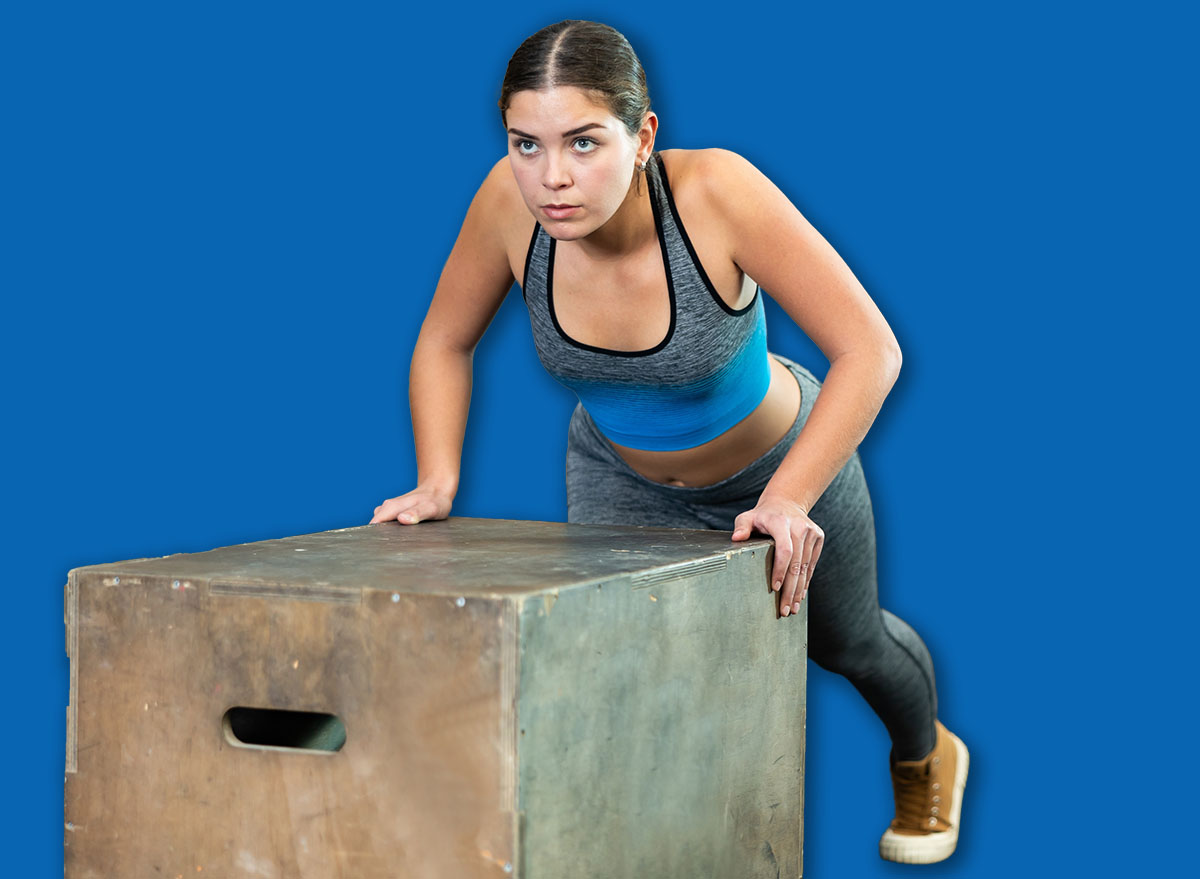
4. Suitcase Carry March
This is an anti-lateral flexion exercise. By holding a weight in only one hand and marching in place, your obliques must fire intensely to keep your body from tilting. It is essentially a "moving plank."
- Muscles Targeted: Obliques, deep core, grip, hip flexors.
- Protocol: 3 sets of 20–30 seconds per side. Rest 30 seconds between sides.
5. Medicine Ball Slam Intervals
To spike the heart rate and improve metabolic flexibility, use a soft medicine ball. The slamming motion requires total-body coordination and forces the abdominal wall to contract forcefully, providing an explosive finish to your routine.
- Muscles Targeted: Entire abdominal wall, lats, shoulders, glutes, legs.
- Protocol: 3 sets of 20–30 seconds. Rest 60 seconds between sets.
Supporting Data: Why Compound Movements Win
Clinical research consistently highlights that isolation exercises (like crunches) are inferior to compound movements for individuals over 55. According to the National Center for Biotechnology Information (NCBI), compound training provides a higher hormonal response—specifically the release of growth hormone and testosterone—which is critical for maintaining lean muscle mass in aging populations.
Furthermore, a study published in The Journal of Strength and Conditioning Research suggests that older adults who incorporate weight-bearing, multi-joint movements see a significant reduction in visceral adipose tissue compared to those who focus solely on cardiovascular exercise like walking or cycling. The "afterburn" effect—or Excess Post-exercise Oxygen Consumption (EPOC)—is significantly higher following a heavy compound circuit, meaning your body continues to burn energy long after the workout concludes.
Official Perspectives: The Trainer’s Consensus
Professional fitness coaches emphasize that for the 55+ demographic, control is more important than speed.
"The goal isn’t to crush yourself," says a veteran strength coach. "The goal is to stimulate the muscles enough to send a signal that they are needed. If you move with control—focusing on the eccentric (lowering) phase of every lift—you minimize joint stress while maximizing muscle recruitment."
The consensus among health professionals is that the "tummy roll" is often a signal of postural collapse. When we spend our days slumped over desks or devices, our abdominal muscles "turn off." By using exercises like the Suitcase March and the Bent-Over Row, we are not just exercising; we are retraining the body to hold itself in a position that naturally creates a firmer, more athletic appearance.
Implications for Long-Term Health
The implications of adopting this routine go far beyond aesthetics. A strong core is the primary defense against lower back pain, which is the leading cause of disability in adults over 50. Furthermore, improved body composition is directly linked to better insulin sensitivity, which helps manage blood sugar levels—a critical factor for longevity.
How to Integrate This Into Your Life
To ensure these exercises become a staple of your routine, follow these three rules:
- Scale for Success: If 10 reps feels impossible, do 5. The priority is showing up, not hitting a specific number.
- Focus on Form: Never prioritize weight over movement quality. If you cannot maintain a neutral spine, decrease the weight.
- Progressive Overload: Once the routine feels "easy," increase the weight by 2–5 pounds or decrease your rest intervals by 5 seconds.
By treating these movements as a daily habit—no different than brushing your teeth—you create the "broad training picture" necessary to change your body. You are not just fighting a tummy roll; you are investing in the strength, mobility, and confidence that define a healthy, active life after 55.
Start today. Keep it simple. Be consistent. The results will follow.