









1 July, 2026 — The European Respiratory Society (ERS) has officially opened the polls for its 2026 Leadership Elections, marking a pivotal moment in the organization’s trajectory. As the society continues to navigate the complexities of global respiratory health—ranging from the lingering challenges of post-pandemic recovery to the escalating crisis of climate-related lung disease—members are tasked with selecting a new Vice President. This election is not merely a vote for an individual, but a vote for a vision; the successful candidate will embark on a prestigious four-year leadership cycle, serving sequentially as Vice President, President-Elect, President, and finally, Past President.
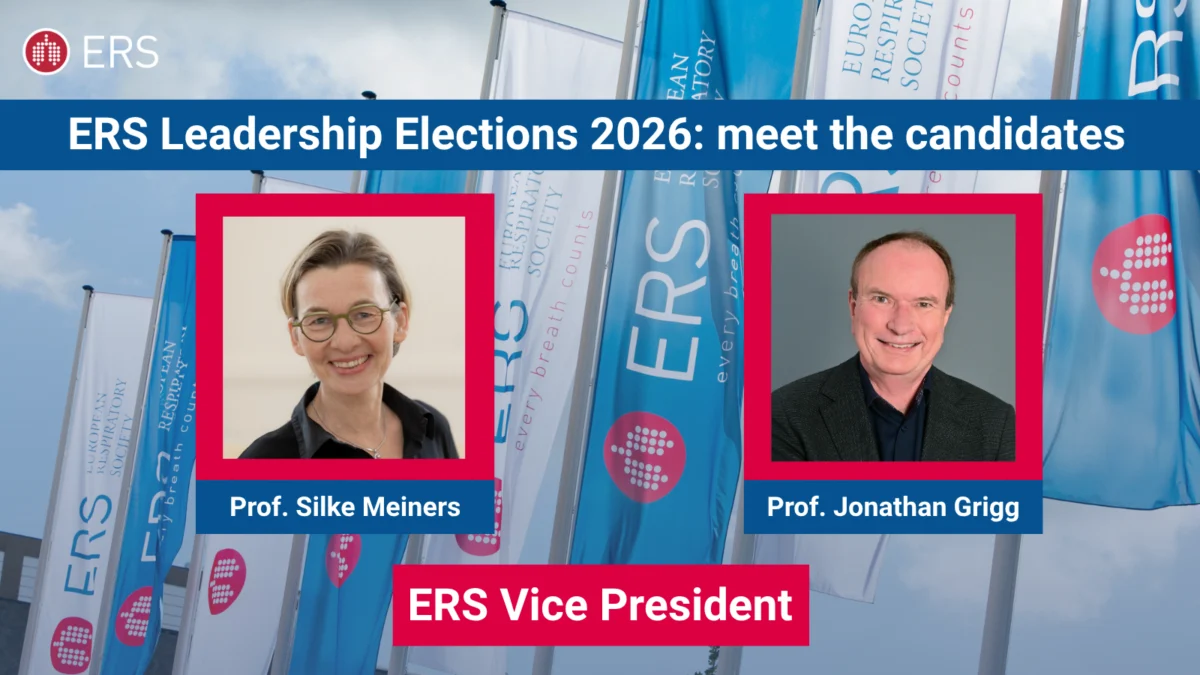
With the ballot now open, the ERS is highlighting two distinguished candidates, Prof. Silke Meiners and Prof. Jonathan Grigg, both of whom bring decades of dedication and specialized expertise to the table. As the deadline of 2 August, 2026, approaches, the medical community finds itself at a crossroads, weighing the merits of a research-centric, translational approach against a policy-driven, global advocacy platform.
The Strategic Importance of the Four-Year Tenure
The ERS leadership structure is meticulously designed to ensure continuity and long-term strategic alignment. By electing a Vice President who will ascend through the ranks over four years, the society ensures that the President’s agenda is grounded in a deep, institutional understanding of the organization’s operational and scientific pillars.
The role of the President is arguably the most influential position within the European respiratory landscape. The incumbent acts as the primary ambassador for the society, guiding its research priorities, steering its international conference strategies, and representing the interests of thousands of members before global health bodies such as the World Health Organization (WHO) and the European Commission.
Candidate Profiles: A Study in Contrasting Strengths
Prof. Silke Meiners: The Architect of Translational Science
Prof. Silke Meiners has cultivated a reputation as a bridge-builder between the laboratory bench and the patient’s bedside. Her candidacy is anchored in a deep-seated commitment to translational medicine—the process of ensuring that basic scientific discoveries do not languish in academic journals but are effectively refined into clinical applications.
- Scientific Background: Her research career has been defined by a rigorous exploration of the mechanisms underlying chronic obstructive pulmonary disease (COPD) and pulmonary fibrosis. By utilizing both human patient cohorts and preclinical animal models, Meiners has provided critical insights into how lung tissue degrades and remodels. Her work in biomarker analysis has been instrumental in the burgeoning field of precision medicine, providing the empirical data necessary to tailor therapies to individual patient profiles.
- Leadership Track Record: A staple of the ERS community for over 15 years, Meiners’ leadership within Assembly 3 has been marked by a focus on infrastructure. As the ERS Conference and Seminars Director, she spearheaded initiatives designed to break down the silos between basic scientists and clinical practitioners.
- The Vision: If elected, Meiners plans to implement an "end-to-end" translational framework. Her goal is to create a seamless pipeline where basic discovery leads directly into clinical trials. She is also a vocal proponent of diversity, equity, and inclusion, specifically advocating for structural support for early-career researchers who represent the future of the field.
Prof. Jonathan Grigg: The Global Advocate for Respiratory Justice
Prof. Jonathan Grigg, a Professor of Paediatric Respiratory and Environmental Medicine at Queen Mary University of London, represents a candidacy centered on advocacy, environmental health, and global equity. His approach views respiratory health through a socio-political lens, arguing that the air we breathe is a determinant of health that transcends individual biology.
- Advocacy and Policy: Grigg is perhaps best known for his courageous intervention in the landmark Ella Adoo-Kissi-Debrah case, where his testimony linked air pollution directly to asthma mortality, changing the legal landscape for environmental accountability. As the founder of the "Doctors against diesel" movement, he has successfully translated medical data into public policy pressure.
- Global Reach: Beyond his clinical and academic work, Grigg has demonstrated a profound commitment to addressing health disparities in the Global South. Through his leadership of a Global Health Research Group in Sub-Saharan Africa, he has gained firsthand experience with the unique challenges of providing respiratory care in resource-limited settings.
- The Vision: Grigg’s platform is defined by "boundary-breaking." He intends to use the ERS platform to foster interdisciplinary collaboration, particularly by connecting pediatric medicine with environmental science. His primary policy goals include increasing the accessibility of inhaled therapies in developing nations and establishing a world-class global network for clinical trials that addresses the specific, unmet needs of non-communicable disease patients worldwide.
Chronology of the 2026 Election Process
The election process is a tightly governed sequence of events designed to ensure transparency and equitable representation for all ERS members:
- Early June 2026: The ERS Nominations Committee completes its vetting process, confirming the eligibility and platforms of the two primary candidates.
- 1 July 2026: The voting portal officially opens on the myERS platform, accompanied by the publication of candidate manifestos and recorded video interviews.
- July 2026: A month-long period of engagement, during which candidates participate in virtual town halls and Q&A sessions with ERS members to discuss their visions for the society.
- 2 August 2026 (23:59 CEST): The final deadline for members to submit their electronic ballots.
- Late August 2026: Official verification of the results by the independent electoral commission.
- September 2026: The formal announcement of the incoming Vice President at the ERS Annual Congress, where the winner will begin their transition period.
Supporting Data: Why Leadership Matters
The current state of respiratory health in Europe and beyond provides the context for this election. According to recent data, respiratory diseases remain among the leading causes of morbidity and mortality worldwide. The rising impact of climate change, increasing urbanization, and the aging population have created a "perfect storm" for respiratory specialists.
- Precision Medicine Trends: The shift toward personalized treatment for lung cancer and COPD, as championed by Prof. Meiners, is projected to reduce healthcare costs by approximately 15% over the next decade by minimizing the use of ineffective, broad-spectrum therapies.
- The Environmental Burden: Prof. Grigg’s focus on air quality is supported by WHO estimates that 99% of the global population breathes air that exceeds air quality guideline limits. His call for policy-driven medicine is viewed as a necessary evolution for a society that aims to address the root causes of disease, not just the symptoms.
Official Responses and Member Implications
The response from the broader ERS community has been one of keen interest. Senior members have noted that both candidates represent the high caliber of leadership the society has come to expect.
"The choice before our members is distinct," noted a senior ERS board member on condition of anonymity. "On one hand, we have a candidate who will likely focus on the technological and scientific advancement of our research pipelines. On the other, we have a candidate who will push the society toward becoming a dominant, activist voice in the global public health arena. Both are vital to our mission."
For the average ERS member—whether a clinician, a researcher, or an allied health professional—the implication of this vote is significant. The elected leader will determine how the society allocates its substantial research grants, which clinical guidelines are prioritized for updates, and how the ERS leverages its influence in the European Parliament to shape legislation on tobacco, pollution, and occupational health.
Conclusion: The Path Ahead
As the deadline of 2 August draws near, the ERS encourages all eligible members to engage with the platforms provided on the myERS portal. The future of respiratory medicine is not just about the science of the lungs, but about the structure of the organizations that protect the global population’s right to breathe.
Whether the society leans toward the precision-focused, translational rigor of Prof. Silke Meiners or the advocacy-heavy, global health-centric approach of Prof. Jonathan Grigg, the result will undoubtedly shape the medical landscape for years to come.
Members are reminded that participation is the hallmark of a healthy professional society. Every vote cast contributes to the legitimacy and the strength of the incoming leadership team, ensuring that the ERS remains a robust, unified voice in the fight against respiratory disease.
Vote now at myERS before 23:59 CEST on 2 August, 2026.