









Introduction: The Frontiers of Cellular Immunotherapy
In the rapidly evolving landscape of oncology, Chimeric Antigen Receptor (CAR) T-cell therapy has emerged as a beacon of hope for patients with large B-cell lymphoma (LBCL). By genetically engineering a patient’s own immune cells to identify and eradicate malignant tumors, this "living drug" has achieved remarkable remissions where conventional chemotherapy failed. Yet, the clinical reality remains sobering: nearly 50% of patients experience a recurrence of their disease.
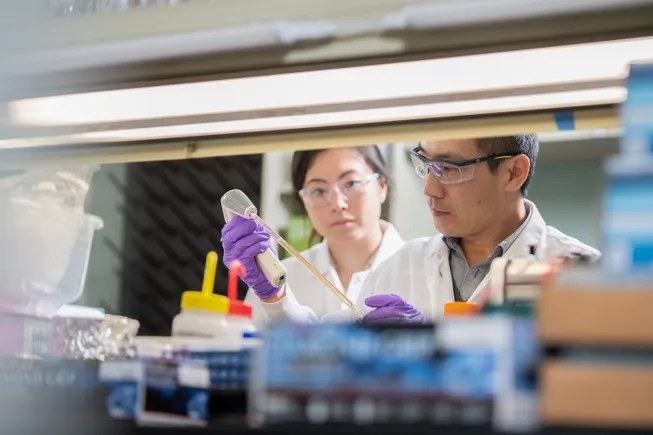
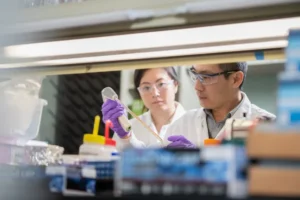
At the Memorial Sloan Kettering Cancer Center (MSKCC), Dr. Sandeep Raj, MD, is spearheading a critical research initiative aimed at deciphering the "why" behind these treatment failures. By integrating quantitative biology with advanced immunology, Dr. Raj is not merely studying cancer; he is architecting the next generation of cellular interventions designed to ensure that the initial promise of CAR T-cell therapy translates into durable, lifelong cures.
Main Facts: The Challenge of Treatment Resistance
The core mission of Dr. Raj’s laboratory is to dismantle the barriers that render CAR T-cell therapy ineffective in half of the LBCL patient population. While CAR T-cells are designed to be "super-soldiers" within the body, the tumor microenvironment (TME) often evolves to neutralize them.
Dr. Raj’s research focuses on three primary pillars:
- Immune Evasion: Identifying how cancer cells effectively "hide" from modified T-cells.
- Microenvironment Modulation: Understanding how the surrounding non-cancerous cells in the lymph nodes create an immunosuppressive "shield" that prevents CAR T-cells from penetrating the tumor site.
- Predictive Modeling: Developing diagnostic biomarkers to identify high-risk patients before they receive their first infusion, allowing for preemptive, personalized therapeutic adjustments.
"Roughly half of patients will see their cancer return, and we do not fully understand why," Dr. Raj notes. "My research aims to uncover the reasons CAR T-cell therapy stops working in patients with LBCL and find ways to overcome them."
Chronology: A Personal and Professional Journey
The trajectory of Dr. Raj’s career is deeply rooted in a personal narrative of resilience and medical triumph. His interest in lymphoma research was not merely academic; it was forged in the waiting rooms of oncology clinics during his youth.
The Catalyst
When a close family member was diagnosed with lymphoma, the experience left an indelible mark on Dr. Raj. He recalls the "overwhelming sadness and anxiety" that permeated his family during the initial diagnosis. However, it was the demeanor of the treating oncologist—a blend of "calm confidence, compassion, and warmth"—that ultimately steered the family member toward full remission.
Medical Training and Commitment
Throughout his subsequent medical training, Dr. Raj found himself repeatedly drawn back to the study of lymphomas. This was not a passive interest, but a purposeful commitment to pay forward the care his family received.
- Medical School and Residency: Early exposure to clinical hematology-oncology reinforced the need for innovation in blood cancer treatments.
- The Fellowship Years: Dr. Raj focused on the intersection of cellular therapy and molecular biology, seeking to understand the granular mechanics of how immune cells fail.
- The Physician-Scientist Role: Currently, at MSKCC, he functions in a dual capacity, balancing the immediate needs of patients in the clinic with the long-term pursuit of laboratory-based breakthroughs.
Supporting Data: The Biological Landscape of Failure
To understand why CAR T-cell therapy reaches its limits, one must look at the interplay between the engineered cells and the patient’s internal biology. Dr. Raj’s work investigates whether "prophylactic intervention" could change the outcome.
The Role of Inflammation
Current data suggests that the immune system’s reaction to the initial therapy can sometimes be counterproductive. Dr. Raj is exploring whether targeted anti-inflammatory drugs, administered in conjunction with CAR T-cell therapy, can optimize the environment, preventing the "exhaustion" of the T-cells.
Viral Interference
Another frontier in his research involves the role of latent viruses and immune signaling. If the immune system is distracted or actively suppressed by internal biological signals, the CAR T-cells may be unable to maintain their potency. Dr. Raj’s lab is currently analyzing patient samples to see if antiviral or immune-modulating protocols can "prime" the body to accept and sustain these therapies.
Official Responses and Strategic Vision
Dr. Raj’s program is a testament to the power of multidisciplinary collaboration. With the support of philanthropic foundations and the robust infrastructure of Memorial Sloan Kettering, he is building a framework that he describes as moving from "the computer to the lab bench to the bedside and back."
A Multidisciplinary Approach
"It is an absolute privilege to be able to work at the intersection of quantitative biology, cancer immunology, and cellular therapy," Dr. Raj states. By bringing together computer scientists who specialize in big-data analysis, laboratory researchers who handle cellular assays, and clinicians who see the patients, Dr. Raj is creating a feedback loop.
When a patient’s CAR T-cells fail, the data is sent back to the lab, analyzed through computational models, and then used to develop a new hypothesis for the next generation of patients. This cycle is intended to accelerate the pace of clinical discovery, shortening the time it takes for a lab-grown idea to reach a clinical trial.
Implications: The Future of Lymphoma Care
The implications of Dr. Raj’s research extend far beyond the specific treatment of LBCL. If his team can successfully identify the biomarkers for "CAR T-cell resistance," the entire field of oncology stands to benefit.
Personalizing Cancer Care
In the current standard of care, many patients receive the same CAR T-cell protocol regardless of their specific biological profile. Dr. Raj’s research points toward a future of "stratified medicine," where a patient’s unique immune profile dictates the treatment strategy.
- High-Risk Patients: If a patient is flagged as having a high risk of failure, they might receive a modified version of the therapy or a concurrent pharmacological intervention.
- Improved Durability: By reshaping the immune environment, the goal is to increase the duration of remission, potentially leading to a permanent cure for a higher percentage of patients.
A Legacy of Compassion
Beyond the technical milestones, Dr. Raj remains anchored by his original motivation: the patient. He views the "physician-scientist" role as the most effective way to combine rigorous inquiry with the human element of medicine.
"I’ve always been led back to studying lymphoma, contributing toward finding a cure, and hoping that I can provide the same compassionate and thoughtful care my family once received," he explains. This ethos ensures that even as the research moves into the complexities of quantitative biology and cellular engineering, the patient’s experience—the anxiety, the hope, and the need for clarity—remains the driving force of his work.
Conclusion
As we look toward the future of oncology, researchers like Dr. Sandeep Raj represent the next wave of clinical innovation. By tackling the most difficult challenge in lymphoma care—the failure of immunotherapy—he is not only helping patients live longer but is also fundamentally changing how we define "remission."
The journey from the lab bench to the bedside is long and fraught with biological hurdles. However, through the integration of computational insights and a steadfast commitment to the patient experience, the team at MSKCC is moving ever closer to a world where a diagnosis of large B-cell lymphoma is no longer a lifelong uncertainty, but a challenge that can be decisively overcome. Through his work, Dr. Raj is ensuring that the "calm confidence" he once witnessed in his own family’s time of need becomes the standard for every patient seeking a cure.