



The landscape of surgical robotics is undergoing its most significant transformation in over two decades. For years, the sector was defined by the near-hegemonic dominance of Intuitive Surgical and its iconic da Vinci platform. However, 2026 has emerged as a watershed moment, marking the end of the "monopoly era" and the beginning of a hyper-competitive epoch defined by technological diversification, platform specialization, and a strategic pivot toward ambulatory surgery centers (ASCs).
As major medtech incumbents and nimble disruptors introduce sophisticated new systems, the clinical environment is evolving. Surgeons now have access to a broader toolkit designed not just for general soft tissue procedures, but for highly specialized interventions in spine, cranial, and orthopedic medicine.
The Seismic Shift: Challenging the Da Vinci Monopoly
For more than 20 years, Intuitive Surgical has dictated the pace of the robotic surgery market. Its da Vinci system became the gold standard, creating a massive barrier to entry for any competitor attempting to break into the U.S. market. That barrier has now been breached.
The current market shift is driven by a combination of clinical necessity and technological maturation. As hospitals face mounting pressure to reduce recovery times, shorten hospital stays, and improve surgical precision, the demand for robotic assistance has surged. Recognizing this, companies like Medtronic, Stryker, CMR Surgical, and Distalmotion have moved from the R&D phase to full-scale commercialization.
Medtronic’s Hugo: A Multi-Year Ascent
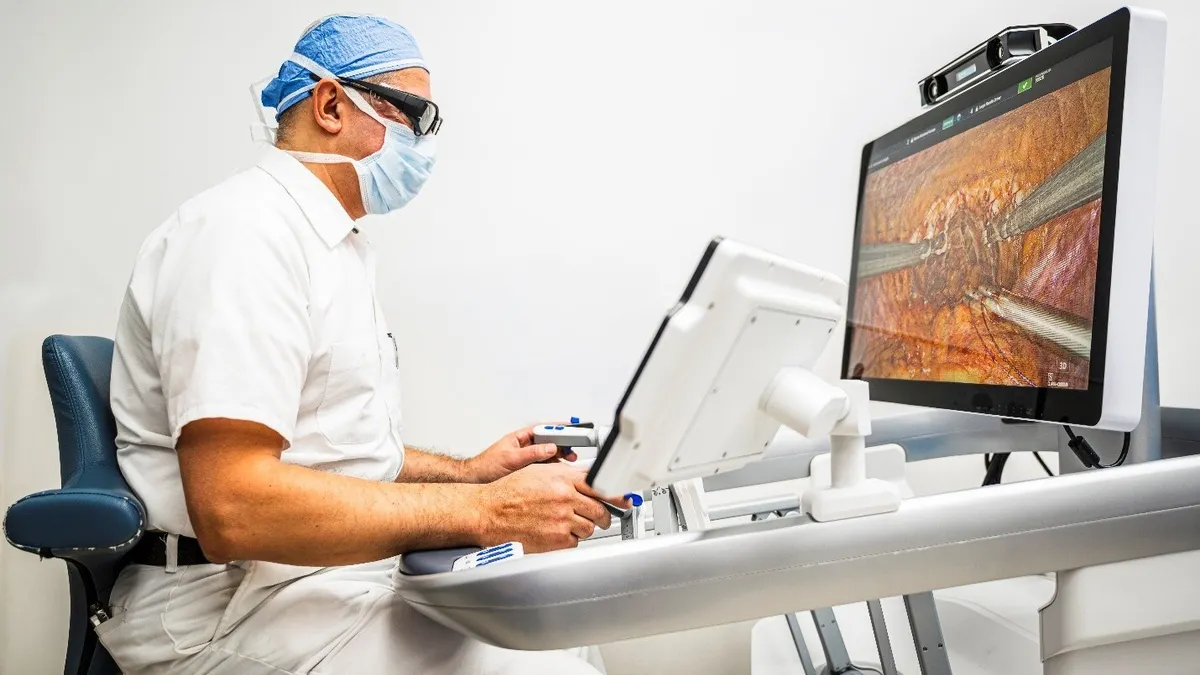
Medtronic’s Hugo robotic-assisted surgery (RAS) system represents the most significant threat to the status quo. Following a long, deliberate regulatory and clinical trial journey, the system saw its first U.S. commercial cases performed at the beginning of 2026. By utilizing an open-console design, Medtronic aims to address a common surgeon complaint regarding the "isolation" of traditional robotic platforms, allowing surgeons to maintain better communication with the operating room team while utilizing advanced 3D visualization and precise instrumentation.
Chronology of Market Disruption (2025–2026)
The acceleration of the market can be traced through several key milestones over the last 18 months:
- Early 2025: Regulatory filings for next-generation systems began to clear hurdles in both the U.S. and Europe, signaling a shift toward diversified platform portfolios.
- Late 2025: Stryker intensified its focus on the orthopedic sector, signaling that the "robotics war" would not be limited to general surgery.
- January 2026: The first commercial use of the Medtronic Hugo system in the United States marked the symbolic end of the era where surgeons had only one primary choice for soft tissue robotics.
- Mid-2026: The expansion of the Stealth AXiS platform, combined with the emergence of specialized handheld robotics, cemented the transition from a "one-size-fits-all" robotic approach to a "right-tool-for-the-job" philosophy.
- Current State: Market focus has shifted to the "outpatient revolution," with companies scrambling to secure footprint in Ambulatory Surgery Centers (ASCs), where the cost-efficiency of smaller, modular robots is a primary selling point.
Supporting Data: Why the Market is Expanding
The proliferation of robotic systems is backed by compelling data regarding clinical outcomes and facility economics.
Clinical Efficacy and Specialization
The shift is no longer limited to soft tissue. Medtronic’s recent clearance for the Stealth AXiS platform highlights a strategic move into highly specialized fields. By integrating navigation and robotics into spine, cranial, and ear, nose, and throat (ENT) procedures, Medtronic is tapping into the high-precision needs of neurosurgeons.
Simultaneously, Stryker continues to innovate within the Mako ecosystem. By introducing a handheld version of the Mako robot for knee procedures, Stryker has effectively addressed a gap in the market for surgeons who desire robotic precision without the full-room footprint of a traditional console-based system.
The ASC Battleground
Perhaps the most significant financial trend is the migration of surgeries from inpatient hospital settings to ambulatory surgery centers. ASCs operate on tighter margins and space constraints, favoring systems that offer:
- Lower Capital Expenditure (CapEx): Systems that do not require massive infrastructure investments.
- Modularity: Platforms like those being developed by CMR Surgical and Distalmotion allow facilities to scale their investment according to their surgical volume.
- Efficiency: Faster setup and teardown times, which are essential for the high-throughput nature of outpatient surgery.
Official Responses and Strategic Pivot
The incumbent leaders are not standing idle. Intuitive Surgical, responding to the pressure of new entrants, has doubled down on the da Vinci 5. Rather than retreating, Intuitive is focusing on vertical integration and the expansion of its programs into complex areas like cardiac surgery.
"The competition is good for the patient," said a spokesperson for a leading surgical robotics firm. "It forces innovation to move faster. When you look at the integration of AI-driven analytics, haptic feedback, and improved visualization, we are seeing more progress in the last two years than we saw in the previous decade."

However, the strategy differs by player:
- Medtronic is focusing on a modular "ecosystem" approach, ensuring that their robotic systems interface seamlessly with their broader portfolio of surgical instruments and implants.
- Stryker is leveraging its dominance in orthopedics to create a "sticky" ecosystem where the robot is an extension of their high-performance orthopedic implants.
- Distalmotion and CMR are positioning themselves as the "accessible" choice, aiming to democratize robotic surgery for mid-sized hospitals and surgery centers that were previously priced out of the market by incumbents.
Implications for the Future of Surgery
As the market matures, the implications for the healthcare system are profound.
For Surgeons
The "training burden" will be the next major hurdle. As more systems enter the market, surgeons will face the challenge of learning multiple platforms. This may lead to a future where hospitals standardize on specific systems, or conversely, where surgeons become "platform agnostic," capable of switching between systems based on the specific requirements of the patient.
For Patients
The primary beneficiary of this competition is the patient. Increased competition is driving down the cost of robotic procedures, potentially making them more accessible to a wider demographic. Furthermore, the diversification of platforms means that more specialized procedures—ranging from delicate ENT surgery to complex joint replacements—can now benefit from the reduced trauma and faster healing times associated with robotic assistance.
For the Industry
We are likely to see a period of consolidation. While the current climate favors innovation and new entrants, the long-term sustainability of smaller players will depend on their ability to integrate with existing hospital IT infrastructures and prove their value through longitudinal clinical data.
In conclusion, the era of the single-platform monopoly is over. We have entered a dynamic, multi-platform environment where surgical robotics are becoming as ubiquitous as the stethoscope. Whether through the modularity of CMR, the reach of Medtronic, or the specialized focus of Stryker and Intuitive, the next five years will be defined by a relentless drive toward precision, efficiency, and expanded patient access. The battle for the operating room has officially begun, and the winners will be those who can best balance technical sophistication with the economic realities of the modern healthcare facility.