











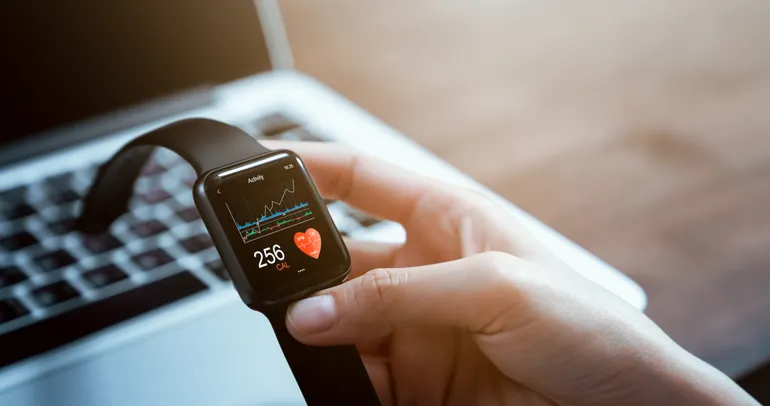
The landscape of modern medicine is undergoing a profound shift. For decades, the doctor-patient relationship was defined by periodic, episodic encounters—a snapshot of health taken in a clinical setting. Today, that model is being challenged by a constant stream of longitudinal data flowing from the wrists and fingers of millions of Americans. As consumer wearables—from the ubiquitous Apple Watch to the discreet Oura Ring—become standard accessories, the healthcare sector finds itself at a critical crossroads: how to effectively bridge the gap between "wellness tracking" and "clinical decision-making."
The Surge of the Quantified Self
The proliferation of wearable technology has been nothing short of explosive. According to a recent analysis by Rock Health, nearly half of all Americans now own a smartwatch or a health-tracking ring. This widespread adoption is no longer limited to fitness enthusiasts; it spans generations and socioeconomic brackets, driven by a growing cultural emphasis on proactive health management.
Patients are increasingly arriving at physician offices with digital portfolios of their heart rate variability, sleep stages, and oxygen saturation levels. For many, this is an act of empowerment—an attempt to provide their clinicians with a more comprehensive, real-time picture of their physiological state. They hope that by sharing this data, they can move beyond the "white coat hypertension" of the office visit and provide a clearer window into their long-term health trends.
Clinical Validation and the Physician’s Perspective
While patients are eager to share this data, the reception from the medical community has been cautiously optimistic. A recent report from the American Medical Association (AMA), which surveyed over 2,200 physicians across six countries, highlights a significant disconnect between enthusiasm and utility.
Nearly 80% of U.S. physicians—and 74% of their counterparts internationally—acknowledge that wearable data offers tangible clinical advantages. They recognize that a device recording a patient’s atrial fibrillation or nocturnal oxygen drops over several weeks provides a far richer dataset than a single EKG or pulse oximetry reading taken during a ten-minute consultation.
The integration of this data into daily practice is already underway. Approximately 30% of U.S. physicians report that they take a clinical action at least weekly based on the data derived from consumer wearables. Whether it is adjusting medication dosages, referring a patient for a formal sleep study, or ordering diagnostic imaging, the impact of these devices is no longer theoretical; it is a measurable, weekly occurrence in clinics across the country.
Chronology of the Digital Health Shift
To understand how we reached this point, one must look at the evolution of the wearable market over the last decade:
- 2010–2014: The Era of Step Counting: Early wearables focused almost exclusively on activity tracking. The primary goal was behavioral modification—encouraging sedentary individuals to move more.
- 2015–2018: The Rise of Biometrics: With the introduction of advanced optical heart-rate sensors and more sophisticated accelerometers, devices began offering insights into heart rate zones and sleep duration.
- 2019–2022: The Clinical Pivot: Apple and other major players sought FDA clearance for specific features, such as ECG monitoring and fall detection. This blurred the lines between "consumer electronic" and "medical device."
- 2023–Present: The Integration Crisis: The current phase is defined by a struggle for interoperability. The devices are capable of collecting high-quality data, but the infrastructure for physicians to interpret, document, and bill for that data remains underdeveloped.
The Bottleneck: Workflow and Interoperability
Despite the clinical promise, the AMA report identifies severe barriers that prevent widespread, efficient adoption. The primary culprit is the lack of integration within physician workflows.
"Doctors often have limited time with patients," notes Dr. Matthew Whyte, a leading expert in digital health implementation. "They simply cannot spend an appointment digging through a patient’s phone, scrolling through proprietary apps, and trying to decipher messy data points."
The issue is twofold: technical and administrative. First, the data must be seamlessly ingested into the Electronic Health Record (EHR). If a physician cannot view a patient’s heart rate trend directly within the EHR alongside their blood work and clinical notes, the data becomes an isolated silo. Second, the data must be documented in a way that is searchable and accessible to other providers in the care continuum. Without this, the data is essentially "lost" as soon as the patient leaves the office.
The Challenge of Clinical Validation
Beyond logistics, there is the fundamental question of scientific rigor. If a consumer-grade ring suggests a patient has sleep apnea, the physician must reconcile that suggestion with clinical reality.
"Where is the clinical validation of this?" Dr. Whyte asks. "Physicians need to know exactly what the device was measuring and whether the algorithms it uses meet the standards of evidence-based medicine."
There is a natural skepticism among clinicians toward proprietary algorithms. Unlike a gold-standard polysomnography machine used in a sleep lab, many wearables rely on "black box" software that may not be transparent about its margin of error. Physicians are trained to be risk-averse; they are hesitant to base a diagnosis or a change in treatment plan on a device that hasn’t undergone rigorous peer-reviewed validation.
Reimbursement and Regulatory Frameworks
Financial incentives are the lifeblood of clinical practice, yet they remain largely misaligned with the current reality of wearable technology. In the United States, only 10% of physicians report utilizing Current Procedural Terminology (CPT) codes for remote patient monitoring.
The current billing pathway is restrictive. It generally requires the use of FDA-approved devices paired with a clinician-directed plan of care. Consumer devices often do not meet these stringent regulatory requirements, leaving physicians without a clear pathway to be compensated for the time they spend reviewing and interpreting patient-provided data.
This stands in stark contrast to international models. For example, in Germany, 35% of physicians utilize the DiGA (Digitale Gesundheitsanwendungen) framework. DiGA provides a streamlined reimbursement pathway for digital health applications that have been vetted for safety, security, and clinical efficacy. This framework encourages manufacturers to bridge the gap between "consumer gadget" and "prescribable medical tool."
The Path Forward: Balancing Innovation and Oversight
For wearable technology to truly fulfill its promise in healthcare, the industry must move toward a more sophisticated regulatory framework. Dr. Whyte emphasizes that oversight should be proportional to the risk. A device that tracks steps requires less scrutiny than one used to manage insulin dosing or heart rhythm monitoring.
"If physicians don’t believe in the data, and if they don’t have a way to integrate it into their workflow, it doesn’t matter what you pay them," says Whyte. "It’s not going to happen."
The future of digital health depends on three pillars:
- Standardization: Manufacturers must work toward interoperability standards that allow data to flow into any EHR system.
- Clinical Evidence: Consumer tech companies must invest in longitudinal, peer-reviewed studies that demonstrate their devices lead to improved clinical outcomes.
- Incentive Alignment: Policymakers must expand CPT codes to include validated consumer-grade data, ensuring that physicians are compensated for the time they invest in patient-driven digital health.
Implications for the Future of Care
The transition from reactive to proactive care is inevitable. As technology improves, the sheer volume of data will become impossible to ignore. We are moving toward a future where "clinical care" occurs in the home, the gym, and the workplace, with the doctor serving as an expert guide interpreting the data stream rather than just a collector of vitals.
However, the "quantified self" is only as useful as the "qualified clinician" who interprets it. If the healthcare system fails to address the workflow and validation barriers, we risk a scenario where patients are overwhelmed by data they don’t understand, and doctors are frustrated by data they cannot trust. By fostering a collaborative ecosystem—where developers, regulators, and providers align on standards—we can unlock the full potential of wearables, turning a flood of digital information into a fountain of better health outcomes.
Ultimately, the goal is to make the wearable not just a tech accessory, but a vital, invisible thread in the tapestry of patient-centered care. As we refine the tools, we must also refine the system, ensuring that the technology serves the human experience of healing, rather than complicating it.