











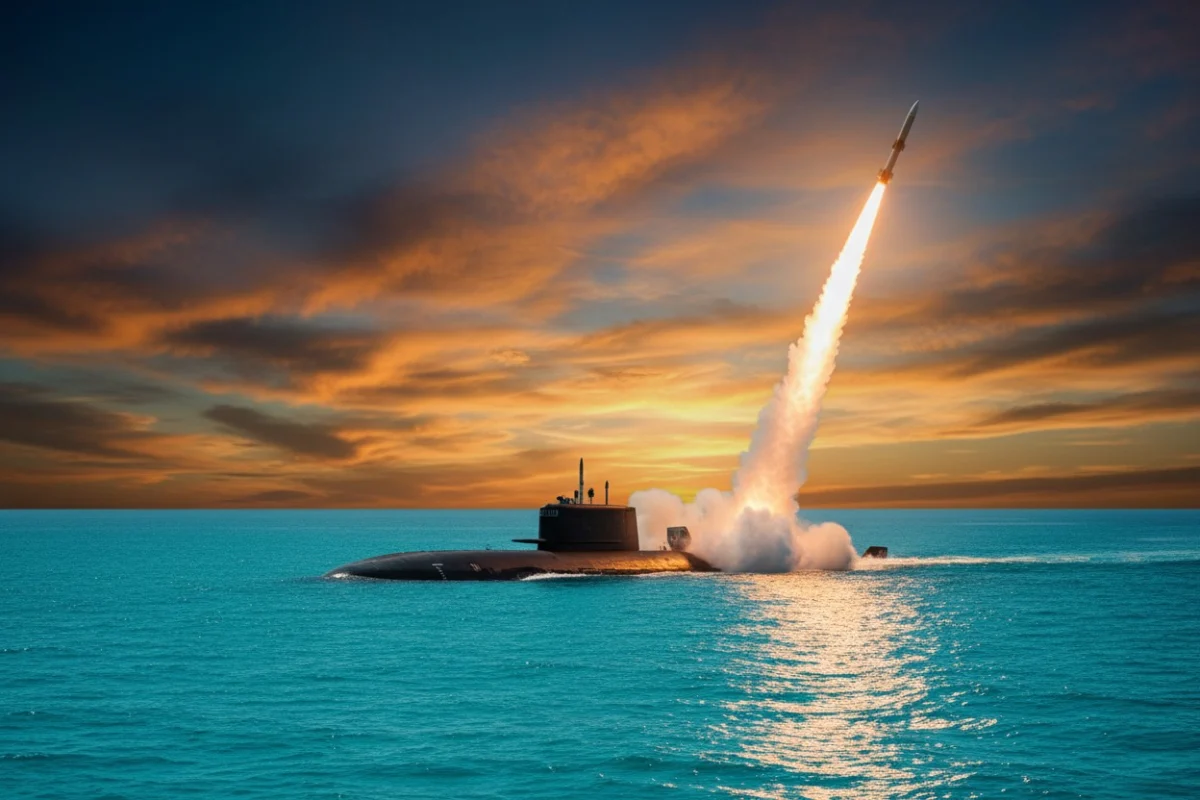
In a move that has reverberated across global defense capitals, the People’s Liberation Army Navy (PLAN) conducted a rare and significant test of a submarine-launched ballistic missile (SLBM) on July 6. The launch, which involved a strategic nuclear-powered submarine firing a missile equipped with a training dummy warhead into the high seas of the Pacific Ocean, serves as a stark reminder of Beijing’s maturing nuclear triad. By demonstrating its ability to project power far beyond its coastal waters, China has signaled a shift in its maritime military posture, moving from regional defense to a more assertive, global strategic stance.
Main Facts: The Anatomy of the Launch
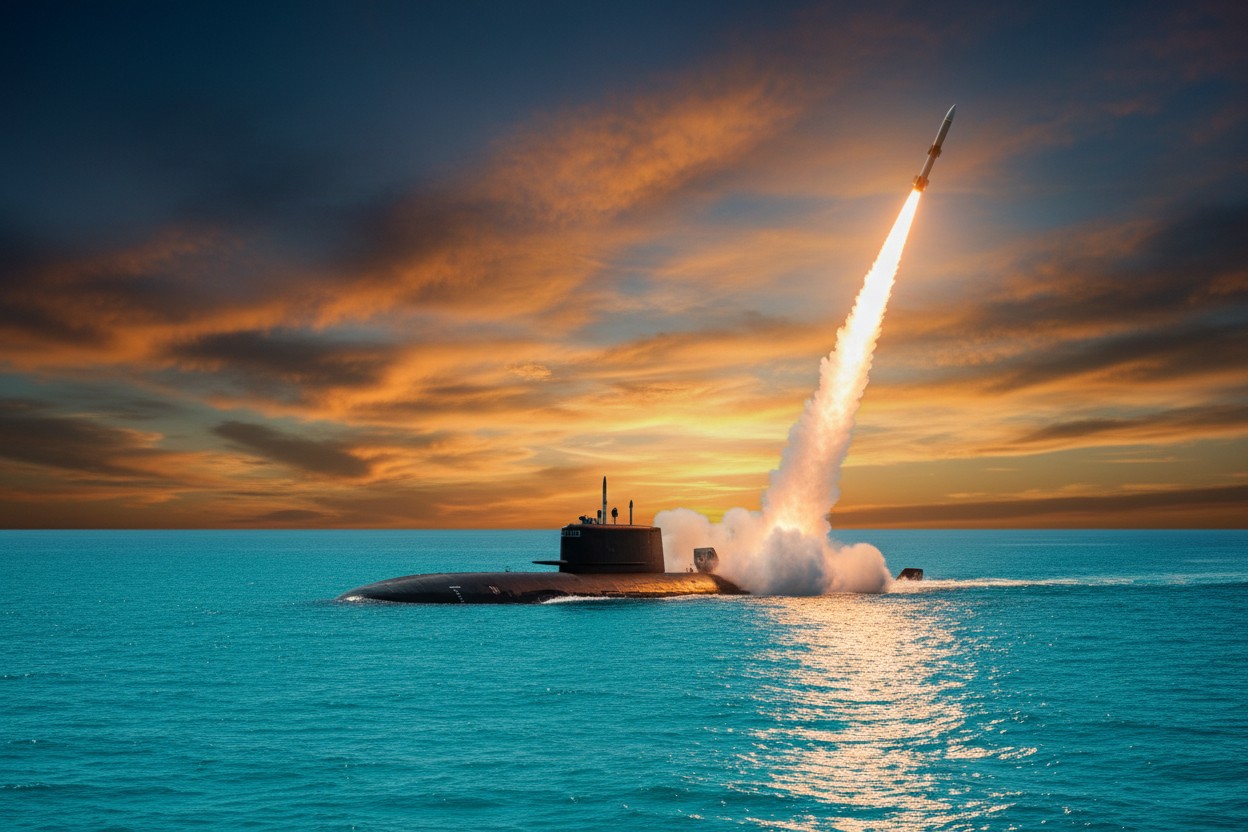
On the morning of July 6, a PLAN strategic nuclear submarine—widely identified by analysts as a Type 094 (Jin-class) vessel—successfully fired an SLBM toward a predetermined area in the Pacific Ocean. According to official statements from the Chinese Ministry of National Defense, the test was a "routine arrangement" within the scope of the PLAN’s annual training schedule.
The missile, carrying a dummy warhead, traveled an estimated 6,300 kilometers before successfully impacting its target zone, which intelligence reports suggest was located in the Pacific Ocean west of the Solomon Islands. While the PLAN remained characteristically opaque regarding the specific classification of the missile, defense analysts have narrowed the candidates down to the JL-2 or the more advanced JL-3. Given the trajectory and the distance covered, most experts lean toward the JL-2 variant, though the test serves as a functional validation of the launch systems used by the Jin-class fleet.
Crucially, Beijing asserted that the test was conducted in accordance with international law and practice. In an effort to mitigate regional anxiety, the Chinese government confirmed that relevant neighboring countries were notified in advance of the test, and that the launch was "not directed against any specific country or target."
A Chronology of the Escalation
To understand the weight of this event, one must look at the timeline of China’s naval development and the build-up to this specific test.
- Early July 2026: China issues two sets of Maritime Safety Administration (MSA) navigation warnings, designating "no-sail" zones in the northern South China Sea and the Yellow Sea. These warnings, which typically precede live-fire exercises, alerted regional intelligence agencies to an impending high-profile test.
- July 6, 2026: The launch occurs. The missile transits through international airspace, reportedly passing over parts of the Philippines, sparking immediate concern from regional observers.
- Post-Launch, July 6: The PLAN issues a formal statement confirming the success of the test. Simultaneously, the Australian government, represented by Deputy Prime Minister Richard Marles, confirms receipt of prior notification from Beijing, confirming that the test was an exercise in established military communication channels.
- July 7–9, 2026: A wave of diplomatic pushback follows. Taiwan, Japan, and New Zealand release statements expressing concern over the lack of transparency and the potential for destabilization in the Indo-Pacific.
Supporting Data: The Modernization of the PLAN
The July 6 test is not an isolated incident but a data point in a broader trend of rapid military modernization. According to reports from the International Institute for Strategic Studies, China launched 10 new submarines between 2021 and 2025 alone. This production velocity has allowed the PLAN to surpass the United States in terms of total submarine hull numbers, if not total tonnage.
The Type 094 submarine used in this test is the backbone of China’s current sea-based deterrent. China currently operates at least six of these vessels, with a next-generation Type 096 submarine reportedly in the advanced stages of development. The Type 096 is expected to feature superior stealth capabilities and the capacity to carry a greater number of longer-range JL-3 missiles, which would allow Chinese submarines to strike the continental United States while operating from the safety of the "bastion" of the South China Sea.
This "bastion" strategy is a cornerstone of current Chinese naval doctrine. By operating within heavily defended littoral zones, the PLAN seeks to negate the superior anti-submarine warfare (ASW) capabilities of the United States and its regional allies. If a submarine can launch a nuclear-capable missile while protected by a screen of surface combatants and land-based air cover, it significantly complicates the defensive calculus for any potential adversary.
Official Responses: A Divided Narrative
The reaction to the launch has been as predictable as it is polarized.
Beijing’s Stance:
Chinese officials have maintained a narrative of normality. By emphasizing that the test is "routine" and "compliant with international law," Beijing is attempting to normalize its nuclear power projection. The messaging suggests that as China grows into a world-class military power, its nuclear testing cadence should be viewed through the same lens as that of the United States, Russia, or France.
Regional Concerns:
The reaction from the Indo-Pacific neighborhood has been one of alarm. Joseph Wu, Secretary-General of the Taiwan National Security Council, characterized the flight path over the Philippines as a "provocation that destabilizes the Indo-Pacific." This sentiment is shared by officials in Tokyo and Wellington, who argue that even with advance notice, the deployment of strategic nuclear assets in such a volatile region serves as an act of intimidation rather than a mere training exercise.
The Western View:
The U.S. Department of War has long warned of this trajectory. In recent years, U.S. intelligence has revised its estimates on China’s nuclear stockpile, warning that Beijing is on track to hold over 1,000 nuclear warheads by 2030. The ability to field a survivable sea-based deterrent is the final piece of a "nuclear triad" puzzle that China has been working to complete for decades.
Strategic Implications: The Shifting Balance of Power
The July 6 test carries profound implications for the global security architecture.
1. The Survivability of the Deterrent
The primary goal of any nuclear state is to ensure a "second-strike capability"—the ability to survive a first strike and retaliate with devastating force. By demonstrating the ability to launch from the Pacific, China is signaling to the world that its deterrent is no longer confined to the mainland. A submarine hidden in the depths of the Pacific is virtually impossible to neutralize in a first-strike scenario, which inherently makes the prospect of conflict with China more dangerous.
2. The End of "Strategic Ambiguity"
For years, the world operated under the assumption that China’s nuclear force was limited and primarily focused on a "minimum deterrence" policy. The rapid expansion of its silo fields for land-based ICBMs, combined with this successful SLBM test, suggests that Beijing has abandoned the "minimum" approach. We are witnessing the emergence of a near-peer nuclear competitor to the United States.
3. The Risk of Miscalculation
As more strategic assets are deployed and more live-fire tests are conducted, the risk of a miscalculation increases. With the South China Sea already a flashpoint for naval encounters, the inclusion of nuclear-armed or nuclear-capable platforms into the daily operational environment increases the pressure on regional commanders. One wrong move or a misinterpreted signal could escalate a routine patrol into a high-stakes standoff.
Conclusion: The Future of Global Deterrence
The rare SLBM launch of July 6 marks a watershed moment in 21st-century geopolitics. It serves as a physical demonstration of the geopolitical shift from a unipolar world to one defined by intense strategic competition between major powers.
As Beijing continues to modernize its submarine fleet and expand its nuclear arsenal, the international community is forced to grapple with a new reality. The era of China’s nuclear restraint appears to be drawing to a close, replaced by a confident, capable, and increasingly assertive nuclear posture. For regional neighbors and global superpowers alike, the challenge will be to manage this transition without allowing the pursuit of deterrence to inadvertently trigger the very conflict all sides claim to be avoiding.
The test in the Pacific was a training exercise in name, but a geopolitical message in practice: the Chinese Navy has arrived, and it is prepared to project its strategic reach across the globe.