










9 July, 2026
As the European Union navigates an era defined by rapid technological acceleration and mounting socio-political pressures, two critical issues have converged at the heart of the European Parliament: the integration of artificial intelligence (AI) into clinical settings and the structural integrity of the bloc’s anti-disinformation infrastructure.
At a landmark hearing of the European Parliament’s health committee this week, lawmakers and leading scientific experts issued a unified warning: neither the promise of high-tech automation nor the establishment of bureaucratic bodies will suffice if they remain untethered from robust, evidence-based policy and human oversight.
The AI Dilemma: Efficiency vs. Essential Care
The integration of AI into Europe’s healthcare systems is currently being framed as a potential panacea for a system buckling under the weight of an aging population, post-pandemic burnout, and chronic staff shortages. However, during the recent parliamentary hearing, MEPs and medical experts cautioned against the seductive narrative that algorithmic efficiency can replace the human element of medicine.
The Myth of the "Quick Fix"
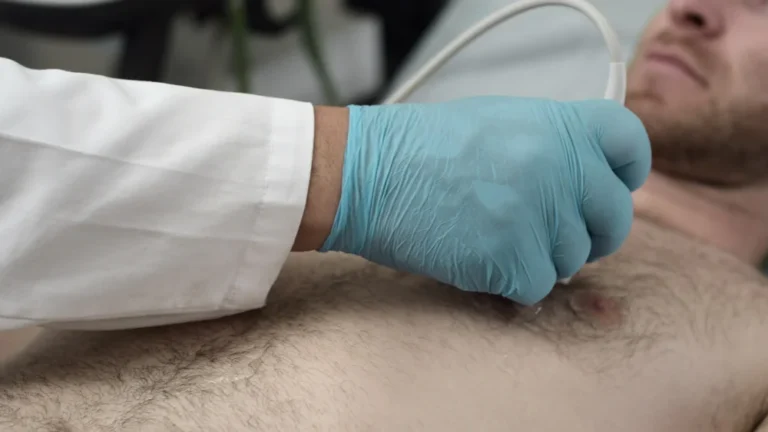
The debate was spurred by reports highlighting that while AI screening tools—particularly in oncology—have demonstrated remarkable precision in the early detection of lung and prostate cancer, there is a growing, dangerous misconception that these tools are a substitute for personnel.
MEP Catarina Martins (The Left, Portugal) expressed grave concern during the hearing, stating, "I’m afraid there’s some kind of expectation that AI can alleviate us from the workforce crisis." Her sentiment reflects a broader anxiety within the European legislature: that governments might utilize AI as a cost-cutting excuse to bypass the necessary, albeit difficult, task of addressing the root causes of the healthcare workforce exodus, such as inadequate wages, poor working conditions, and systemic underinvestment.
The Scientific Consensus: A Tool, Not a Surgeon
The consensus among the medical community is clear: AI is a diagnostic supplement, not a medical practitioner. Prof. Barbara Hoffmann, Chair of the ERS Advocacy Council, emphasized that while AI possesses "real potential" to support clinicians in diagnostic workflows, its deployment must be strictly managed.
"AI must remain a properly vetted, supporting tool, guided and overseen by trained professionals at every stage," Hoffmann argued. "It cannot be a substitute for the healthcare workforce or the scientific evidence that underpins good care." The underlying fear is that if AI models are trained on biased or incomplete datasets, the resulting "clinical decisions" could exacerbate health inequalities rather than resolve them.
Chronology: The Evolution of European Policy
The current discourse is the culmination of several years of legislative and technological shifts within the EU:
- 2023–2024: Initial debates regarding the EU AI Act dominate the Brussels agenda, focusing on defining "high-risk" AI applications in the medical sector.
- February 2026: The European Centre for Democratic Resilience is launched as the primary pillar of the European Democracy Shield. Its mission is to coordinate member state resources to combat foreign interference and disinformation.
- Spring 2026: Growing alarm among medical advocacy groups regarding the proliferation of health-related misinformation on social media, compounded by the rise of AI-generated medical advice.
- July 2026: The European Parliament’s health committee convenes to assess the intersection of clinical workforce stability and the digital transition.
Supporting Data: The Case for Resilience
The urgency of these discussions is supported by data regarding the vulnerability of the European public health ecosystem. Recent assessments indicate that misinformation regarding medical treatments has a direct correlation with lower vaccination rates and a decline in patient trust in traditional scientific institutions.
Furthermore, the "Defend Science, Protect Public Health" campaign—a movement supported by various medical societies—has highlighted that the loss of scientific integrity is not merely a theoretical risk. When patients cannot distinguish between peer-reviewed medical guidance and AI-hallucinated or state-sponsored disinformation, their agency is eroded.
Dr. Eva Polverino, ERS Director of Scientific Relations with the European Union, noted that the shortage of healthcare specialists is, in itself, a "threat to democracy." When access to qualified, human medical advice is restricted, patients become increasingly susceptible to predatory information environments.
The European Centre for Democratic Resilience: Substance or Symbolism?
While the health committee grappled with AI, a parallel controversy erupted regarding the European Centre for Democratic Resilience. Launched in February 2026, the centre was designed to be the "shield" of European democracy. However, according to reports from The Brussels Times, the body is currently facing a crisis of confidence.
MEPs have been vocal in their demands that the Centre avoid becoming a "symbolic front." Without binding legislation, a dedicated budget, and true operational autonomy, the Centre risks becoming a hollow institution that produces reports rather than results.
Demanding Authority
Dr. Polverino was particularly blunt regarding the requirements for this new body: "An anti-disinformation body is only as strong as the resources and authority behind it. If Europe is serious about protecting public debate and public health, that commitment needs to be backed by real funding and real powers, not just good intentions."
The call is for a governing framework that can move at the speed of the internet. As AI-driven disinformation campaigns become more sophisticated—using deepfakes to impersonate health officials or synthesize false medical journals—the European Centre must possess the technical capacity to detect and dismantle these threats in real-time.
Implications: The Road Ahead
The implications of these developments for the future of the European Union are profound. The intersection of technology, public health, and democratic oversight forms the "triad of stability" for the next decade.
1. The Regulatory Imperative
The EU must move beyond the preliminary stages of the AI Act. Implementation is the new frontier. This requires the establishment of independent oversight committees that include not only tech regulators but also clinical professionals and patient advocates who understand the nuances of healthcare delivery.
2. Protecting the Human Element
The "Defend Science" movement underscores that the human-to-human relationship in healthcare is a bedrock of societal trust. Any policy that prioritizes technological implementation over the retention of the healthcare workforce is essentially a policy of decline. The goal must be to build "augmented" health systems, where AI handles administrative and diagnostic heavy-lifting, thereby releasing staff to focus on patient-centered care.
3. Strengthening Democratic Infrastructure
The European Centre for Democratic Resilience must move toward a model of decentralized, high-speed enforcement. If the body is to be effective, it must integrate with national health authorities to create a firewall against medical disinformation. This means treating health-related digital harms with the same severity as threats to electoral processes.
Conclusion: A Call to Action
The message from the July 2026 hearings is unequivocal: innovation without oversight is a liability. As Europe faces the dual challenges of a strained healthcare workforce and a volatile information landscape, the path forward must be defined by the rigorous application of scientific evidence and a refusal to settle for "symbolic" solutions.
The "Defend Science, Protect Public Health" campaign continues to mobilize, providing the public with the tools to engage their local MEPs and ensure these concerns remain at the forefront of the legislative agenda. By downloading advocacy resources—available in eight languages—citizens can play a direct role in demanding that their representatives prioritize robust, well-funded, and human-led healthcare systems.
In an era of rapid change, the preservation of public health and democratic agency depends on the courage to demand more than just the latest technology; it requires a renewed commitment to the scientific principles and the human expertise that have historically formed the backbone of the European project.
For those interested in joining the efforts to ensure science-based policymaking, detailed toolkits, email templates, and social media advocacy content can be accessed via the official campaign portal.