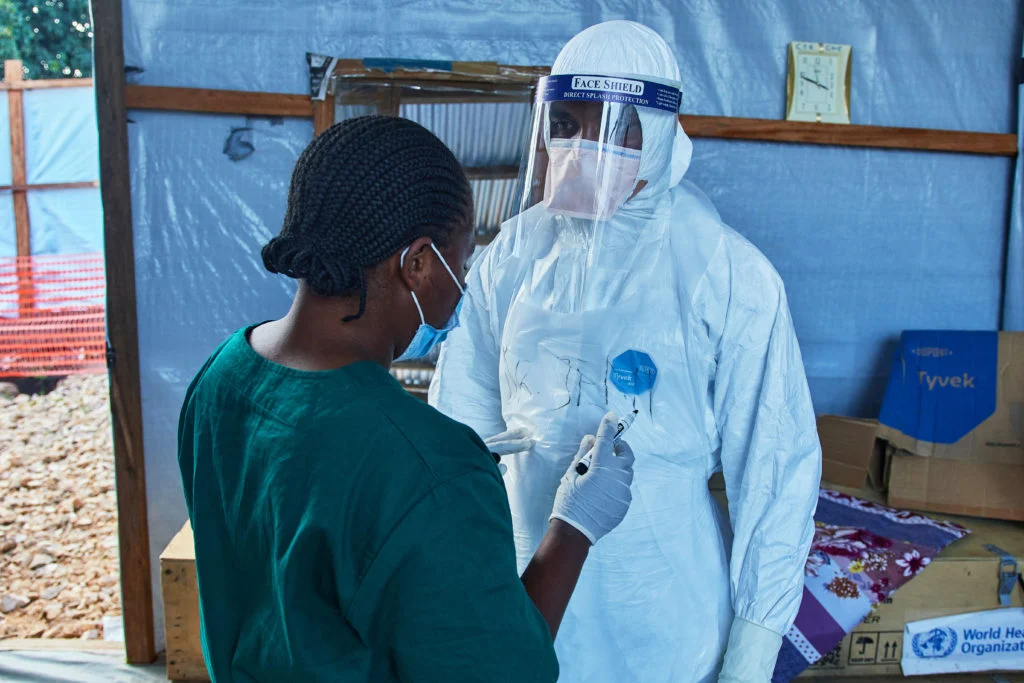
KINSHASA, Congo — The Democratic Republic of the Congo (DRC) is facing a critical juncture in its battle against a lethal Ebola resurgence, as health authorities confirmed Thursday that the virus has breached new geographical borders. With the death toll climbing to 600, the expansion of the outbreak into the provinces of Tshopo and Haut-Uele has ignited fears that the containment strategies currently in place are failing to keep pace with the pathogen’s transmission.
Since the outbreak was officially declared on May 15, 2026, the disease has moved with alarming stealth. While the epicenter remains rooted in the volatile Ituri province, the emergence of suspected cases in Kisangani, the capital of Tshopo, marks a significant escalation in the scope of the emergency.
The Current State of the Outbreak: Key Facts
The latest data from the Congolese Ministry of Health paints a grim picture of an epidemic that has proven difficult to cage. As of July 9, 2026, the cumulative number of confirmed cases has surged to 1,759.
The most concerning development is the epidemiological profile of the new cases in Tshopo. While one of the two suspected cases has been traced back to the Nia-Nia health zone in Ituri—a known hotbed of infection—the second case appears to have no direct link to previous clusters. This "geographical anomaly" has triggered an intensive investigation by the World Health Organization (WHO) and local health teams to determine if there are undetected chains of transmission or if the virus is circulating in previously assumed "safe" zones.
The specific strain fueling this crisis is the Bundibugyo virus. Unlike the more common Zaire strain, the Bundibugyo variant presents unique challenges: there is currently no approved vaccine or standardized treatment regimen, leaving healthcare workers to rely on supportive care and experimental clinical trials.
Chronology of a Resurgent Threat
The timeline of the 2026 outbreak highlights a period of silent transmission that has complicated the response from its inception.
- Early April 2026: Initial cases of an undiagnosed, hemorrhagic-like fever appear in remote villages in Ituri. Due to the region’s isolation and ongoing civil unrest, these cases go unreported to central authorities.
- May 15, 2026: The Congolese government, in conjunction with the WHO, officially declares an Ebola outbreak. Epidemiologists later confirm that the virus had been circulating for weeks, allowing it to gain a foothold in densely populated areas.
- June 2026: The death toll steadily climbs past 300. Violence in eastern Congo leads to attacks on health centers, forcing some facilities to close their doors and creating gaps in surveillance.
- Early July 2026: Clinical trials for experimental treatments are launched in Bunia, offering a glimmer of hope.
- July 9, 2026: The government reports that the virus has crossed provincial lines into Tshopo and Haut-Uele. The death toll reaches 600.
Supporting Data and Epidemiological Challenges
The scale of this outbreak is compounded by a complex intersection of geography, sociology, and biology. The Bundibugyo virus, while historically less frequent than the Zaire strain, is highly virulent.
Data provided by the Ministry of Health indicates that the Case Fatality Rate (CFR) remains uncomfortably high. With 1,759 confirmed cases and 600 deaths, the mortality rate is hovering near 34%. However, experts warn that this figure may be an underestimate, as many deaths in conflict-ridden zones likely go unrecorded by official census takers.
Furthermore, the "funding gap" has become a central narrative in the failure to contain the spread. USAID and other international aid bodies have faced internal budgetary shifts, leaving the DRC’s front-line health workers under-resourced. In many regions, there is a lack of basic personal protective equipment (PPE), sanitation supplies, and rapid diagnostic kits, which are essential for identifying the "index patient" in new geographic clusters.
Official Responses and Clinical Innovation
In response to the deteriorating situation, the Congolese government has intensified its partnership with international NGOs and the WHO. The launch of clinical trials last week represents the most significant scientific effort to date.
"We are entering a phase of active, clinical intervention," said a spokesperson for the Congolese health ministry. "While we fight to stop the movement of the virus through contact tracing and quarantine, our scientists are working around the clock to evaluate if current experimental therapies can mitigate the severity of the Bundibugyo strain."
The trials, taking place at the Evangelical Medical Center in Bunia, involve a rigorous study of antiviral compounds. While researchers are optimistic, they caution that the impact of these trials will not be immediate. "Clinical trials are a marathon, not a sprint," noted a lead researcher involved in the study. "We need stability, security for our staff, and, most importantly, the cooperation of the local communities who are currently living in fear."
Implications: A Crisis of Security and Public Health
The implications of the current outbreak extend far beyond the immediate health crisis. The intersection of Ebola with ongoing civil conflict in eastern Congo creates a "perfect storm" for contagion.
1. The Security-Health Nexus
In regions where armed groups operate, health workers are frequently viewed with suspicion. Attacks on medical facilities—fueled by misinformation and local distrust—have become a hallmark of this outbreak. When a health center is attacked, it does not just stop treatment; it halts the surveillance apparatus that monitors the virus, allowing it to "jump" to neighboring provinces like Haut-Uele.
2. Economic and Regional Stability
The spread of the virus to Tshopo is particularly concerning for the region’s economic stability. Kisangani is a major transit hub. If the virus establishes a permanent presence in such a commercial center, the logistical hurdles for containing it will grow exponentially. Border closures and travel restrictions, while necessary, threaten the livelihoods of millions of people already struggling with poverty.
3. The Need for Global Solidarity
The WHO has issued a call for renewed international support, citing the "fragility of the current containment effort." The decline in international aid, specifically the loss of consistent USAID funding, has left a void that the Congolese government is struggling to fill alone. Experts argue that without a massive influx of international financial and logistical support, the outbreak could continue to propagate throughout the country for months, if not years.
Conclusion: The Road Ahead
As the world watches the situation in the DRC, the message from public health experts is clear: the virus is moving faster than the current response infrastructure can manage. The confirmation of cases in Tshopo and Haut-Uele serves as a sobering reminder that Ebola is not merely a regional health issue, but a global security challenge.
The path to containment requires a three-pronged approach: immediate financial stabilization to provide essential medical resources, enhanced security measures to protect healthcare workers in conflict zones, and a robust community engagement strategy to combat the misinformation that continues to hinder medical interventions.
For the people of Congo, the coming weeks will be critical. The 600 souls lost are not just numbers in a report; they represent a breakdown in the global public health apparatus. Whether this outbreak is eventually curtailed or allowed to spread further will depend on the speed and efficacy of the international response in the face of this rare, relentless pathogen.