











In the modern age of wellness, a new obsession has taken hold: the desire to "hack" the aging process. At the forefront of this movement is tech billionaire Bryan Johnson, whose relentless pursuit of physiological optimization—documented in the film Don’t Die—has thrust the concept of "biological age" into the global spotlight. Johnson’s routine, a multi-million-dollar spectacle of dozens of daily supplements, hyperbaric oxygen therapy, and controversial plasma infusions, has made him the face of a burgeoning industry that promises to turn back the biological clock.
But beneath the headlines and the high-tech marketing lies a complex scientific reality. Is "aging in reverse" truly possible, or are we simply witnessing a high-stakes experiment in data collection?
The Core Concept: Chronological vs. Biological Age
To understand the current fervor, one must first distinguish between the two ways we track time. Chronological age is simple: it is the number of candles on your birthday cake, a linear progression dictated by the earth’s orbit around the sun. Biological age (bio age), however, is a measurement of how your cells, tissues, and organ systems are actually functioning compared to the population average.
Consider the hypothetical case of two 50-year-old men. One, living a sedentary lifestyle in a polluted urban environment with poor dietary habits and chronic stress, likely exhibits cellular wear and tear far exceeding his years. The other, an active gardener who prioritizes nutrient-dense foods, consistent strength training, and mindfulness, likely possesses a bio age significantly lower than his chronological one. Biological age testing attempts to quantify this gap by analyzing biomarkers—objective indicators of physiological states.
A Chronology of the Bio-Hacking Movement
The evolution of bio age testing has moved from clinical research labs to the consumer marketplace with dizzying speed.
- Early Research (2000s–2010s): Scientists began identifying molecular "clocks," such as telomere shortening and DNA methylation patterns, as reliable proxies for cellular aging.
- The Rise of the "Super-Agers" (2018–2022): High-profile figures, including Peter Attia, Joe Rogan, and Andrew Huberman, began featuring longevity experts on their platforms, normalizing the idea that one could "manage" their aging.
- The Commercial Explosion (2023–Present): Companies began offering direct-to-consumer kits for DNA methylation and telomere analysis. Meanwhile, Bryan Johnson’s "Blueprint" protocol became a cultural touchstone, triggering a surge in search interest for "bio age testing."
Supporting Data: What Are We Actually Measuring?
When a consumer purchases a bio age test, they are usually buying a snapshot of one of several specific biological processes.
1. DNA Methylation (The "Epigenetic Clock")
This process involves the addition of methyl groups to DNA, which changes how genes are expressed without altering the underlying code. The "Horvath Clock" and "DunedinPACE" are the gold standards in this field. They were originally designed for large-scale population studies to see how environmental factors impact health, not necessarily to provide individualized health advice to the public.
2. Telomere Analysis
Telomeres are the protective caps at the ends of chromosomes that shorten each time a cell divides. While extremely short telomeres are associated with specific genetic disorders, the use of consumer-grade "qPCR telomere tests" to predict the longevity of healthy individuals remains scientifically controversial.
3. Functional Fitness Metrics
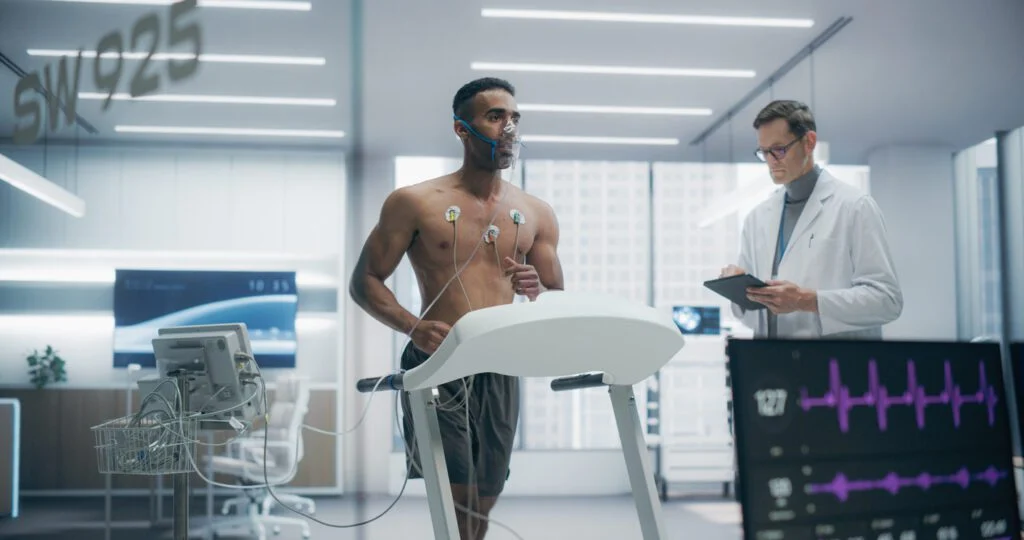
Beyond molecular markers, researchers increasingly point to physical performance as the most honest reporter of biological age. Metrics like VO2 Max—the maximum amount of oxygen your body can utilize—serve as powerful predictors of all-cause mortality. As the body ages, cardiovascular efficiency, muscle mass, and lung capacity naturally decline. Monitoring these through VO2 Max, the "Sitting-Rising Test," and grip strength provides a highly practical, low-cost look at one’s "functional age."
Official Responses and Scientific Skepticism
While the promise of these tests is alluring, the medical establishment urges caution. A New York Times exposé recently challenged Bryan Johnson’s claims, suggesting that while he may be optimizing certain markers, his actual biological age may have fluctuated in ways that contradict his "reverse aging" narrative.
The primary concern is the "commercial bias" inherent in many testing companies. When a company sells you a test and then immediately offers a proprietary, expensive supplement protocol to "fix" your results, they have a clear financial incentive to keep you worried. Medical professionals emphasize that biological age is not a single, monolithic number. Your heart might be aging at a different rate than your kidneys, and your immune system might be years ahead or behind your metabolic health.
Furthermore, many commercial tests lack the rigorous clinical validation required to make definitive claims about life expectancy. A high-tech test cannot replace a standard, insurance-covered annual physical, which measures blood pressure, cholesterol, and glucose—the "big three" markers that have the strongest evidence base for predicting premature death.
Implications: From Data to Action
If you or your clients are considering bio age testing, it is vital to view the data as a starting point, not a destination. Information without action is useless.
The "Evergreen" Foundations
Before spending thousands on high-tech longevity interventions, the scientific consensus remains rooted in the "boring" basics. These high-impact strategies consistently outperform trendy supplements:
- Consistent Strength Training: Vital for maintaining metabolic health and preventing frailty.
- Sleep Hygiene: The primary window for cellular repair and hormonal regulation.
- Nutritional Density: Minimizing processed intake while maximizing fiber and micronutrients.
- Stress Management: Chronic cortisol elevation is a known accelerator of biological aging.
Turning Data into Strategy
If you decide to undergo testing, use it as a tool for accountability. If a test indicates your grip strength is declining, don’t look for a "longevity pill"—increase your resistance training. If your blood panels show rising glucose, re-evaluate your dietary habits rather than seeking a pharmaceutical quick fix.
The goal of these tests should be to inform behavioral change. If the mirror shows you that your habits are "aging" you, the solution is almost always to change the habits, not to change the testing kit.
Conclusion: The Wisdom of Aging
The "don’t die" movement has successfully sparked a global conversation about health, but it risks turning the human experience into a spreadsheet of data points. Biological age testing can be a powerful motivator if used to foster a deeper connection with one’s own health and a commitment to long-term habits. However, we must remain wary of the temptation to view human longevity as a problem to be "solved" with technology alone.
The most effective "bio age" strategy is not a secret cocktail of peptides or plasma, but the lifelong pursuit of resilience, strength, and balance. By focusing on the fundamentals—the free, scientifically validated pillars of movement, rest, and nutrition—you can ensure that the number on your cake is merely a reflection of time passed, not a measure of your potential to live well.
Summary of Free Biomarker Assessments
For those interested in tracking their health without the high price tag of commercial kits:
- The Sitting-Rising Test: Assesses mobility, strength, and balance.
- Grip Strength: A reliable proxy for overall muscle mass and longevity.
- One-Leg Balance: A window into neurological and muscular coordination.
- Fatigability Scale: A subjective but clinically useful measure of energy and health decline.
- Body Composition: Using a tape measure to track waist-to-hip ratios rather than just the scale weight.
For more information on these protocols, consult with a qualified health professional or a certified longevity coach to ensure your data-gathering leads to sustainable, life-extending action.