







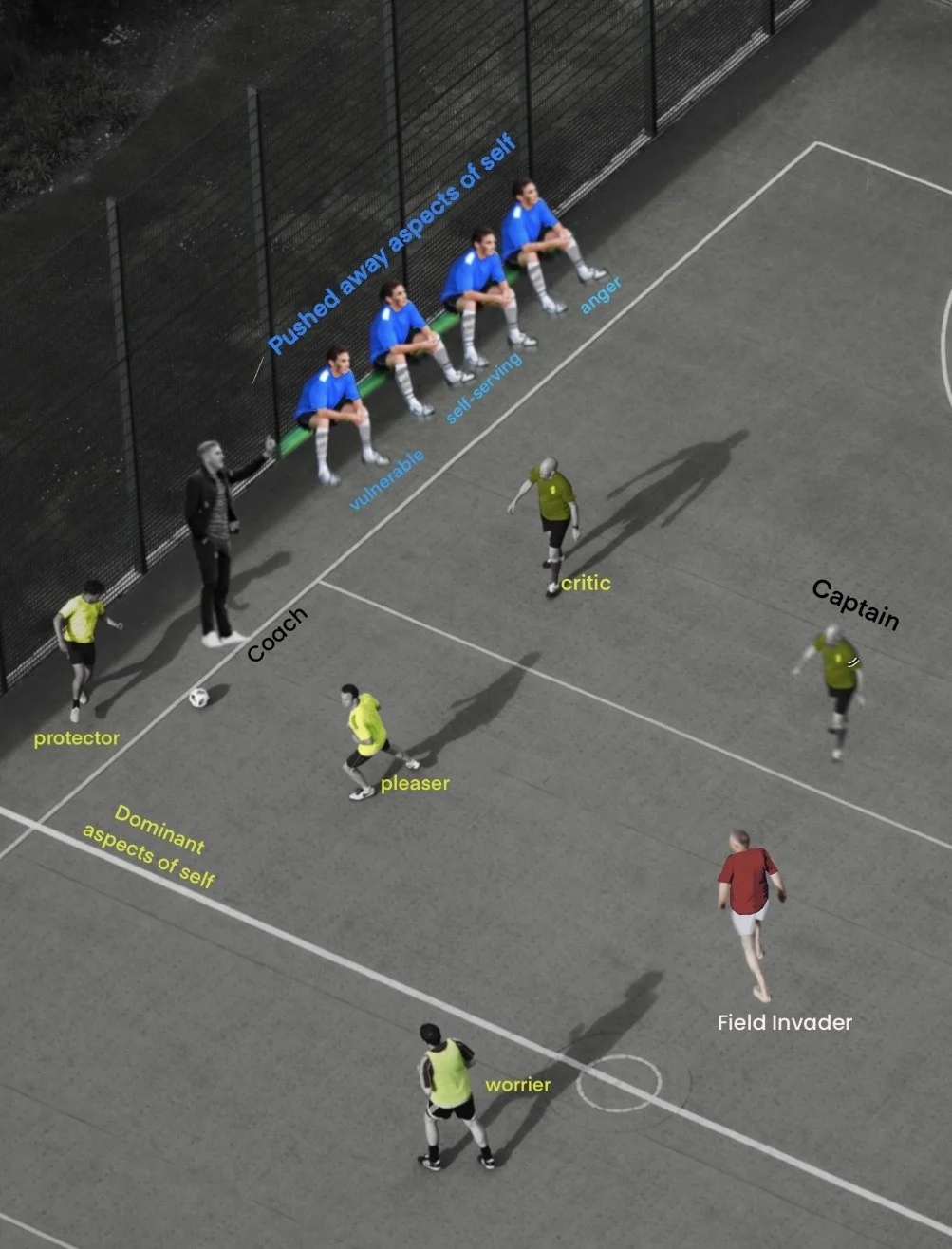
In the traditional corridors of clinical psychiatry, the experience of hearing voices has long been classified as a "hallucination"—a biological glitch in the brain’s machinery, often synonymous with a diagnosis of schizophrenia. For decades, the standard response has been suppression through medication. However, a growing movement of psychologists and "voice-hearers" is championing a radical paradigm shift. At the heart of this transformation is a deceptively simple analogy: the soccer team.
By reframing the human psyche as a sports squad managed by a coach, practitioners are helping individuals move from being victims of their voices to becoming the managers of their internal worlds. This approach, known as "Talking with Voices" or "Voice Dialogue," suggests that voices are not random neurological noise but symbolic messengers of disowned trauma and unaddressed emotions.
Main Facts: The "Talking with Voices" Paradigm
The "Talking with Voices" approach is an evidence-based psychological intervention that encourages individuals to engage in assertive, compassionate dialogue with the voices they hear. Unlike traditional Cognitive Behavioral Therapy (CBT), which often focuses on reality-testing or ignoring the voices, this model treats the voices as "sub-personalities" or "parts" of the self.
According to psychologists Rufus May and Kate Middleton, who have spent decades refining this model, the goal is "social cohesion" within the mind. They argue that a person’s internal world functions much like a soccer organization. When a coach (the conscious self) neglects certain players (parts of the personality), those players become disaffected, disruptive, and may eventually "revolt" in the form of distressing voices.
Core Principles of the Model:
- Meaning-Making: Voices are seen as meaningfully related to the person’s life history and trauma.
- Expertise of Experience: The voice-hearer is regarded as the primary expert on their own psyche.
- Relationship over Suppression: The objective is not to "cure" the voices by making them disappear, but to change the power dynamic so the individual can live a functional, empowered life.
Chronology: From Dutch Innovation to Global Research
The evolution of this approach is rooted in a forty-year history of peer-led advocacy and psychological innovation.
- The 1970s: The Birth of Voice Dialogue: Psychologists Hal and Sidra Stone developed the "Voice Dialogue" technique. They proposed that the human personality is not a monolith but a cluster of "selves." They introduced the concept of the "Aware Ego"—the part of the mind capable of standing back and managing these different facets.
- The Late 1980s: The Dutch Revolution: In Holland, psychiatrist Marius Romme and researcher Sandra Escher teamed up with voice-hearer Patsy Hage. Their research revealed that many people who hear voices live healthy lives without psychiatric intervention. This led to the founding of the Hearing Voices Movement, which spread quickly to the UK and beyond.
- The 1990s: Bridging Theory and Practice: Links were established between the Stone’s Voice Dialogue and the self-help techniques used by voice-hearers like Ron Coleman. This period saw the development of "chair work," where individuals would literally move between chairs to speak from the perspective of their different internal parts.
- 2000s–Present: Clinical Integration and Trials: Practitioners like Rufus May began integrating these metaphors into clinical practice. Over the last decade, researchers such as Eleanor Longden and Dirk Corstens have conducted pilot trials and feasibility studies (e.g., the "Talking with Voices" trials) to provide a rigorous evidence base for this dialogical approach.
Supporting Data: The Soccer Team Metaphor in Practice
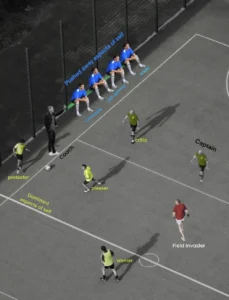
To make these complex Jungian and dissociative theories accessible, May and Middleton utilize the soccer team metaphor. This framework breaks down the internal experience into specific roles:
1. The Team Coach (The Aware Ego)
The coach’s job is to pay attention to every member of the squad—those on the field and those on the bench. In psychological terms, this is the "Aware Ego." A good coach doesn’t have favorites. If a coach is insecure and only listens to a few "star players," the neglected players will eventually sabotage the team’s efforts. The goal of therapy is to strengthen the "Coach" so they can manage the psyche with grounded confidence.

2. The Captain (The Protector/Controller)
Every team has a defensive captain. In Voice Dialogue, this is the "Protector/Controller." This part of the personality oversees the team to keep it "safe." It often blocks access to more vulnerable parts of the self to prevent further pain. Clinicians find that they must often "negotiate" with this Captain before they can reach the deeper, more distressed voices.
3. The Players on the Field (Dominant Selves)
These are the aspects of our personality that are socially acceptable and "selected to play" daily. They are influenced by culture, gender, and upbringing. For example, a "Pleaser" or a "Hard Worker" might be a permanent fixture on the field. While these parts are useful, becoming "stuck" in one role prevents the Coach from seeing the rest of the squad.
4. The Players on the Bench (Disowned Selves)
These are the traits we have been taught to suppress—perhaps anger, vulnerability, or unconventional desires. They remain part of the team but are not "in the game." If they remain on the bench too long without acknowledgement, they become the "Disaffected Players."
5. The Protesters and Leakers (The Voices)
When parts of the self are pushed away (often due to trauma), they don’t disappear. Instead, they may reappear as "voices" that feel external and intrusive. In the metaphor, these are players who have been dropped from the squad and are now leaking stories to the press or protesters disrupting the match. By talking to these "protesters," the Coach can learn what they need to feel valued again, often causing the "hostile" behavior to cease.
Official Responses and Theoretical Frameworks
The "Talking with Voices" approach sits at the intersection of several established psychological schools, though it often challenges the "official" medical model of psychiatry.
The Hearing Voices Movement (HVM)
The HVM has been the most vocal supporter of this model. They emphasize that hearing voices is a "variation of human experience" rather than a symptom of pathology. Their response to this metaphor has been overwhelmingly positive, as it provides a non-stigmatizing language for peer support groups.
Internal Family Systems (IFS)
The soccer metaphor shares significant DNA with Richard Schwartz’s Internal Family Systems (IFS) model, which views the mind as an "inner family" of sub-personalities. While IFS has gained massive popularity in the last 20 years for treating trauma, its application to psychosis is a newer frontier. Official IFS practitioners have begun exploring these "dialogues with voices" more formally, as seen in recent interviews between Schwartz and trauma experts.

The Medical Model’s Critique
Critics within traditional psychiatry express caution, noting that for some individuals, the "biological load" of psychosis may be too high for dialogue alone to be effective. There are concerns that encouraging people to "talk to their hallucinations" could, in some cases, increase preoccupation with them. However, proponents argue that the "Talking with Voices" trials (e.g., Longden et al., 2022) specifically address this by using a structured, facilitated approach that emphasizes the "Coach" (Aware Ego) remaining in control.
Implications: A New Future for Mental Health
The implications of the soccer team metaphor and the "Talking with Voices" approach extend far beyond the therapy room. They suggest a fundamental shift in how society views "madness" and mental diversity.
1. Empowerment and Agency
By viewing themselves as a "Coach," the individual regains agency. They are no longer a "patient" with a broken brain, but a "manager" of a complex team. This shift has been shown to reduce the distress associated with voices, even if the voices do not stop entirely.
2. Trauma-Informed Care
This model naturally integrates trauma history. If a voice is critical, the "Coach" asks: "What is this voice trying to protect me from?" or "When did I first feel this way?" This leads to a more compassionate understanding of the self, which is the cornerstone of recovery from PTSD and dissociative disorders.
3. Cultural Inclusivity
The authors acknowledge that not everyone wants to see their voices as "parts of self." For those who view their voices through a spiritual or ancestral lens—such as djinns, ghosts, or spirits—the soccer metaphor remains flexible. It becomes about managing the "beings" in one’s consciousness with respect and boundaries, rather than focusing on their origin.
4. Limits of the Metaphor
May and Middleton are careful to note the limits of the analogy. Unlike a real soccer team, internal "players" cannot be traded or fired. They are part of the psyche for life. Therefore, the ultimate implication is that "social cohesion" is the only path forward. We cannot arrest our internal protesters; we must listen to their grievances and bring them back into the fold.
Conclusion
The transition from viewing voices as symptoms to viewing them as "disaffected teammates" represents one of the most significant shifts in modern psychological practice. By using the soccer team metaphor, Rufus May and Kate Middleton have provided a bridge between complex theory and lived experience. This model offers hope that through communication, curiosity, and "good coaching," individuals can move from internal warfare to a state of collaborative harmony, proving that even the most disruptive voices might just have something important to say to the team.