










The death of Martha Lillard on June 26, 2026, marks the end of a medical epoch that once defined the American struggle against one of the 20th century’s most terrifying diseases. Lillard, who spent seven decades tethered to a mechanical ventilator—specifically the iconic and cumbersome iron lung—passed away in her Oklahoma home at the age of 78. Her passing, attributed to chronic pulmonary failure, post-polio syndrome, and the lingering complications of long COVID, signals the final chapter for a device that has largely vanished from modern medicine.
Lillard’s life was defined by resilience in the face of a devastating diagnosis. Contracted at the age of five in 1953, the virus paralyzed her respiratory muscles, forcing her into a life-support system that became a global symbol of polio’s cruelty. Her death is not merely the loss of an individual; it is the closing of a living history regarding the polio epidemic, a reminder of the fragility of public health, and a testament to the advancements that have since rendered the iron lung a relic of the past.
The Life and Legacy of Martha Lillard
Born into an era where the polio vaccine was still in its infancy, Lillard’s trajectory shifted irrevocably in the early 1950s. While most children recovered, Lillard was among the thousands who suffered from bulbar-spinal polio, which left her unable to breathe independently.
For over 70 years, Lillard lived within the confines of her iron lung—a negative-pressure ventilator that utilizes rhythmic changes in air pressure to stimulate the lungs to expand and contract. While medical technology evolved rapidly in the 1960s and 70s, transitioning toward positive-pressure ventilation (where air is pushed into the lungs via a mask or tracheostomy), Lillard remained steadfast in her reliance on the iron lung. She often described the device not just as a machine, but as an extension of her own body, a rhythmic companion that granted her decades of life beyond the dire prognosis she received as a child.
A Chronology of a Medical Odyssey
- 1953: Martha Lillard contracts polio at age five. She is placed in an iron lung, the standard of care for respiratory paralysis at the time.
- 1955: The Salk polio vaccine is declared safe and effective, leading to a massive national immunization campaign that would eventually eradicate the disease in the United States.
- 1960s–1980s: Medical technology shifts toward modern ventilators. Most iron lung patients transition to smaller, portable units; Lillard remains one of the few who prefer the negative-pressure approach.
- 2023–2025: Lillard continues to be a public voice for polio awareness, despite the compounding challenges of post-polio syndrome and the secondary health issues brought on by long COVID.
- June 26, 2026: Martha Lillard passes away in Oklahoma, leaving behind a legacy as the last known iron lung user in the United States.
The Iron Lung: A Mechanical Sentinel
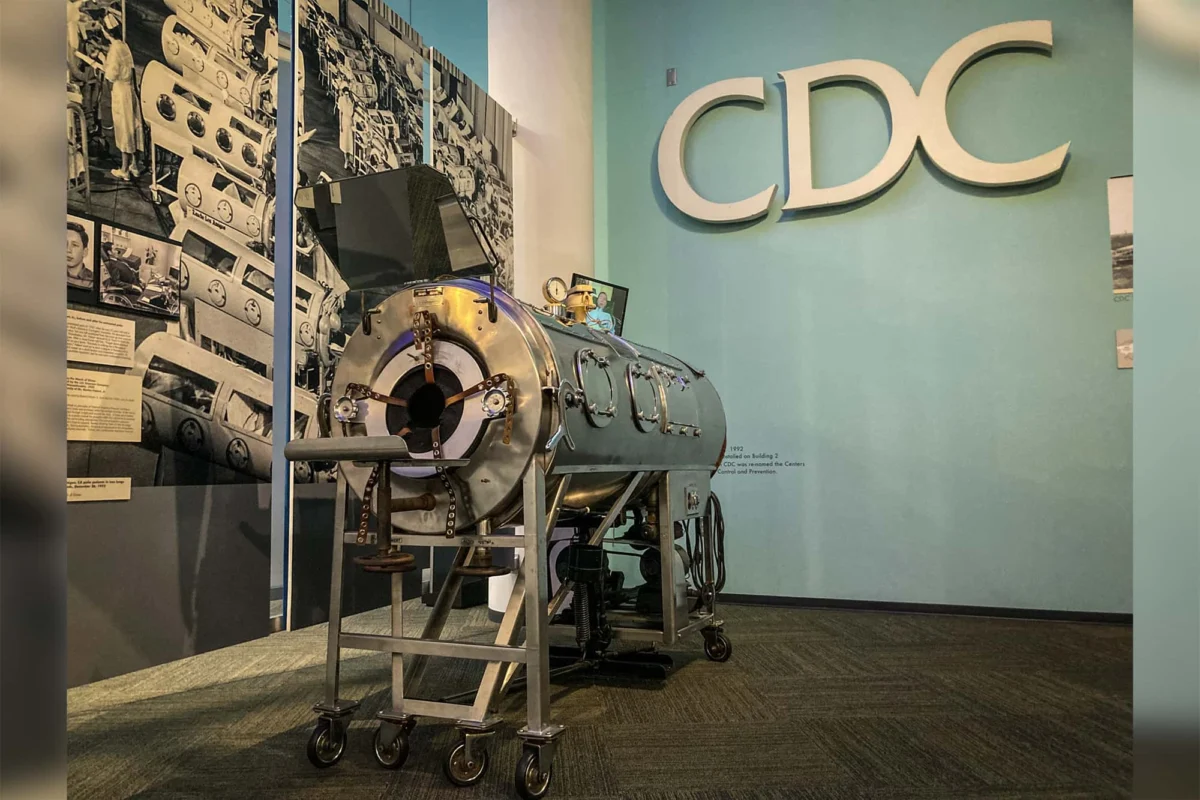
To understand Lillard’s life, one must understand the iron lung itself. Developed in 1928 by Philip Drinker and Louis Shaw, the "Drinker respirator" was a marvel of its time. It was a large, horizontal steel cylinder that enclosed the patient’s entire body up to the neck.
By creating a vacuum, the machine forced the chest to rise, pulling air into the lungs. When the pressure was released, the chest would fall, exhaling the air. During the peak of the polio epidemics in the 1940s and 50s, rows of these machines filled hospital wards, their rhythmic, mechanical "hissing" becoming the signature sound of a crisis.
As the 20th century progressed, the iron lung became obsolete. By the late 20th century, the parts required to maintain these machines—leather gaskets, specialized bellows, and vacuum pumps—were no longer in production. Lillard’s survival necessitated a unique community of advocates, engineers, and dedicated respiratory therapists who hunted for spare parts on platforms like eBay or salvaged them from defunct medical museums to keep her machine operational. Her existence was a logistical feat as much as a medical one.
The Intersection of Polio and Long COVID
The medical reports provided by Lillard’s family indicate that her decline was not solely due to the polio she contracted seven decades ago. The emergence of SARS-CoV-2 and the subsequent phenomenon of "long COVID" created a complex physiological environment for a patient whose respiratory system was already severely compromised.
Post-polio syndrome—a condition that causes muscle weakness and fatigue in survivors years after the initial infection—had already begun to take its toll. When compounded by the systemic inflammation and pulmonary stress associated with long COVID, Lillard’s fragile respiratory system reached its limit. This intersection of two different viral crises, separated by 70 years, underscores the lingering, multi-generational impact of infectious disease.
Supporting Data: The Decline of the Iron Lung
At the height of the polio epidemic in the United States in 1952, there were 57,628 reported cases of polio, with thousands of individuals requiring some form of mechanical ventilation. The iron lung was the primary tool for survival.
Following the success of the polio vaccine, the incidence of the disease dropped precipitously. By 1979, the United States was declared polio-free. The number of patients in iron lungs dwindled from thousands to hundreds, then to dozens, and eventually to a handful. By the mid-2010s, it was estimated that only a few patients remained in the country. Lillard’s passing brings that number to zero.
The disappearance of the iron lung is a success story for preventative medicine. It represents a transition from reactive care—managing the devastating symptoms of a preventable disease—to proactive immunity. Yet, for those like Lillard, the "success" of the vaccine was a double-edged sword; while it protected millions of children, it also relegated the survivors of the pre-vaccine era to a medical landscape that was rapidly moving on from their specific needs.
Official Responses and Public Sentiment
The medical community has responded to the news of Lillard’s death with a mix of mourning and reflection. The American Association for Respiratory Care (AARC) and various polio survivor advocacy groups have issued statements highlighting her role as an educator and advocate.
"Martha was a pioneer in living with chronic respiratory failure," said Dr. Elena Rossi, a specialist in post-polio care. "Her life taught us that technology is only half of the equation. The other half is the human will to survive. She navigated a world not designed for her needs with grace, and her passing forces us to look back at the progress we’ve made in vaccine development and public health policy."
Historians of medicine have also noted that Lillard’s life provided a rare bridge to a past that most Americans have forgotten. Her presence served as a tangible reminder of why the polio vaccine was considered one of the greatest scientific achievements of the 20th century. Without her advocacy, the terror of the polio wards might have faded into a purely academic footnote.
Implications for Public Health and Vaccination
The death of the last iron lung patient arrives at a time of renewed global debate regarding vaccination. While polio has been eradicated in the U.S., it remains endemic in pockets of the world, and vaccine hesitancy in some regions has led to localized outbreaks or the re-emergence of vaccine-derived polio.
Lillard’s story serves as a stark rebuttal to the anti-vaccination sentiment. Her daily life, characterized by the sound of the bellows and the necessity of constant medical oversight, was a living embodiment of what the world looked like before the Salk and Sabin vaccines. Public health experts suggest that her legacy should be used to educate younger generations on the reality of vaccine-preventable illnesses.
Furthermore, her case highlights the need for specialized long-term care for survivors of pandemics. Whether dealing with the aftermath of polio or the current crisis of long COVID, the healthcare system must evolve to support those who are left with chronic, permanent disabilities following global health emergencies. Lillard’s life proves that medical support must extend far beyond the acute phase of an illness.
Conclusion: The Final Silence
The silence of Martha Lillard’s iron lung is profound. For seventy-three years, that machine provided the breath that she could not produce on her own. It was a rhythmic reminder of the fragility of the human body and the power of medical innovation.
As we move forward, the iron lung will likely be found only in museums, displayed behind glass as a grim reminder of a mid-century nightmare. But for Lillard, it was home. Her story is a testament to the endurance of the human spirit. While she was the last to rely on the iron lung, her life ensures that the lessons of the polio epidemic will not be forgotten.
The medical community now turns its focus to honoring the survivors who remain, managing the complications of post-polio syndrome and other chronic conditions with the same dedication that kept Lillard alive for so long. As the era of the iron lung officially concludes, it leaves behind a mandate for future generations: to prioritize public health, maintain the progress made through immunization, and never lose sight of the individuals behind the medical statistics. Martha Lillard may have been the last of her kind, but her legacy is the collective memory of a nation that once united to defeat a common, invisible enemy.