As we navigate our fifties and beyond, the physical landscape of our bodies naturally begins to shift. One of the most common aesthetic and functional changes individuals report is the softening of the upper arms. Often referred to as "bat wings" or simply sagging skin, this phenomenon is not merely a cosmetic concern; it is a visible indicator of declining muscle mass—a process known as sarcopenia—and a reduction in collagen production.
However, the prevailing myth that heavier dumbbells are the only remedy for this change is not only outdated but potentially counterproductive for aging joints. As a personal trainer with 15 years of experience, I have seen firsthand that the secret to firmer, more capable arms lies in consistency, functional movement, and the strategic use of resistance bands and bodyweight training.
The Science of Arm Softening: Understanding the Biological Shift
Sarcopenia and Collagen Loss
After the age of 50, the body enters a phase where muscle protein synthesis begins to decline. If not countered with resistance training, muscle tissue is slowly replaced by adipose tissue (fat). Simultaneously, the skin loses elasticity due to a decrease in collagen synthesis. This "double-whammy" causes the skin to lose its structural support, leading to that softer appearance even if your body weight has remained static for years.
Beyond Bicep Curls: The Functional Approach
Many fitness enthusiasts fall into the trap of isolation exercises, focusing entirely on the biceps. Yet, the upper arm is a complex network of muscles—most notably the triceps, which make up two-thirds of the arm’s mass. Furthermore, the aesthetic appearance of the arm is inextricably linked to the health of the shoulders, chest, and upper back. To achieve truly firmer arms, one must train the body to function as a unit, enhancing daily capabilities like lifting groceries, pushing open heavy doors, and reaching for items on high shelves.
Chronology of Progress: What to Expect
When embarking on a new fitness regimen after 55, managing expectations is key to long-term success.
- Weeks 1–2: The Neuromuscular Adaptation Phase. During the first fortnight, you may not see physical changes in mirror reflection, but your brain is learning to recruit muscle fibers more effectively. You will notice less fatigue during daily tasks.
- Weeks 3–6: The Endurance Phase. As your muscles adapt to the resistance, you will find you can perform more repetitions with better form. This is where the "softness" begins to firm up as muscle tone improves.
- Weeks 8–12: The Definition Phase. With consistent training (3–4 times per week), the underlying muscle begins to push against the skin, and posture improves, creating a more toned, upright aesthetic.
Supporting Data: Why Low-Impact Resistance Wins
Research in geriatric exercise science consistently shows that high-frequency, low-load training is superior to sporadic, high-intensity lifting for older adults.
- Joint Preservation: Resistance bands provide "accommodating resistance," meaning the tension increases as you move through the range of motion. This protects joints at their weakest points.
- Increased Protein Synthesis: Frequent, moderate stimulation of muscle fibers is more effective at triggering the repair and growth process than a single, grueling "arm day" that leaves the body inflamed for days.
- Core Integration: Unlike seated machine exercises, the movements below force the core to stabilize the spine, providing a secondary benefit of improved balance and posture.
Expert Recommendations: The 5-Move Routine
These five movements, when performed 3–4 times weekly, target the specific muscles required for arm firmness while keeping the shoulders healthy.
1. Wall Push-Ups: The Foundation of Pushing Power
Wall push-ups are the gold standard for those who want to avoid the strain of floor-based push-ups. They engage the pectorals, deltoids, and the long head of the triceps.
- The Technique: Stand arm-length away from a wall. Place palms flat against the wall at shoulder height. Keeping your body in a straight line, bend your elbows to bring your chest toward the wall. Push back to the start.
- Why it works: It builds functional pushing strength that translates directly to the ability to push open doors or lift yourself from a chair.
2. Resistance Band Triceps Press-Down
Targeting the triceps—the largest muscle group in the arm—is essential for eliminating "softness."
- The Technique: Secure a resistance band to a sturdy anchor point above your head. Hold the ends of the band with your elbows tucked close to your ribs. Extend your arms downward until they are straight, squeezing the back of your arms at the bottom.
- Why it works: The band provides constant tension throughout the entire range of motion, which is much safer for the elbow joint than a heavy metal dumbbell.
3. Resistance Band Pull-Aparts
Firm arms are often hidden by poor posture. If your shoulders are rounded forward, your arms will appear less toned than they actually are.
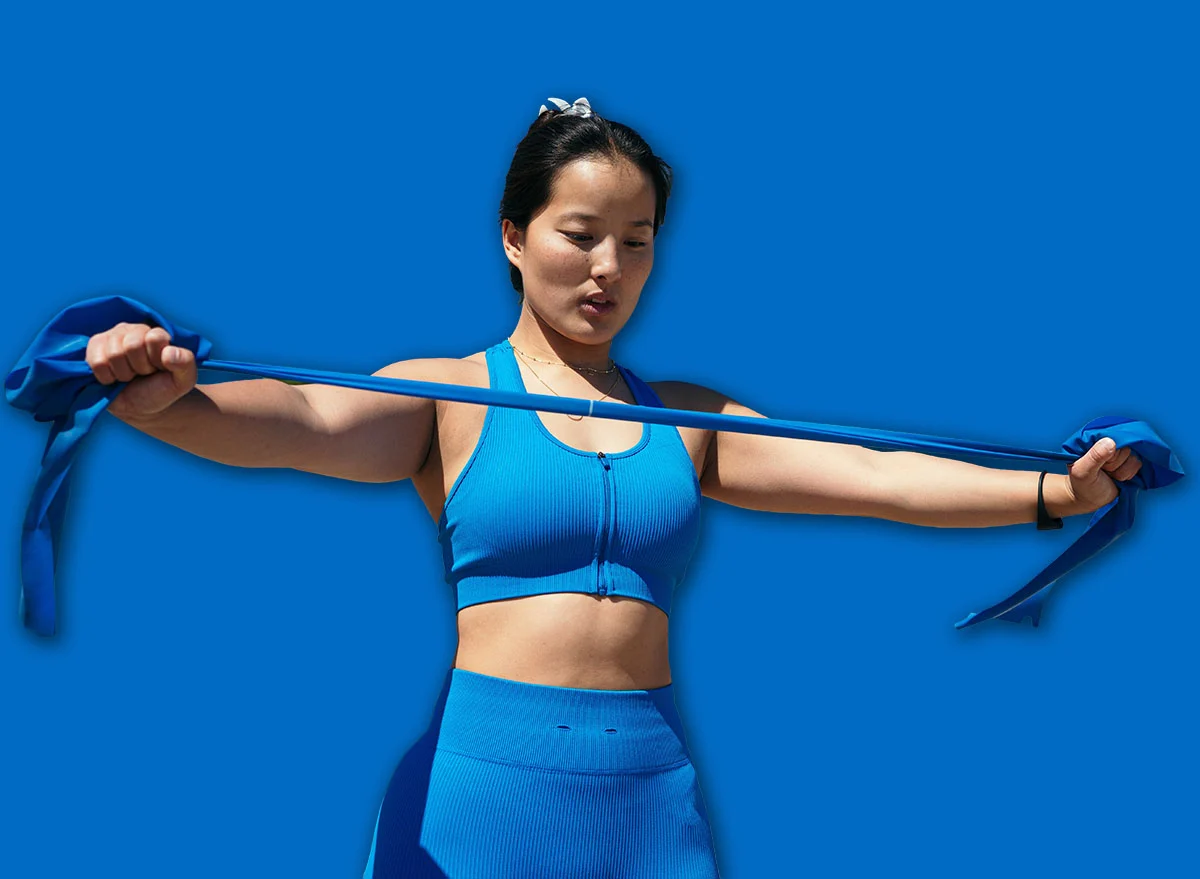
- The Technique: Hold a resistance band in front of you with arms straight. Pull the band apart by squeezing your shoulder blades together. Keep your shoulders down, away from your ears.
- Why it works: This strengthens the rear deltoids and rhomboids, pulling the shoulders back and instantly creating a more defined, athletic silhouette.
4. Modified Chair Triceps Dips
This move specifically targets the under-arm area, but it must be performed with strict control to avoid shoulder impingement.
- The Technique: Sit on the edge of a sturdy chair. Place your hands next to your hips. Slide your hips off the chair, supporting your weight with your arms. Bend your elbows to lower yourself just a few inches—do not go too deep. Push back up using your triceps.
- Why it works: It is the most effective bodyweight movement for the "bat wing" area. By limiting the depth, you maintain tension on the muscle without stressing the shoulder capsule.
5. Overhead Resistance Band Press
This movement integrates the shoulders and triceps, ensuring your arm training has a "finishing" quality.
- The Technique: Stand on the center of a resistance band. Hold the ends at shoulder height. Press your arms straight up toward the ceiling, then slowly return to the starting position.
- Why it works: It challenges the core and shoulders simultaneously. It is essential for restoring the overhead mobility that naturally declines with age.
Implications for Long-Term Health
The decision to focus on arm strength after 55 carries implications far beyond the aesthetic. Muscle mass is considered an "organ of longevity." Individuals with higher muscle mass have better metabolic health, improved blood sugar regulation, and a significantly lower risk of falls.
When you strengthen your arms, you are not just working toward a tighter look in a sleeveless shirt; you are investing in your autonomy. You are ensuring that you can lift your luggage, carry your grandchildren, and perform household tasks without pain.
Final Thoughts from the Field
As a trainer, I have worked with hundreds of clients who felt it was "too late" to see results. I am here to tell you that the muscles in your arms are highly responsive, regardless of your starting point. The secret is not in the weight of the iron you lift, but in the consistency of your effort and the quality of your movement.
Start slow. Focus on the sensation of the muscle working. Maintain your form. By dedicating just fifteen minutes a day to these five movements, you will build a foundation of strength that is as practical as it is visible. Your arms are a reflection of your vitality—treat them with the consistency they deserve, and they will support you for years to come.