











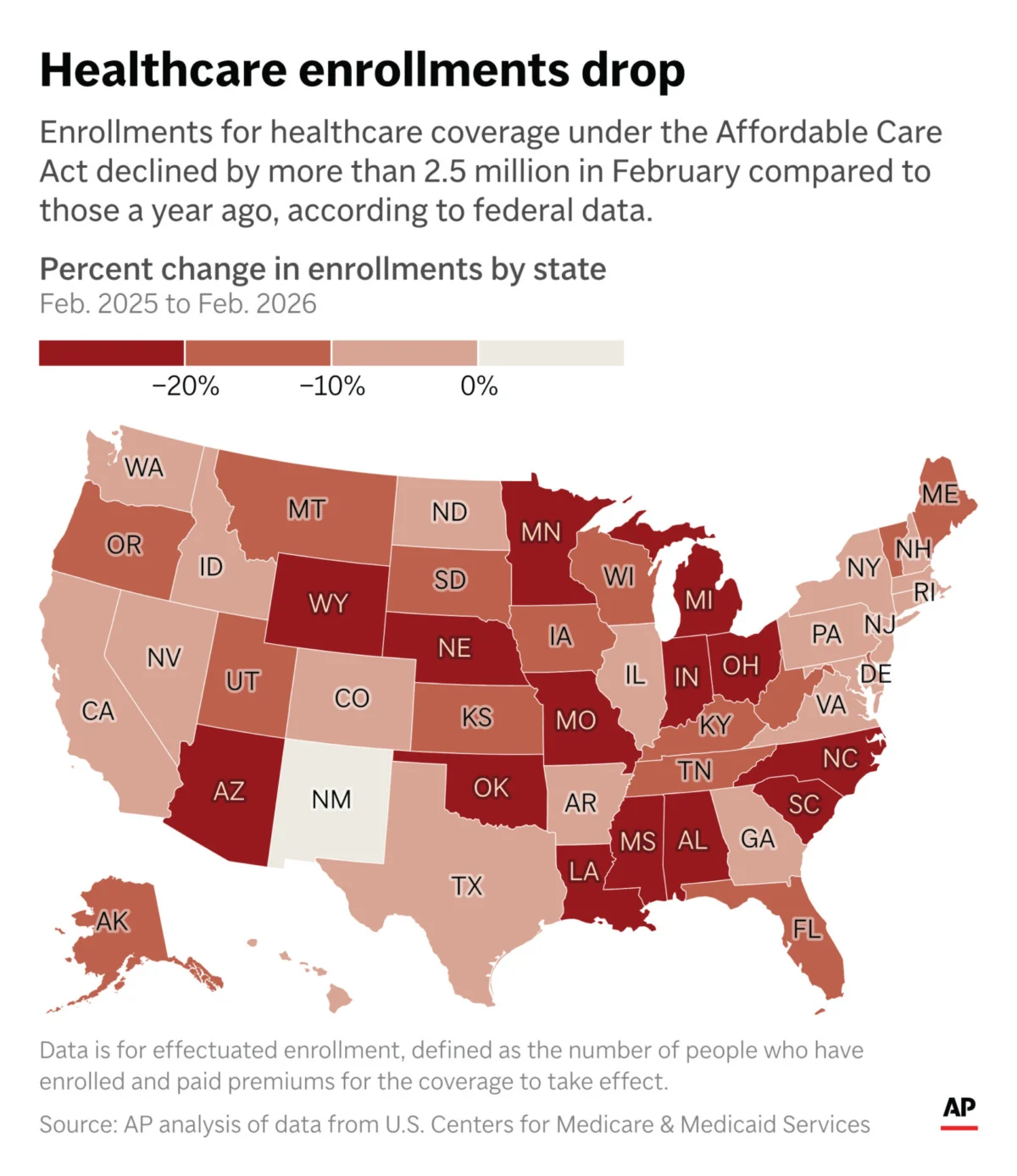
NEW YORK — The landscape of American healthcare is undergoing a jarring contraction. New federal data, released in late June and analyzed by The Associated Press, provides the first comprehensive 50-state snapshot of the fallout following the expiration of enhanced Affordable Care Act (ACA) subsidies. The figures reveal a stark reality: approximately 2.6 million fewer Americans were enrolled in ACA marketplace plans in February 2026 compared to the same period in the previous year.
The decline represents a seismic shift in access for millions of households, particularly in states that had seen historic enrollment gains during the pandemic-era expansion of federal assistance. As monthly premiums for millions of Americans doubled or even tripled overnight following the January 1 expiration of these credits, the marketplace—often described as the "coverage of last resort"—has seen its population dwindle as families are forced to navigate a post-subsidy reality where healthcare affordability has once again become a luxury rather than a guarantee.
The Anatomy of the Decline
The newly released dataset is significant because it provides a granular look at "real" coverage. Unlike initial sign-up figures, which can be inflated by prospective interest, this data accounts for enrollees who actually paid their first monthly premiums and maintained their status after the grace period for nonpayment expired.
Cynthia Cox, vice president and director of the ACA program at the healthcare research nonprofit KFF, emphasized the gravity of the findings. "This is the first time we’ve seen state-level data that shows how much ACA marketplace enrollment truly fell," Cox noted. "It is in line with our expectations, but it does show a very steep drop in the number of people with ACA coverage."
The 2.6 million drop is not merely a statistical anomaly; it is a human-centered trend. While some of these individuals may have transitioned to employer-sponsored plans or other forms of coverage, experts like Cox warn that the vast majority are likely now uninsured. For those without access to traditional employer benefits, the ACA was the only bridge to medical security.
Chronology: From Pandemic Expansion to the January "Cliff"
To understand the current crisis, one must look back to the legislative environment of the early 2020s.
- 2021-2024: As part of pandemic relief measures, Congress passed enhanced premium tax credits that significantly lowered the cost of ACA premiums, capping them at a percentage of income. This led to record-breaking enrollment numbers, particularly in states with high concentrations of gig workers and entrepreneurs.
- Late 2025: A bitter legislative battle unfolded in Congress. Democrats and a coalition of advocates pushed for a permanent extension of the subsidies, arguing that their expiration would trigger a "coverage cliff." However, the political impasse remained, and the subsidies were permitted to lapse.
- January 1, 2026: The expiration took effect. For millions of enrollees, the "sticker shock" arrived with their first bill of the new year, as premiums surged to pre-pandemic levels.
- February 2026: Federal data collection points to the massive exodus from the marketplace.
- June 2026: The Trump administration releases the official state-level breakdown, confirming the widespread erosion of coverage across the nation.
Data Breakdown: A National Trend with Local Impacts
The impact of the subsidy expiration has been uneven, disproportionately hitting states that relied heavily on federal support to keep premiums affordable.
State-Level Losses
Ohio and Oklahoma currently lead the nation in enrollment decline, each experiencing a staggering drop of more than 32% over the past year. These states, which had seen substantial growth when subsidies were at their peak, effectively saw that growth evaporate within months.
Following close behind in the "double-digit decline" category are Arizona, South Carolina, Minnesota, Indiana, Michigan, Mississippi, Louisiana, and Missouri, all of which lost more than a quarter of their covered populations.
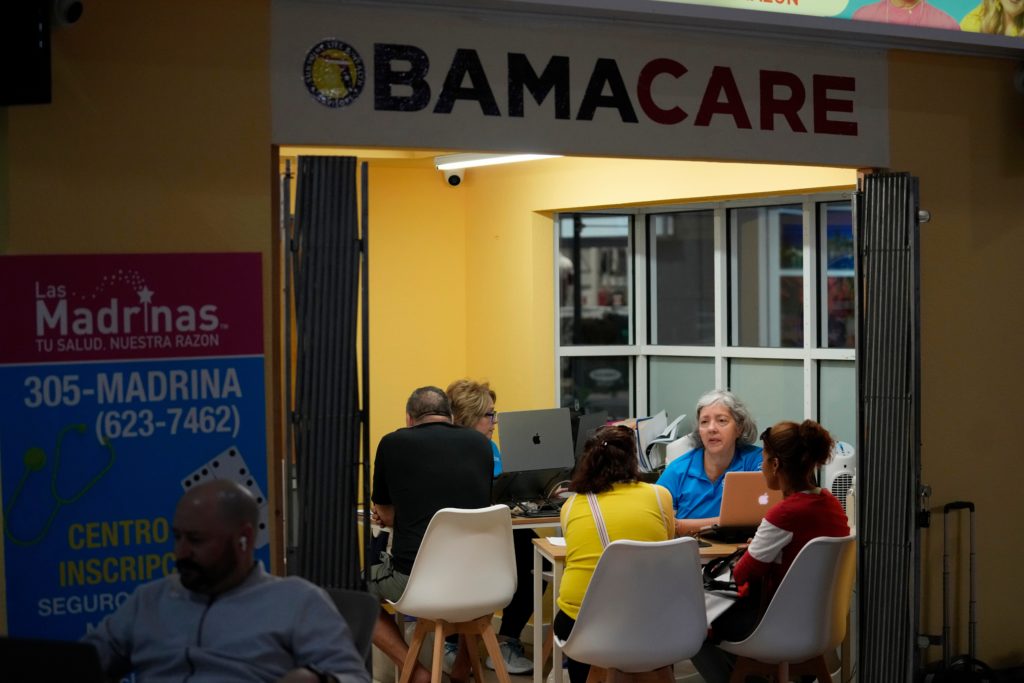
Florida serves as a unique case study in scale. With nearly 4 million residents, it remains the largest ACA marketplace in the country—largely because the state did not expand Medicaid and relies heavily on the exchange for its massive gig-economy workforce. However, Florida also recorded the highest absolute volume of losses, with approximately 443,000 residents dropping their coverage.
The New Mexico Exception
Amidst the sea of decline, New Mexico stands alone. It is the only state to record an increase in enrollment—rising by approximately 14%. This anomaly is directly tied to policy. While other states watched their residents struggle with the expiration of federal credits, New Mexico lawmakers took decisive action. During a special legislative session, the state authorized the use of its own funds to fill the gap left by the expired federal subsidies. In March 2026, the governor further solidified this commitment, extending the state-funded assistance through mid-2027.
Official Responses and Administrative Context
The U.S. Department of Health and Human Services (HHS) has offered a nuanced interpretation of the data. In a report issued last week, the department suggested that a portion of the decline could be attributed to a federal crackdown on fraudulent or "phantom" enrollments—a move intended to clean up marketplace data.
However, independent analysts and healthcare policy experts remain skeptical that this accounts for the lion’s share of the 2.6 million drop. Most experts point to three primary drivers:
- The January 1 Subsidy Expiration: The primary economic driver that made coverage unaffordable for millions.
- Immigration Policy Shifts: New, more stringent requirements on which immigrant populations are eligible for subsidized plans have effectively pruned the rolls.
- The "Marketplace Gap": The lack of state-level interventions in states that use the federal Healthcare.gov exchange compared to states with their own, more flexible marketplaces.
Implications for Healthcare and Politics
As the nation moves toward the November elections, the issue of healthcare affordability is once again ascending to the top of the voter agenda. The current data highlights a deepening divide in American public health: a bifurcated system where residents in states with robust legislative safety nets retain access, while those in states reliant solely on federal infrastructure face an increasingly precarious future.
The Economic Ripple Effect
The implications of this drop-off extend beyond individual health. When millions of Americans lose coverage, the cost of healthcare doesn’t disappear; it is shifted. Uninsured individuals often defer routine and preventative care, leading to higher rates of chronic disease and, eventually, a reliance on emergency rooms for acute care. This creates a "cost-shift" that often lands on hospitals, which must then seek reimbursement through higher charges to private insurers or increased taxpayer-funded subsidies for uncompensated care.
The Political Future of the ACA
The data provides significant ammunition for both sides of the political aisle. Supporters of the ACA argue that the current crisis proves the system requires permanent, stable federal funding to function effectively. Conversely, critics of the ACA argue that the massive reliance on subsidies highlights a fundamental structural flaw in the law, suggesting that the marketplace is artificially propped up and fails to provide long-term, self-sustaining affordability.
As families across Ohio, Oklahoma, and beyond open their mail to find premium notices they can no longer afford, the question of whether the federal government will intervene again remains the most significant variable in the future of American healthcare. For now, the "coverage cliff" has become a reality, leaving millions of Americans to navigate the complexities of a medical system that is increasingly out of reach.