










1 July, 2026
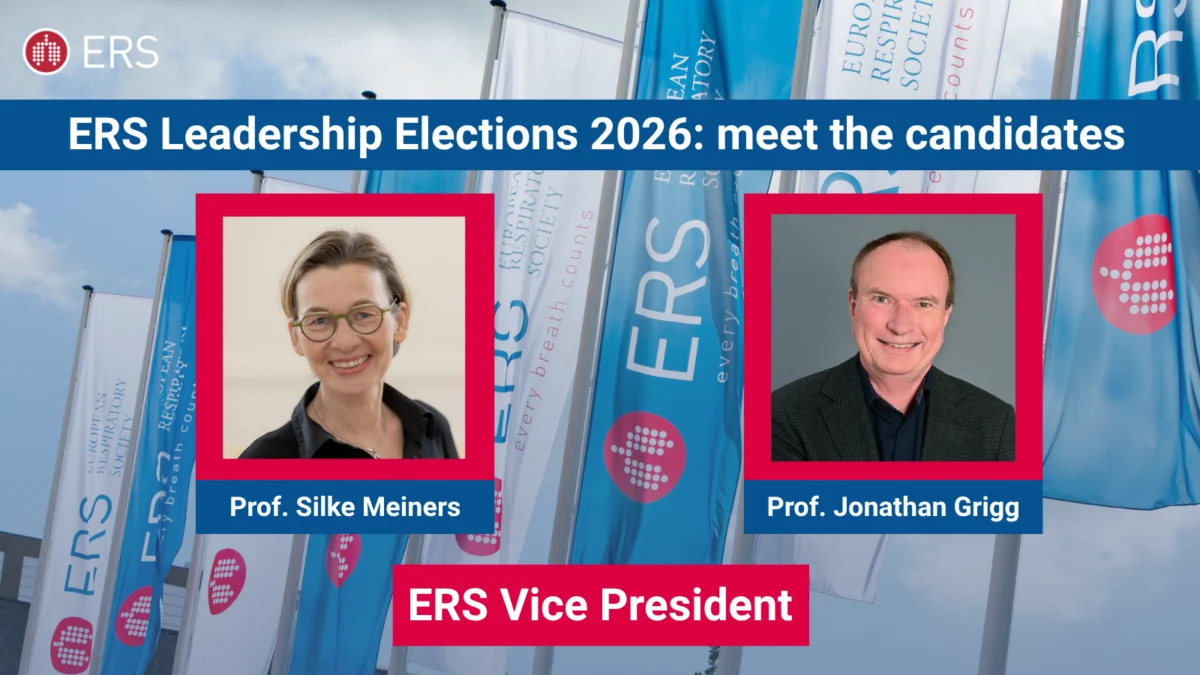
The European Respiratory Society (ERS) has officially opened the polls for its 2026 Leadership Elections, marking a pivotal moment for the future of respiratory health research and clinical practice. As the society prepares to transition to a new executive leadership team, the election for the next ERS Vice President—a position that serves as the gateway to a four-year tenure as President-Elect, President, and finally, Past President—has taken center stage.
With two candidates of exceptional caliber, the 2026 election offers the ERS membership a clear choice between two distinct visions for the future of the field: the deep translational scientific rigor championed by Prof. Silke Meiners and the environmental advocacy and global health strategy promoted by Prof. Jonathan Grigg.
Main Facts: The Path to the Presidency
The ERS Vice Presidency is not merely an honorary title; it is a long-term commitment to guiding the strategic direction of one of the world’s most influential medical societies. The winner of this election will be tasked with steering the society through a four-year cycle, eventually assuming the mantle of the ERS Presidency.
The successful candidate will be responsible for upholding the society’s mission: to alleviate suffering from respiratory disease and promote lung health through research, education, and advocacy. In an era defined by rapid technological advancements, the challenges of climate change, and the persistent burden of chronic respiratory conditions like COPD and asthma, the next leader must bridge the gap between bench science and patient care.
Voting is currently open to all eligible ERS members via the myERS portal. The deadline for casting ballots is 23:59 CEST on Sunday, 2 August, 2026.
Chronology of the Election Cycle
The 2026 election cycle is the culmination of months of rigorous vetting and candidate selection.
- Early 2026: The ERS Nominating Committee conducted a comprehensive review of potential candidates, seeking individuals with proven leadership track records, scientific excellence, and a deep commitment to the society’s values.
- 1 July 2026: Official opening of the polls. The society released candidate profiles, encouraging members to engage with the manifestos of Prof. Silke Meiners and Prof. Jonathan Grigg.
- 15 July 2026: Mid-campaign window. The society hosted virtual town halls, allowing members to pose direct questions to the candidates regarding their vision for the future of respiratory medicine.
- 2 August 2026 (23:59 CEST): The final deadline for voting.
- September 2026: The official announcement of the new Vice President, to be formally inaugurated during the ERS International Congress.
Profiles in Leadership: The Candidates
Prof. Silke Meiners: The Architect of Translational Science
Prof. Silke Meiners enters this race with a reputation as a bridge-builder. For over 15 years, the ERS has been her scientific home, and her career has been characterized by a relentless pursuit of moving basic discovery into the clinical theater.
Meiners’ expertise is broad yet precise, spanning oncology, cardiovascular disease, and respiratory science. Her work in understanding the mechanisms of fibrosis and COPD has been transformative, specifically through her innovative use of human patient samples and preclinical animal models. By validating novel therapeutic strategies for lung cancer and leading biomarker analyses in multi-centre studies, she has effectively laid the bedrock for the next generation of precision medicine.
Her leadership tenure within Assembly 3 and her time as the ERS Conference and Seminars Director speak to her operational competence. Notably, she launched the ERS translational research initiative, a program designed to foster collaboration between laboratory scientists and clinicians. Her platform for the Vice Presidency is clear: she intends to implement an end-to-end translational science framework that integrates basic discovery with clinical trials, ensuring that research does not stay in the lab, but instead becomes accessible, patient-centered clinical practice.
Prof. Jonathan Grigg: The Global Advocate
Prof. Jonathan Grigg, currently a Professor of Paediatric Respiratory and Environmental Medicine at Queen Mary University of London and an Honorary Consultant at Barts Health NHS Trust, offers a platform focused on external impact and global equity.
Grigg’s history with the ERS is equally distinguished, having served as Head of the Paediatric Assembly and Chair of the Tobacco Control Committee. He is perhaps best known for his courageous and high-profile advocacy work. As the founder of the "Doctors against diesel" group and a pivotal figure in the Ella Adoo-Kissi-Debrah case—which linked air pollution to asthma mortality—Grigg has proven his ability to influence public policy and legal precedents.
If elected, Grigg plans to turn the ERS into a more outward-facing organization. His vision includes fostering interdisciplinary collaboration to tackle the unmet needs of patients in the Global South. Having led global health research groups in Sub-Saharan Africa, he is uniquely positioned to address the disparity in access to inhaled therapies. He aims to make the ERS the definitive voice for policymakers, ensuring that the society’s scientific output is directly converted into legislative improvements for global lung health.
Supporting Data: The Landscape of Respiratory Medicine
The context in which these candidates operate is one of increasing urgency. Data from the World Health Organization and recent ERS research papers highlight several critical trends that will dictate the agenda for the next President:
- The Burden of NCDs: Non-communicable diseases, specifically COPD and asthma, remain leading causes of mortality globally.
- Environmental Factors: The impact of air quality on pediatric respiratory development is now a central pillar of clinical concern, echoing the work of Prof. Grigg.
- The "Valley of Death" in Research: The challenge of transitioning basic science to clinical application—the core of Prof. Meiners’ platform—remains the biggest hurdle in pharmaceutical development for lung diseases.
- Equity in Access: The gap in therapeutic access between high-income and low-income nations continues to widen, demanding a coordinated, global, multi-stakeholder response.
Both candidates acknowledge that the ERS cannot afford to remain siloed. Whether through Meiners’ focus on "bench-to-bedside" infrastructure or Grigg’s focus on "policy-to-patient" advocacy, the consensus is that the next four years will require a proactive, assertive leadership style.
Official Responses and Strategic Visions
In their respective manifestos, both candidates have emphasized the importance of the "Next Generation."
Prof. Meiners has explicitly stated: "Our society is only as strong as our ability to nurture early career researchers. By creating an integrated framework that connects the lab to the clinic, we give young scientists a clear path to make a tangible difference in patient lives."
Prof. Grigg has echoed the need for engagement, albeit from a different angle: "We must break down the traditional boundaries of medical specialties. The climate crisis is a respiratory health crisis. If we want to move the needle on global health, we must inspire our younger members to step outside the hospital and into the halls of government."
The ERS Secretariat has expressed satisfaction with the caliber of both candidates, noting that the diversity of their professional backgrounds reflects the multifaceted nature of the society itself.
Implications: A Crossroads for the ERS
The outcome of the 2026 election will have profound implications for the society’s trajectory.
- Strategic Focus: A victory for Prof. Meiners would likely solidify the ERS’s reputation as the primary global engine for translational respiratory research, focusing on the biological mechanisms of disease and precision therapy.
- Societal Influence: A victory for Prof. Grigg would likely shift the society toward a more activist, policy-driven model, increasing the organization’s presence in international environmental policy and global health equity discussions.
Regardless of the result, the election is a testament to the vibrancy of the ERS. The democratic process is a vital reminder of the society’s commitment to self-governance and accountability. Members are encouraged to look beyond the titles and consider the long-term impact of the policies proposed.
As the deadline of August 2 approaches, the ERS urges all members to review the candidate manifestos on the myERS portal. This is not merely a choice of an individual, but a choice of priorities for the respiratory community at large. The future of global respiratory health—and the lives of millions of patients worldwide—depends on the strength, vision, and determination of the leadership elected today.
Cast your vote now via myERS.