Introduction: The Frontiers of Cellular Immunotherapy
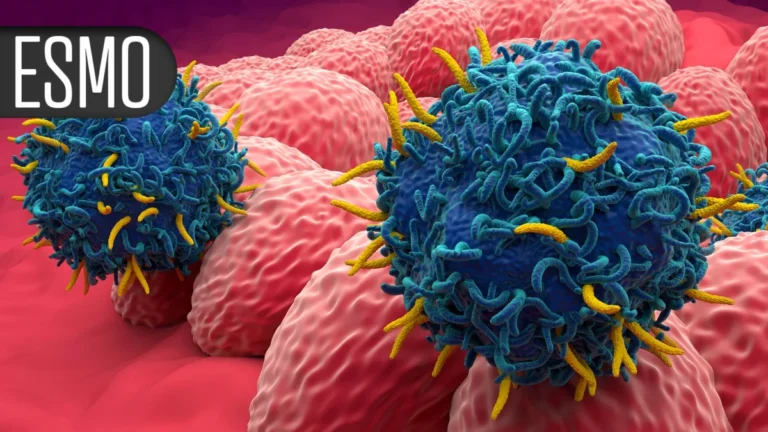
In the rapidly evolving landscape of oncology, Chimeric Antigen Receptor (CAR) T-cell therapy stands as one of the most profound breakthroughs of the 21st century. By genetically engineering a patient’s own immune cells to recognize and destroy malignant tissues, medical science has moved beyond the "carpet bombing" approach of traditional chemotherapy toward precision biological warfare.
Yet, for all its promise, CAR T-cell therapy remains a double-edged sword. While it has induced durable remissions in patients who once had no hope, a significant cohort—roughly 50% of those with large B-cell lymphoma (LBCL)—face the devastating reality of disease recurrence. At the Memorial Sloan Kettering Cancer Center (MSKCC), Dr. Sandeep Raj, MD, has positioned himself at the vanguard of this challenge. His research is not merely an academic pursuit; it is a clinical mission to decipher why these "living drugs" fail and how to ensure they remain effective for every patient.
The Core Challenge: Why Does CAR T-Cell Therapy Fail?
Main Facts and the Current Landscape
Large B-cell lymphoma is a fast-growing, aggressive cancer that has historically been difficult to manage once it becomes refractory to standard-of-care treatments. CAR T-cell therapy changed the paradigm by offering a one-time, curative-intent infusion. However, the high rate of relapse indicates that the tumor microenvironment—the complex ecosystem of cells surrounding a cancer—often finds ways to evade, exhaust, or neutralize the engineered T-cells.
"Roughly half of patients will see their cancer return, and we do not fully understand why," says Dr. Raj. His research seeks to dismantle the "black box" of treatment failure. By studying the interplay between the immune system and the infused CAR T-cells, Dr. Raj is investigating two primary avenues of failure:
- Immune Exhaustion: The engineered cells become "tired" or dysfunctional due to persistent antigen exposure or suppressive signals within the tumor.
- Immune Shielding: The cancer cells actively modify their environment to prevent T-cells from penetrating the tumor site, effectively creating an impenetrable barrier.
Chronology of a Calling: From Personal Loss to Clinical Innovation
The Origins of a Physician-Scientist
Dr. Raj’s commitment to lymphoma research is rooted in a deeply personal narrative. Like many of the most dedicated oncologists, his path was forged in the crucible of a family health crisis.
- The Catalyst: Early in his life, a close family member was diagnosed with lymphoma. Dr. Raj recalls the atmospheric shift in his household—the overwhelming anxiety and the suffocating uncertainty that accompanied the diagnosis.
- The Turning Point: During the initial consultation, the family encountered an oncologist who combined technical expertise with profound empathy. That interaction proved to be the turning point, not only for his relative, who achieved a full remission, but for Dr. Raj’s own career trajectory.
- The Evolution: Throughout his medical training, Dr. Raj remained tethered to the field of hematologic malignancies. He views his current research as a "full circle" moment: he is not just studying data points, but attempting to replicate that original experience of "calm confidence and compassionate care" for the next generation of patients.
Supporting Data: Mapping the Immune Landscape
Data-Driven Strategies for Survival
To move beyond current limitations, Dr. Raj is leveraging the power of quantitative biology. His research program is designed to identify "biomarkers of failure" before the patient even undergoes the infusion process.
By utilizing advanced genomic and proteomic sequencing, Dr. Raj’s team is categorizing the immune environments of high-risk patients. The data suggests that specific inflammatory markers can predict whether a patient’s immune system will support or sabotage the CAR T-cells.
Proposed Interventions:
- Prophylactic Anti-inflammatories: By modulating the patient’s systemic inflammation prior to infusion, Dr. Raj believes the "environment" can be primed to favor the survival of the engineered cells.
- Antiviral Strategies: Some evidence suggests that latent viral activity or persistent immune activation can interfere with cell proliferation. Targeted antiviral protocols may serve as a "cleansing" step to ensure the T-cells have a clear path to the tumor.
The MSKCC Approach: A Multidisciplinary Ecosystem
Official Perspectives and Institutional Philosophy
Memorial Sloan Kettering Cancer Center has long been a global leader in oncology, but Dr. Raj’s work represents a shift toward a more integrated, cross-disciplinary model. He describes his laboratory as a hub where "quantitative biology, cancer immunology, and cellular therapy" converge.
"It is an absolute privilege to be able to work at the intersection of these fields," Dr. Raj notes. The institution supports this by providing the necessary infrastructure to facilitate what he calls the "computer-to-bench-to-bedside" pipeline:
- The Computer: Using big data and AI to predict treatment responses based on initial biopsy profiles.
- The Lab Bench: Validating these predictions in cell cultures and animal models to test drug combinations that protect CAR T-cells.
- The Bedside: Translating these findings into clinical trials where patients can receive the benefit of these "reshaped" therapies.
This cycle is crucial. By bringing the clinical experience back to the lab, Dr. Raj ensures that the research remains grounded in the reality of human suffering rather than just theoretical modeling.
Implications: The Future of Lymphoma Care
Shaping a New Standard of Care
The implications of Dr. Raj’s research extend far beyond the walls of MSKCC. If his team successfully identifies the signatures of treatment resistance, it would allow for a "stratified" approach to lymphoma care. Instead of a one-size-fits-all infusion, patients could receive personalized "pre-conditioning" regimens based on their specific immune landscape.
1. Predictive Medicine
The ability to identify a patient at high risk of failure before treatment starts is the "holy grail" of oncology. It would allow physicians to escalate care or add synergistic therapies immediately, rather than waiting for the cancer to return.
2. Enhancing Therapeutic Longevity
By overcoming the mechanisms that shield cancer cells, Dr. Raj’s work could extend the duration of remissions, potentially turning even the most aggressive lymphomas into manageable, or even permanently cured, conditions.
3. A Humanistic Framework
Perhaps the most significant implication is the reminder that medical technology is only as good as the care that surrounds it. Dr. Raj’s commitment to combining rigorous science with the "thoughtful care" he witnessed as a youth sets a standard for the next generation of physician-scientists.
Conclusion: The Long Road Ahead
The quest to master CAR T-cell therapy is a marathon, not a sprint. Dr. Sandeep Raj recognizes that while the technology is transformative, the biological complexity of human cancer is formidable. However, with the support of the Foundation and the collaborative environment at MSKCC, he is building a framework that looks at the patient as a whole—not just a collection of tumor cells.
As he continues to bridge the gap between complex data and compassionate care, the hope remains that the 50% of patients currently experiencing recurrence will soon see that number dwindle. For Dr. Raj, the goal is simple: to ensure that the "overwhelming sadness and anxiety" he felt as a young relative of a patient is replaced, for everyone, by the quiet, confident hope of a life restored.
Key Takeaways for Patients and Families
- Proactive Monitoring: Understanding the immune environment is as important as identifying the cancer type.
- Clinical Trials: Dr. Raj’s work underscores the importance of participating in research-driven clinical trials to access the next generation of cellular therapy improvements.
- Personalized Care: The future of lymphoma treatment lies in identifying the unique biological "fingerprint" of a patient’s immune system.
As we move forward, the "computer to lab to bedside" approach pioneered by experts like Dr. Raj promises to turn the tide against large B-cell lymphoma, one engineered cell at a time.