








By DM Sullivan
July 2026
As the Ehlers-Danlos community descends upon Allen, Texas, for the 2026 Ehlers-Danlos Society Annual Global Learning Conference, the atmosphere is charged with a rare blend of celebration and sober reflection. This year’s theme, "Exploring Comorbidities in EDS & HSD," strikes at the very heart of the patient experience—the complex, often invisible web of overlapping immune, neurological, gastrointestinal, and vascular conditions that define life with connective tissue disorders.
This conference marks a significant milestone: the tenth anniversary of the Ehlers-Danlos Society. For many of us—patients, caregivers, and advocates—this decade has been a relentless journey of discovery. It is a moment to pause, to analyze the progress made, to identify the systemic barriers that remain stubbornly in place, and to chart a course for a future where patient advocacy translates into accessible, compassionate care.
The Chronology of a Movement: From 2013 to 2026
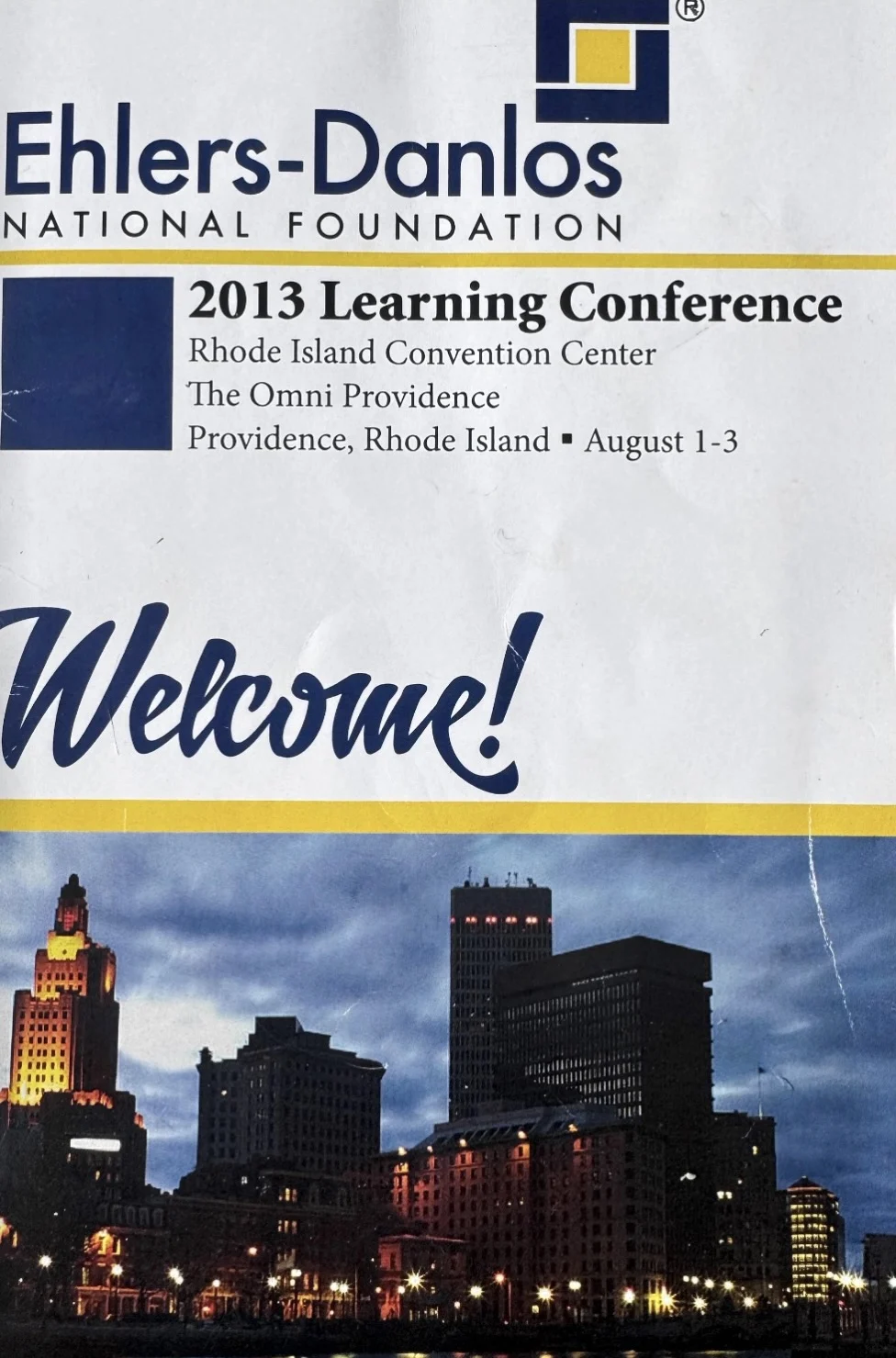
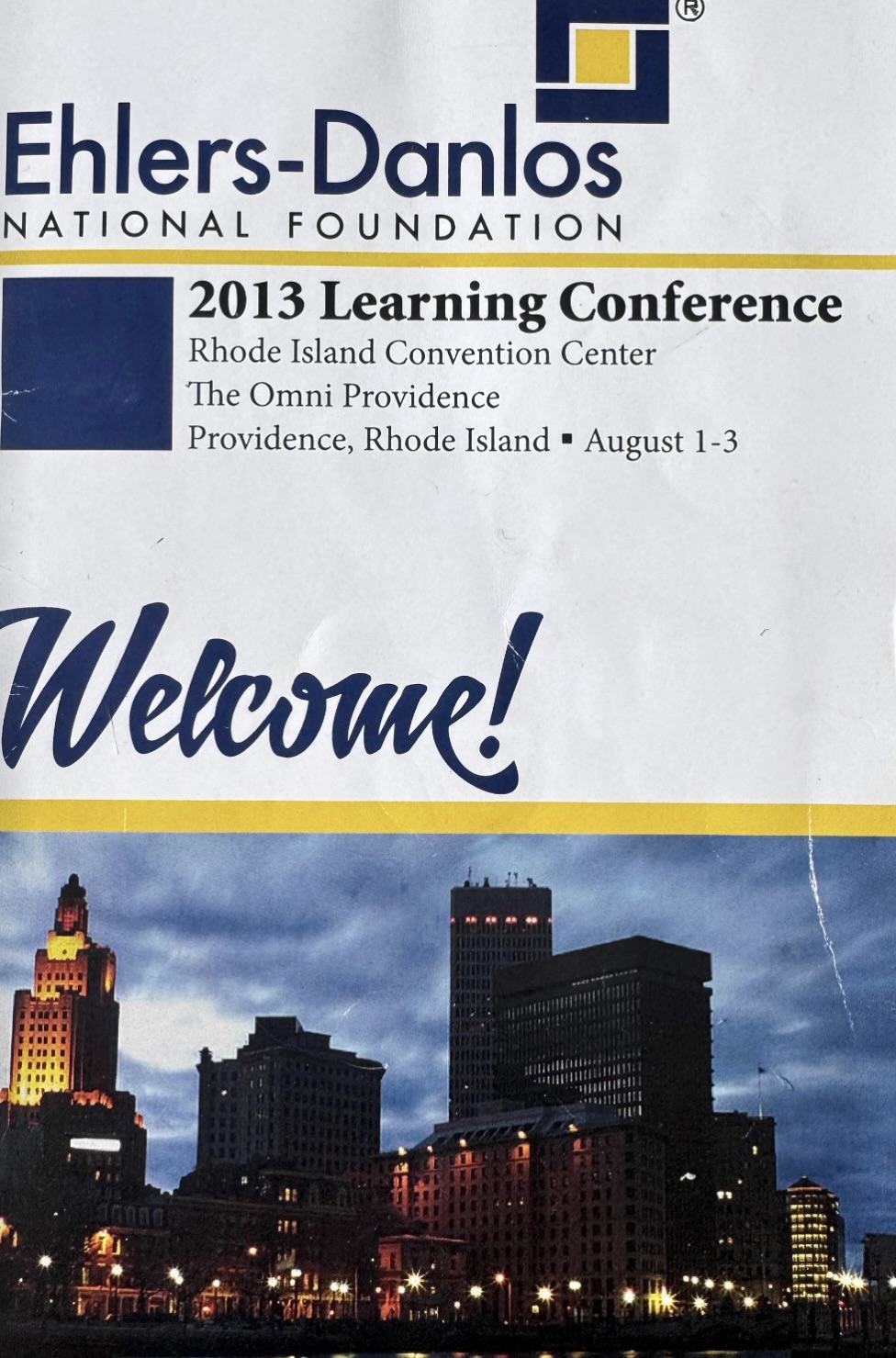
To understand where we are going, we must look at where we began. Recently, while organizing my home office, I unearthed a relic of the past: a brochure from the 2013 Ehlers-Danlos National Foundation conference in Providence, Rhode Island.
Holding that pamphlet felt like opening a time capsule. In 2013, I was a young mother navigating a diagnosis that my own pediatrician openly admitted he had never encountered. The brochure lists names that have become titans in the field—Dr. Claire Francomano, Dr. Frasier Henderson, and Dr. Pradeep Chopra—visionaries who were fighting for recognition long before the mainstream medical community caught up.
The 2013 conference was a lifeline. It was a gathering of pioneers, including organizations like Chronic Pain Partners and The Silver Ring Splint Company. Yet, looking back, the topics discussed—such as Dr. Rodney Grahame’s session, "What Should We Call Our Syndrome?"—remain hauntingly relevant. As we wait for potential nomenclature updates in the upcoming 2026 diagnostic criteria, we are reminded that the foundational questions regarding how we classify and define these conditions are still being debated thirteen years later.
The Persistence of the "Invisible" Comorbidity
A recurring theme in the 2013 brochure, which remains a primary focus in 2026, is the psychological toll of medical gaslighting. Dr. Alan Pocinki’s early presentation on "Pseudopsychiatric Symptoms in EDS" and Dr. Richard Barnum’s work on "Psychiatric Questions in Pediatric Pain Disorders" were revolutionary attempts to bridge the gap between physical symptoms and mental health.
However, in the years since, we have seen that despite growing medical awareness, "psychological misdiagnosis" remains a systemic failure. The term "gaslighting," while now a household word in medical advocacy circles, was not even in our vocabulary in 2013. Yet, today’s data from peer-reviewed literature suggests that many patients with Ehlers-Danlos Syndrome (EDS) and Hypermobility Spectrum Disorders (HSD) still face the same hurdles: their symptoms are dismissed as psychosomatic, leading to delayed diagnoses and years of unnecessary suffering.
The urgency of this year’s conference theme—comorbidities—cannot be overstated. These conditions (POTS, TMJ, GI dysfunction, and neurological instability) are where disability often takes root. While industry and research sectors are finally converging to address these issues, the patient population has been the "living data" for decades.
Supporting Data: The Gap Between Research and Practice
The shift in medical focus is promising. We are seeing a surge in emerging research, increased industry sponsorship, and a more diverse array of healthcare voices entering the EDS space. However, we must distinguish between knowledge and clinical application.
A decade of advocacy has taught us that research is only the first step. The true challenge lies in the "middle mile":
- Diagnostic Standardization: Clearer guidelines are needed to prevent the diagnostic odyssey that currently lasts years for the average patient.
- Physician Education: Medical school curricula remain largely devoid of training on connective tissue disorders, leaving patients to act as their own medical coordinators.
- Care Coordination: EDS is a systemic, multi-disciplinary condition. Our current healthcare model, which fragments care into silos (cardiology, neurology, gastroenterology), is fundamentally incompatible with the needs of an EDS patient.
My own experience reflects this systemic gap. Despite my deep immersion in medical research and personal relationships with world-class specialists, I have spent the last ten years struggling to secure cohesive care for my family. The arrival of the COVID-19 pandemic introduced new, complex neurological challenges, proving that even for the well-informed, the system remains fragile and difficult to navigate.
The Human Element: Why We Document the Struggle
This year, our film, Complicated, will be screened at the conference. Some have asked why we chose to highlight such heavy, complex realities. The answer is simple: because that is the lived reality of our community.
I remember meeting Karen Richards at the 2013 conference. She was a 12-year-old girl with a fierce spirit, challenging Professor Rodney Grahame with the poignant observation: "I have a lot of doctors; they hear me, but they don’t listen to me." That sentence remains the most accurate summary of the patient experience.
Similarly, I remember the grace of Dr. Frasier Henderson in a hotel lobby, looking at an X-ray of my daughter’s spine when her own orthopedist was at a loss. Those moments of human connection—physician to patient—are what sustain us. But we cannot build a sustainable healthcare system on "lobby consults" and heroic individual efforts. We need structural change.
Implications for the Future: A Call to Action
As we look toward the next ten years, the goal must move beyond awareness. Awareness is the baseline; accountability is the objective.
1. From Awareness to Accessibility
We must advocate for the implementation of EDS-specialized clinics that utilize a "medical home" model. When a patient presents with POTS, they shouldn’t have to explain their EDS to a cardiologist; the medical record should be integrated, and the care path should be established.
2. The Role of Industry
The presence of sponsors like those seen in 2013 and now in 2026 is vital. Industry must continue to invest in therapies that treat the whole patient rather than focusing on a single, isolated symptom.
3. Strengthening the Patient-Physician Alliance
We need to move away from the adversarial nature of "fighting for care" toward a collaborative model. This requires training physicians to view the patient as an expert on their own body and equipping them with the diagnostic tools to validate those experiences early in the progression of the disease.
Closing Thoughts: A Time Capsule for 2036
When I land in Texas this week, I will be looking for the new conference brochure. I intend to tuck it away in my office, just as I did with the 2013 edition. My hope is that when I open that folder in another ten years, the "time capsule" will look significantly different.
I hope that in 2036, we are no longer writing about the need for basic diagnostic criteria. I hope the focus has shifted from "How do we get doctors to listen?" to "How do we refine the life-saving treatments we already have?"
The progress of the last decade is undeniable. We have built a global community, we have pushed for legislative recognition, and we have forced the medical establishment to acknowledge that connective tissue disorders are not rare, but rarely diagnosed. Yet, for the patient living with the daily reality of pain, fatigue, and systemic instability, the work is far from finished.
We go to Allen, Texas, to learn. We go to celebrate the decade of progress. But most importantly, we go to ensure that the next ten years are defined not by our struggle to be heard, but by our success in being healed.
DM Sullivan is an author, the producer of the documentary "Complicated," and the Founder and Executive Director of Elevate Rare. Her work continues to focus on the intersection of patient advocacy, medical research, and systemic healthcare reform.