For over a decade, the relationship between sleep medicine professionals and the booming consumer wearable market has been defined by a singular, persistent friction: the "accuracy gap." Sleep specialists, accustomed to the gold-standard fidelity of in-lab polysomnography (PSG), have long viewed consumer-grade trackers with skepticism. They cautioned against the potential for "orthosomnia"—an unhealthy obsession with achieving "perfect" sleep scores—and frequently dismissed app-generated data as anecdotal at best.
However, a landmark partnership announced in May 2026 between respiratory care giant ResMed and smart-ring pioneer Oura suggests that the industry is finally moving past the binary debate over accuracy. The focus has shifted from "Is this data precise enough to replace a lab test?" to "Is this data effective at bridging the gap between an undiagnosed patient and a sleep clinic?"
The Evolution of the Sleep Journey
The primary challenge facing the American sleep health landscape remains the staggering prevalence of undiagnosed obstructive sleep apnea (OSA). Millions of individuals suffer from nocturnal breathing disturbances, yet they remain outside the clinical system until their symptoms manifest as severe daytime exhaustion or significant comorbidities.
Historically, the funnel for sleep care has been narrow and reactive. A patient might mention fatigue during a fleeting annual physical, leading to a referral, which often faces weeks of bureaucratic delays. By the time a patient reaches a sleep clinic, their condition may have significantly degraded. The ResMed-Oura collaboration aims to blow the top off this funnel. By integrating Oura’s nighttime breathing disturbance metrics with ResMed’s deep repository of clinical education and virtual care pathways, the two companies are creating a proactive bridge. The system is designed to identify irregularities in longitudinal, real-world data and prompt the user to seek professional evaluation before a crisis occurs.
A Chronology of Collaboration
The groundwork for this partnership was laid through years of independent research into the utility of wearables in clinical settings.
- Pre-2024: Sleep specialists expressed widespread concern regarding the "wild west" of consumer wearables, citing data privacy issues and the lack of diagnostic-grade validation.
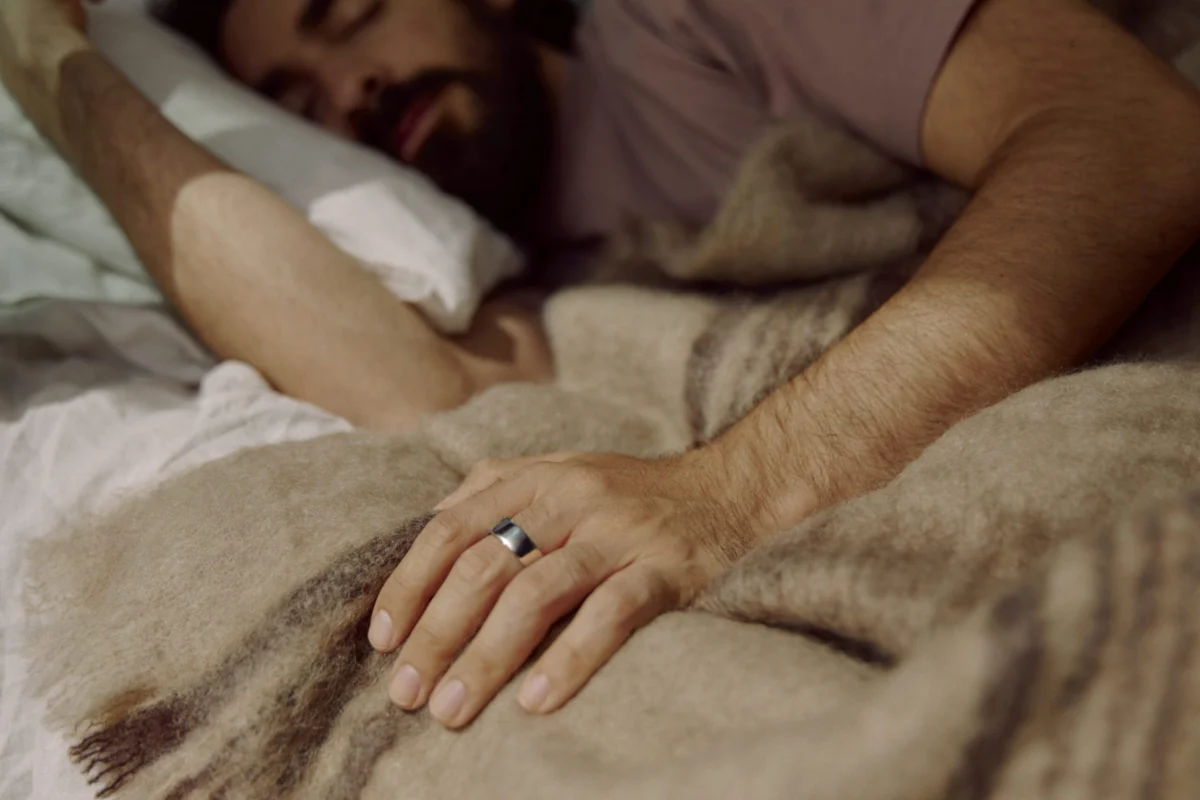
- October 2024: A pivotal study published in Sensors demonstrated that the Oura Ring Gen3 outperformed several leading competitors in sleep-stage accuracy, showing over 95% sensitivity for sleep detection when compared to PSG.
- Early 2025: ResMed began analyzing massive datasets from hundreds of thousands of users, identifying "global benchmarks" for sleep health that proved consumer data held genuine clinical utility for population health monitoring.
- May 2026: The official partnership is announced. The integration is revealed to be a user-centric alert system: when Oura’s metrics hit specific thresholds for breathing disturbances, users receive an in-app "tile" providing educational resources and pathways to virtual sleep care providers.
- Late 2026 and Beyond: The focus shifts toward measuring the efficacy of this "nudge" in converting passive users into active patients within the clinical ecosystem.
Longitudinal Value vs. The Gold Standard
The core argument against wearables has always been their lack of one-night diagnostic certainty. However, Dr. Carlos Nunez, Chief Medical Officer at ResMed, argues that this comparison is fundamentally flawed. "Physicians should view wearable data less like a diagnostic lab test and more like an extension of the patient’s history and physical exam," Nunez explains.
While a PSG is a snapshot—a single night in a foreign environment—wearables provide the "long game." They offer a longitudinal look at sleep efficiency, duration, and physiological markers over months or years. This context is arguably more valuable to a primary care physician who only has eight to ten minutes to spend with a patient. By bringing a record of persistent, long-term sleep disturbances to an appointment, a patient provides their doctor with a concrete data set that shifts the conversation from subjective complaints to objective trends.
Recent ResMed research supports this pivot. In an analysis of over 312,000 CPAP users, researchers established global benchmarks that correlate wearable data with actual therapeutic outcomes. A secondary analysis of 117,000 OSA patients found that higher sleep efficiency, as measured by consumer-friendly metrics, was consistently linked to improved resting heart rates and increased physical activity. As Dr. Nunez notes, "Even if wearable data is not diagnostic-quality, the trends matter, and they matter because they influence the lives of our patients."
Official Perspectives: The "General Wellness" Strategy
Both ResMed and Oura are careful to maintain a distinction between "wellness" and "medicine." Dr. Ricky Bloomfield, CMO at Oura, emphasizes that the company is not seeking to become a diagnostic entity. "We want to make sure it stays firmly in the general wellness category," Bloomfield says. "We are not making any explicit diagnosis in this situation."
Instead, Oura serves as a signal-provider. The "tile" in the app is not a prescription; it is a suggestion for a conversation. This is a critical distinction, as it allows the companies to navigate the regulatory landscape without the immense burden of FDA-cleared diagnostic claims for every specific metric, while still providing immense value to the patient.
ResMed, in turn, is not attempting to monopolize the clinical care pathway. They are not launching a "ResMed-only" testing service. Instead, the partnership funnels users toward independent, virtual sleep care providers like Ognomy Sleep, Arima Health, and Gem Health. By acting as a conduit, ResMed is effectively strengthening the existing infrastructure of sleep medicine rather than attempting to replace it.
The Implications for Clinical Practice
For the average sleep specialist, the rise of the "informed patient" is inevitable. Dr. Nunez offers a challenge to clinicians who remain wary of this technology: "If you are not wearing a wearable as a physician, buy one. Try it out. Your patients believe in this; the world believes in this. You need to understand what they believe in."
The implications of this shift are profound:
- Earlier Intervention: Patients who might have ignored their snoring for years are now seeing the data on their screens, prompting them to act sooner.
- Data-Driven Consultations: The shift from "I feel tired" to "My breathing disturbances have been elevated for three months" allows physicians to triage patients more effectively.
- Long-term Adherence: By connecting the wearable to the clinical journey, companies can track how therapy impacts a patient’s life long after the initial 90-day compliance period.
- Democratization of Health: This model provides a low-barrier, accessible entry point for millions of people, particularly those in underserved areas or those who cannot easily access a traditional, brick-and-mortar sleep center.
Success Metrics: Measuring the Impact
The success of the ResMed-Oura partnership will not be measured by the number of rings sold, but by the flow of the patient journey. Key performance indicators (KPIs) include:
- The Conversion Rate: How many users who see a "breathing disturbance alert" successfully complete a virtual or in-person consultation with a sleep specialist?
- The Diagnostic Yield: Of those who seek care, what percentage are successfully diagnosed and initiated into effective treatment?
- The Behavioral Loop: How does the knowledge that a patient is being treated change their engagement with their health-tracking device?
As Dr. Bloomfield notes, "Are members using the feature? Are they getting value? Ultimately, are they able to figure out a better path forward when it comes to their own sleep?"
Conclusion: A Connected Health Ecosystem
The ResMed-Oura partnership represents a maturation of the digital health sector. We have moved past the "hype" phase where devices were marketed as magic bullets, and we have entered the "integration" phase. By acknowledging that wearables are not replacements for clinical care but rather essential precursors to it, these industry leaders are building a more robust, connected health ecosystem.
For the patient, the future of sleep medicine is looking increasingly seamless. Consumer wearables may not be the final word in a diagnosis, but as the technology improves and the clinical pathways become more frictionless, they are undeniably becoming the first word. In the quest to address the global burden of sleep apnea, this connection between the bedside and the clinic may prove to be the most important innovation of the decade.